Ripple Launches Ripple Mint to Streamline Institutional Access to RLUSD Stablecoin
Key Takeaways
- •Ripple Mint provides regulated organizations with a single platform to mint, redeem, and manage RLUSD through web or API access.
- •Ripple launched RLUSD in December 2024 with an initial focus on institutional users, though later reporting indicated retail traction as well.
- •Cointelegraph-referenced data showed RLUSD ranked ninth among USD-pegged stablecoins by market capitalization at the time of publication.
- •CoinGecko figures cited in earlier coverage showed RLUSD’s market capitalization peaked above $1.8 billion on June 1, 2026.
- •The platform is designed to reduce operational friction for institutions by standardizing workflows and supporting integration with existing systems.
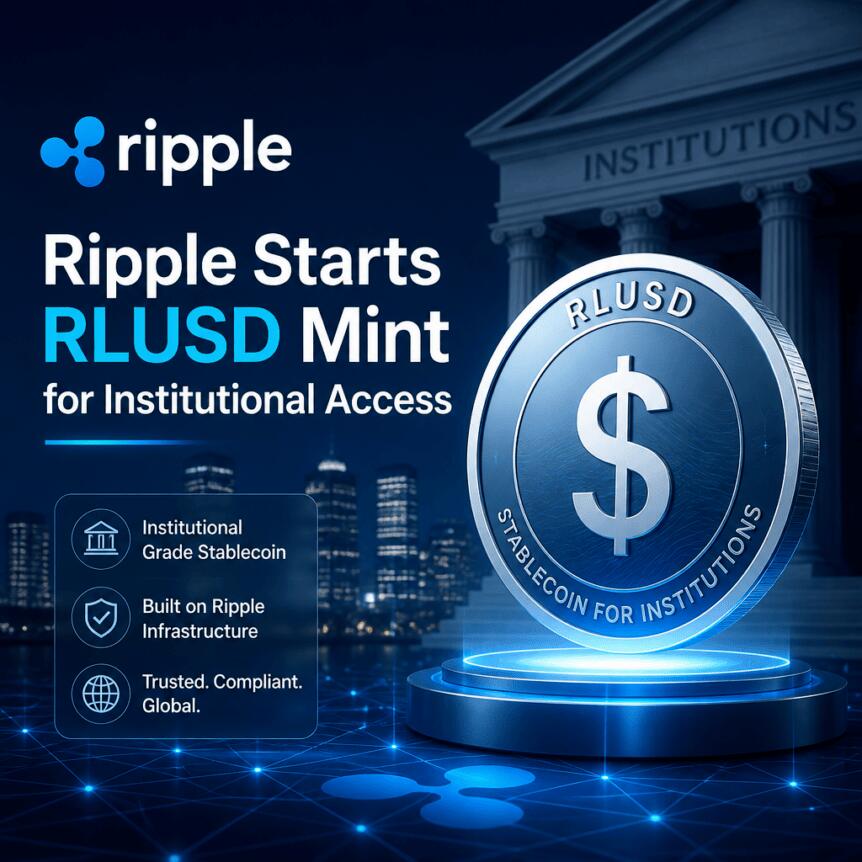
Ripple has introduced Ripple Mint, a new institutional platform designed to simplify how regulated organizations interact with the company's US dollar-pegged stablecoin, Ripple USD (RLUSD). The product provides a single workflow layer for minting, redeeming, and managing RLUSD through either a web interface or direct API integrations.
Announced on Thursday, Ripple Mint is positioned by the company as a "unified platform" capable of supporting both manual operations and automated connections. The launch reflects a broader industry trend in which financial institutions are increasingly adopting stablecoin infrastructure for payments, trade execution, and treasury management rather than treating it as experimental technology.
A Unified Workflow for RLUSD
According to Ripple's announcement, Ripple Mint is built to accommodate different operational requirements within financial institutions. The company states that the platform offers flexible access to "digital dollars through the workflows that fit their needs," enabling organizations to manage RLUSD via a web interface or through API connections.
This dual-access approach aligns with how institutions typically deploy blockchain-based infrastructure. Manual workflows suit smaller-scale operations, testing environments, and internal controls. API-based integration, on the other hand, is generally necessary for high-throughput environments where stablecoin transactions must interface with broader systems such as trading platforms, payment engines, and treasury management tools.
Minting and redemption are also central to how dollar-backed stablecoins move between issuer-managed reserves and user-facing circulation. For regulated firms, having those processes available through standardized workflows can matter as much as the token itself, because operational controls, audit trails, and repeatable procedures are often required before digital asset infrastructure can be used beyond pilots.
From RLUSD Launch to Institutional Tooling
RLUSD was launched in December 2024 with an initial institutional focus. Subsequent reporting indicated that the stablecoin has also gained retail traction, indicating the product's reach extends beyond enterprise channels, even as its infrastructure roadmap remains institutionally oriented.
The stablecoin's market capitalization has grown accordingly. Earlier reporting from Cointelegraph noted that RLUSD entered the ranks of the largest US dollar-backed stablecoins by market cap, reaching the top 10 less than a year after its launch. CoinGecko charts cited in that coverage showed the token's market cap peaking on June 1, 2026, when it reportedly surpassed $1.8 billion.
This growth trajectory is relevant to the Ripple Mint rollout. A stablecoin's market size can influence perceptions of ecosystem readiness for institutional deployment. While market capitalization alone does not determine adoption quality, it can serve as an indicator of liquidity and accessibility—two factors institutions weigh when integrating stablecoins into operational workflows.
What the Rollout Could Mean for Enterprise Adoption
Institutional stablecoin infrastructure has historically been characterized by friction: onboarding complexity, integration challenges, reconciliation requirements, and fragmented operational tooling. Ripple Mint addresses these pain points by offering what Ripple describes as a single management layer for RLUSD, with web and API access modes.
For institutions, this consolidation can reduce time-to-integration by minimizing the number of bespoke systems needed to mint, redeem, or manage stablecoin balances. A consistent operational interface can also support internal compliance workflows, particularly as stablecoin usage expands into treasury and trading settlement activities.
At the time of publication, data referenced by Cointelegraph indicated that RLUSD ranked ninth among USD-pegged stablecoins by market capitalization. Prior coverage also cited a brief market cap increase around the Ripple Mint launch window, with RLUSD's market cap reportedly moving from approximately $1.54 billion to $1.64 billion before settling near $1.59 billion, based on CoinGecko figures.
While short-term price movements around product announcements are not a direct measure of enterprise traction, they can signal market attention. A more meaningful indicator will be whether Ripple Mint translates into new institutional integrations, increased transaction volumes, and recurring usage through automated API connections.
RLUSD's Position in the Broader Stablecoin Landscape
RLUSD competes within the USD-pegged stablecoin market, where adoption is driven by trust, liquidity, and the quality of surrounding infrastructure. Cointelegraph previously reported on RLUSD's ascent into the top tiers by market capitalization and highlighted its positioning as a US dollar-backed stablecoin with a growing and diversifying user base.
Ripple Mint reinforces that positioning by addressing the operational dimension of stablecoin access. Rather than treating minting and redemption as separate, fragmented processes, the platform consolidates RLUSD management into a unified workflow—an approach designed to appeal to institutions seeking predictable processes and seamless integration with existing systems.
This development does not remove the need for institutional due diligence. Organizations must still evaluate issuer and platform controls, counterparty and custody arrangements, and regulatory compliance alignment. However, tooling that reduces integration overhead is frequently a prerequisite for stablecoins transitioning from pilot programs to routine operational use.
Looking ahead, the central question for RLUSD users and prospective institutional partners is whether Ripple Mint drives measurable growth in automated adoption—particularly through API-based integrations—and how rapidly the platform's capabilities extend beyond basic mint and redeem functions into more comprehensive payment and treasury workflows.

