Ripple CEO Brad Garlinghouse Says He Owns 'a Lot of XRP' and Is 'Incredibly Bullish' on Crypto
Key Takeaways
- •Garlinghouse disclosed on Jan. 22, 2026 that he owns a large amount of XRP, tying his bullish position to Ripple's execution and growing financial institution participation on its network.
- •In February, he called XRP Ripple's North Star, linking the company's payments, prime brokerage, treasury, custody, and RLUSD stablecoin businesses to increasing utility, trust, and liquidity around the token.
- •Ripple launched digital asset accounts and unified treasury capabilities on April 1 for managing XRP and RLUSD alongside cash, offering real-time valuations and automated transaction records.
- •The SEC lawsuit filed against Ripple in December 2020 formally concluded in 2025 after a July 2023 ruling that programmatic exchange sales of XRP were not unregistered securities, with Ripple paying a $125 million civil penalty ordered in 2024.
- •Evernorth completed its business combination on Oct. 9, receiving equity-exchange contributions of approximately 211.3 million XRP from Arrington XRP Capital Fund and 50 million XRP from a Ripple-affiliated trust.
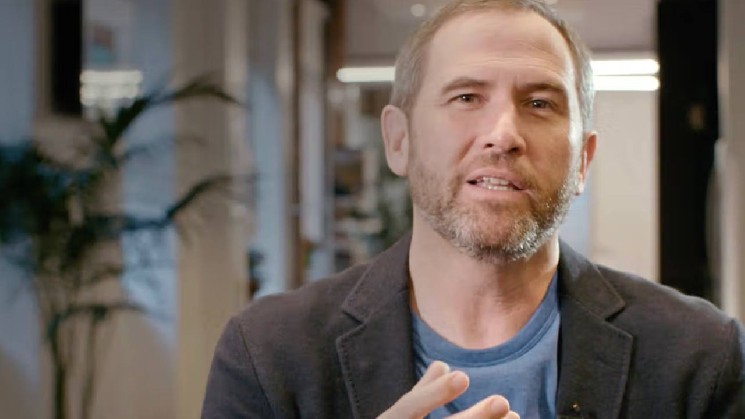
Ripple CEO Brad Garlinghouse has repeatedly voiced confidence in XRP throughout 2026, with interviews, community appearances, and anniversary messages emphasizing utility, institutional participation, and long-term prospects. Those statements have run alongside new corporate treasury tools and an October merger milestone that have extended the asset's financial applications. Garlinghouse has led Ripple since December 2016, when he took the helm of the blockchain payments company after serving as its chief operating officer.
At an XRP Las Vegas appearance discussed in May, Garlinghouse endorsed the XRP Ledger's performance and outlook, saying the asset stands out for its speed, low costs, scalability, operating history. The ledger went live in 2012 with a fixed supply of 100 billion XRP created at inception, rather than issued through mining.
“You have something special and unique that is poised for great success in the years ahead,” he said.
His public support continued into June, when XRP's 14th anniversary prompted a message celebrating the XRP community, in which Garlinghouse described being part of the XRP family as the honor of a lifetime. That message followed his February strategy comments and his May assessment of the ecosystem's prospects.
In February, he connected Ripple's various business lines to the company's XRP objectives. The executive said XRP is Ripple's North Star and linked payments, prime brokerage, treasury, custody, and its stablecoin to efforts to increase utility, trust, and liquidity around XRP and the XRP Ledger.
The Interview Behind His Personal XRP Stake
Garlinghouse outlined the personal investment behind his XRP position during a conversation about crypto's role in global finance at Faena Rose on Jan. 22, 2026. He tied his XRP exposure to Ripple's execution and to growing participation by financial institutions.
“I own a lot of XRP. I'm very bullish on XRP in our use case in part because you have a company like Ripple that is successfully executing and getting more and more financial institutions into that network,” he said.
His broader crypto outlook also reflected skepticism about governments' management of money and a preference for assets with distinct applications. His description of being “incredibly bullish” concerned crypto overall, while his XRP explanation centered on Ripple's execution.
“I think bitcoin is a fabulous store of value and I think kind of owns that space as digital gold,” he said. “I think other assets will own other use cases and I own some ETH.”
That distinction ties the value of cryptocurrencies to their different applications rather than treating them as interchangeable investments. During the same January conversation, Garlinghouse also disclosed exposure to Solana and rejected XRP maximalism, meaning his stated portfolio extended beyond the token associated with his own company.
Payment Utility and Institutional Participation Shape His Thesis
The business case begins with moving money between currencies, where XRP can act as an intermediary asset. The XRP Ledger settles transactions in three to five seconds, and using XRP as a bridge involves exchanging one currency into the token and then into another, linking markets through available liquidity.
Institutional participation extends beyond Ripple's own network. In January comments to CNBC, Garlinghouse connected his bullish crypto outlook to institutional demand that he believed valuations underrepresented. The argument combined expectations for broader financial-sector participation with the payment applications he described at Faena Rose.
Ripple's courtship of financial institutions also unfolded against a legal backdrop that shifted during Garlinghouse's tenure. The U.S. Securities and Exchange Commission sued Ripple and two of its executives in December 2020 over XRP sales, and in July 2023 a federal judge ruled that programmatic sales of the token on exchanges were not unregistered securities transactions, while institutional sales were. The case formally concluded in 2025, with Ripple paying a $125 million civil penalty ordered in 2024.
Utility Developments Extend the Thesis Beyond Ripple
The utility theme has surfaced in independent businesses as well. On May 31, Anodos Finance co-founder and CEO Panos Mekras described XRP treasury and payroll use, reporting that his company had bought XRP for its treasury, held it, and paid its team with the asset since 2023 — an operating use that goes beyond trading.
Ripple CTO Emeritus David Schwartz highlighted a broader range of applications in a June 17 post on X ahead of Swell, Ripple's annual conference, citing XRP use cases spanning payments, tokenization, interoperability, decentralized finance and artificial intelligence. His observations about ecosystem development complemented Garlinghouse's earlier emphasis on practical financial applications.
Corporate tools have advanced alongside those public statements. On April 1, Ripple introduced digital asset accounts and unified treasury capabilities for managing XRP and Ripple USD (RLUSD), its dollar-backed stablecoin launched in December 2024, alongside cash. Features include real-time valuations and automated transaction records, with availability varying by geography.
The institutional infrastructure behind Garlinghouse's January thesis continued to develop into October, when Evernorth completed its business combination on Oct. 9. The XRP treasury company's SEC filing detailed token contributions, including approximately 211.3 million XRP from Arrington XRP Capital Fund and 50 million XRP from a trust affiliated with Ripple. Those were contributions in exchange for equity rather than open-market purchases, extending XRP's role as a corporate treasury asset.

