Revolut Disclosed Customer Identity and Bitcoin Records After Fake Agency Request
Key Takeaways
- •The reported disclosure involved both customer identity information and records of Bitcoin activity on Revolut’s platform.
- •The request allegedly came from an entity impersonating a legitimate authority, but the requester, communication method, and verification process have not been identified.
- •No evidence in the available report indicates that funds were stolen, accounts were compromised, or Revolut’s systems were hacked.
- •The number of affected customers, precise data exposed, and potential scope of the incident remain unknown.
- •The account describes a customer-data disclosure issue rather than evidence of financial loss or access to Bitcoin through transaction records alone.
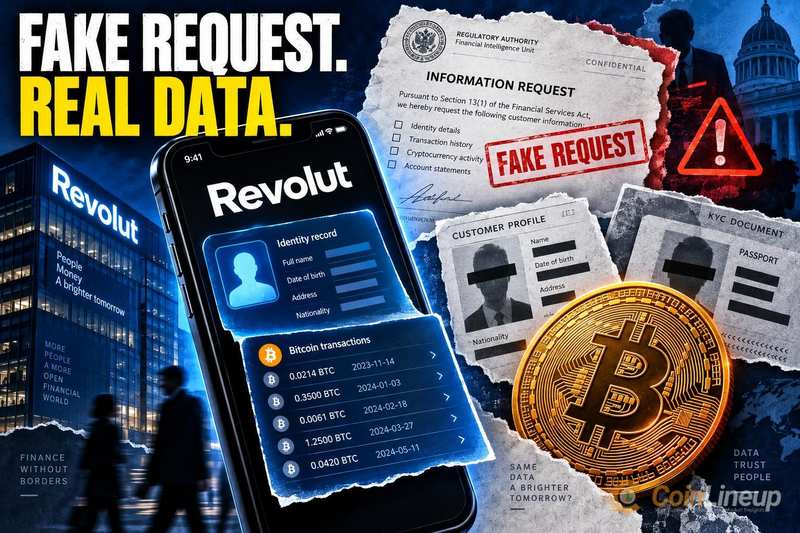
CoinLineup reported that Revolut disclosed customer identity information and Bitcoin transaction records after receiving a request that appeared to come from an agency but was later determined to be fake. The incident raises questions about how requests for sensitive financial data are verified before information is released.
The established facts are limited. Revolut, a financial technology company, released two categories of records: identity information and Bitcoin transaction records. The records were provided after the fraudulent request was received. The date, location, number of people affected, and exact fields disclosed have not been verified.
What Revolut disclosed
The reported disclosure involved identity records, which can identify a specific customer, and Bitcoin transaction records, which show that customer’s Bitcoin activity on the platform. Records that connect a person’s identity with transaction history can be sensitive because they may reveal financial behavior associated with a named individual. However, the exact information released remains unknown, so the potential scope of exposure has not been established.
The disclosure of transaction records is not the same as the loss of funds. There is no evidence in the reported account that Bitcoin was stolen, an account was compromised, or Revolut’s systems were hacked. The issue described is the release of customer data, not the theft of money.
Transaction records are also different from private keys. A person who sees a transaction history cannot use that information alone to spend the associated Bitcoin. Control of funds depends on private keys, which are separate from transaction records.
What is known about the fake request
The request was described as fake because it appeared to originate from a legitimate agency but did not. It arrived before the records were disclosed, and the information was subsequently provided.
The identity of the supposed agency and requester, the communication channel used, and the verification procedures Revolut applied have not been confirmed. No specific procedural failure or legal finding has been established in the available account. The reported sequence is that an entity posing as a legitimate authority requested data and Revolut provided it. Further details about how the impersonation worked or how it was detected require confirmation from a verified source.
Revolut has been expanding its crypto-related operations, including plans to roll out a euro stablecoin in the European Union and its pending pursuit of a U.S. bank charter. In that context, the company’s handling of data requests is relevant to its broader operations, although the available report does not establish any additional impact.
The scope of the exposure, Revolut’s formal response, and any protective measures offered to customers remain unknown. Until those points are addressed by verified sources, the incident should be understood as a reported data-request verification issue, not as evidence of financial loss.
This article is for informational purposes only and does not constitute financial or investment advice. Cryptocurrency and digital asset markets carry significant risk. Readers should conduct their own research before making decisions.

