Retired Colonel Warns Trump Policies Are Hollowing Out the U.S. Military
Key Takeaways
- •Breen Fram said she left the military because her presence contradicted false claims about service members, not because of any professional shortcoming.
- •Fram accused Trump and Pete Hegseth of pushing out people who do not share their views and of discouraging dissent inside the armed forces.
- •She described the Golden Dome missile defense proposal as technologically weak and expensive, arguing that it would contribute to a hollow force.
- •Fram called the proposed Trump-class battleship a largely aesthetic project that would be vulnerable as a modern floating target.
- •The article also cited other critics who say Trump’s approach is harming NATO, Ukraine, Taiwan, and broader U.S. foreign policy.
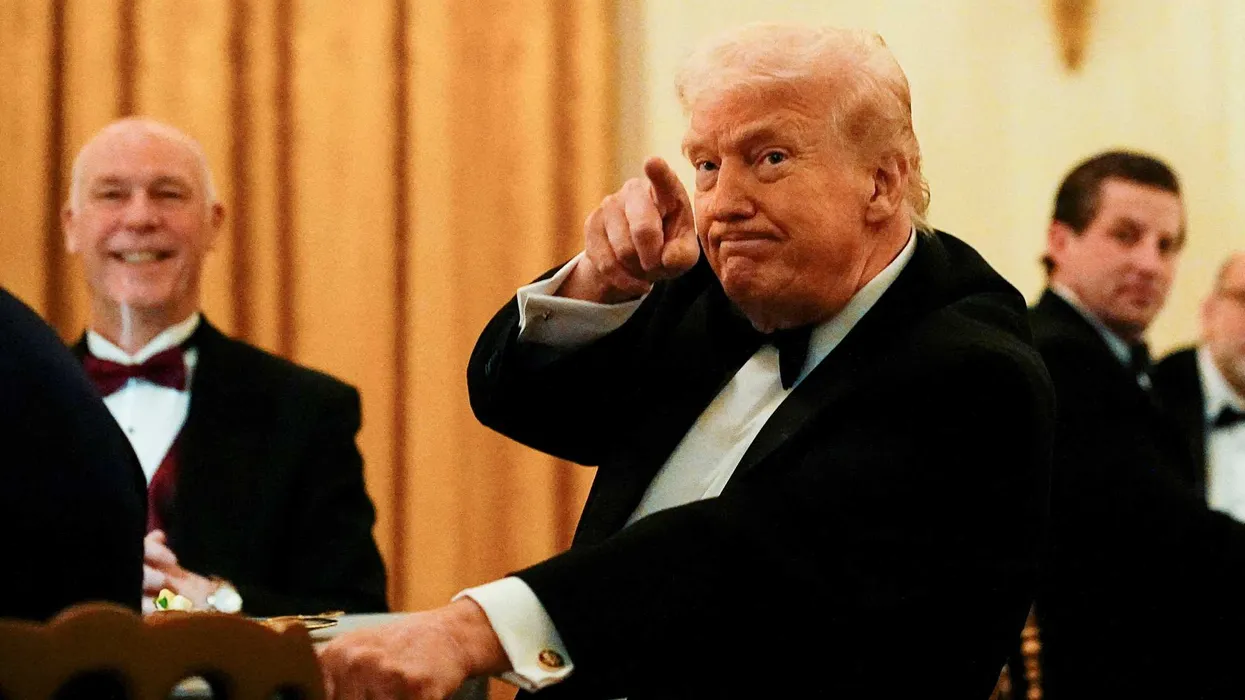
A retired military officer and activist has warned conservative commentator Bill Kristol that President Donald Trump's policies are dangerously weakening the American armed forces, describing a pattern of ideological purges, suppression of expert dissent, and strategically unsound procurement proposals.
Kristol, a longtime Republican strategist and editor who has become one of Trump's most prominent conservative critics, posted the interview on X. His guest, Col. Breen Fram, an American astronautical engineer and former colonel with 23 years of service, explained that her departure from the military was not a result of any professional failing.
"In my retirement speech, I mentioned the fact that we were not being tossed away because we had failed in any way," Fram told Kristol. "It was because what we had done could not be hidden away if we remained in uniform. That we had done our job so well that we had won the respect of our friends, our colleagues, and the people that we worked for or led, that having us there continued to put to the torch the lie that they were saying about our character and our capability."
Fram said the executive order framed discharged service members as "dishonorable, undisciplined liars who lacked the humility required for military service," and also cited the claim that they were undeployable due to long-term medication.
"It's pretty crazy that now we have Secretary Hegseth in his quest for a high-T Department of War saying that long-term hormone replacement therapy is a lethality enhancer for some, but is a clear readiness crisis for others," Fram said. "The hypocrisy behind all of this is overwhelming."
Hegseth, a former Fox News television host and Army National Guard veteran, was confirmed as Secretary of Defense in January 2025 following one of the most contentious confirmation processes for the position in recent history.
Fram also accused Trump and Hegseth of purging from the military those who do not share their views, arguing that the suppression of diverse perspectives produces a brittle fighting force. Military doctrine has long emphasized the value of pluralistic input in strategic planning, and Fram's warning echoes historical concerns about groupthink in national security decision-making.
"Not only is the science clear, but the military had embraced this—that it takes multiple perspectives," Fram said. "Yes, there are certain situations where we know an order is important to be carried out immediately because lives are on the line, or we need a snap decision. But in most cases, we're planning for the future. We are building the force and our readiness, and we need to consider all the options. And if people are not willing to speak up, you get these hollow armies that look amazing but will collapse at the first sign of adversity."
As one example, Fram cited Trump's Golden Dome missile shield proposal, originally called Iron Dome. Trump signed an executive order titled "The Iron Dome for America" in January 2025, directing the development of a next-generation missile defense shield. The name borrows from Israel's shorter-range tactical system, though the U.S. proposal envisions a far more expansive architecture spanning hypersonic interceptors and space-based sensors.
"My experience was with the Golden Dome proposal, which was originally Iron Dome, but of course, anything that Trump touches has to be gilded," Fram said. "So it immediately turned to Golden Dome. And as this proposal came over for this worldwide missile shield, I with 23 years of service as an astronautical engineer, thought, maybe, maybe my input would be valued on this. But when I said that this was the least technologically feasible, highest cost way of accomplishing this mission, and I said, 'Have we told the political appointees this?' one of my bosses up the chain said, 'We can only tell them yes.'"
"In the end, it just, again, hits on building this hollow force—a force that looks strong, but we're weakening it out from the inside," Fram concluded.
Fram was similarly critical of Trump's proposed "Trump-class battleship," calling it a vessel driven by aesthetics rather than strategic value. The U.S. Navy decommissioned its last Iowa-class battleships in the early 1990s, judging the large, heavily armored surface vessels to be obsolete against modern missile and submarine threats—a strategic assessment that has only deepened with advances in anti-ship ballistic missiles and hypersonic weapons.
"The Trump-class battleship—this is a ship that is all about aesthetics," Fram said. "It is about looking good. It is Trump, again, calling something his golden fleet. We retired our last battleship in the early '90s because they were obsolete. And yes, a ship that may have energy weapons and may have large storage capacity could have uses. But what we're really proposing to build is a floating target. And the Chinese, the Russians, know this. They won't be impressed by this gleaming ship on the horizon. They'll be tracking its signature from space and counting the number of missiles it takes to disarm it and to sink it. And that's what this is."
"It is a monument, just like the arch that's going up across the Potomac from Washington, as a monument to Trump," Fram said. "And a monument at sea will sink. And it will be a terrible disaster."
Fram is not alone in arguing that Trump is weakening the military and America's geopolitical standing. In July, Steve Schmidt, a former adviser to President George W. Bush, argued that Trump's abandonment of NATO undermines American foreign policy.
"NATO was built by men like Harry Truman and Dean Acheson, George Marshall and Dwight Eisenhower, sustained by John Kennedy and Richard Nixon and Ronald Reagan and Jimmy Carter, Barack Obama and Bill Clinton," Schmidt said. "It is the most successful military alliance in world history. It is what emerged from what Franklin Roosevelt called the United Nations—an alliance of free nations bound together by common defense, that says an attack on one is an attack on all. It is the greatest deterrent force in history, and Donald Trump despises it like he despises the values of these free nations."
In March, conservative foreign policy analyst Daniel DePetris wrote in Reason Magazine that Trump's overthrow of the Venezuelan government, while intended as a display of American strength, may actually be "throwing it all away."
"Unlike Russia and China, the United States has been blessed with advantageous geography and benevolent neighbors," DePetris wrote. "Both have been sources of strength. The so-called Donroe Doctrine risks throwing it all away."
In February, Joseph Bosco, who served as China country director at the Department of Defense under President George W. Bush from 2005 to 2006, joined the criticism, writing in The Hill about Trump's failure to remain loyal to American allies such as Taiwan and Ukraine.
"History will brand the U.S. failure to ensure Ukraine's victory and prevent Taiwan's fall as the time when America fell from greatness and her 'cunning' but miscalculating enemies plunged the world into a new global conflict," Bosco wrote.

