From 'Triple Trump' to Trumpless: GOP Candidates Scale Back Trump Ties Ahead of Midterms
Key Takeaways
- •Steve Schmidt documented multiple Republican candidates, including Ralph Alvarado and Andy Barr, removing prominent Trump photos and 'America First' messaging from campaign websites after winning their primaries.
- •Rep. Don Bacon criticized Trump's actions as chaotic, calling his renaming of Lake Ontario 'silly,' while Rep. Stephanie Bice warned Republican voters could stay home or vote Democratic due to 'Trump fatigue.'
- •The president's party has lost House seats in nearly every midterm election since World War II, contributing to candidates calibrating their distance from the White House.
- •Voting-rights attorney Pooja Chaudhuri warned that reports of possible ICE deployment at polls and last-minute changes to mail-in voting rules could have a chilling effect that suppresses turnout among vulnerable communities.
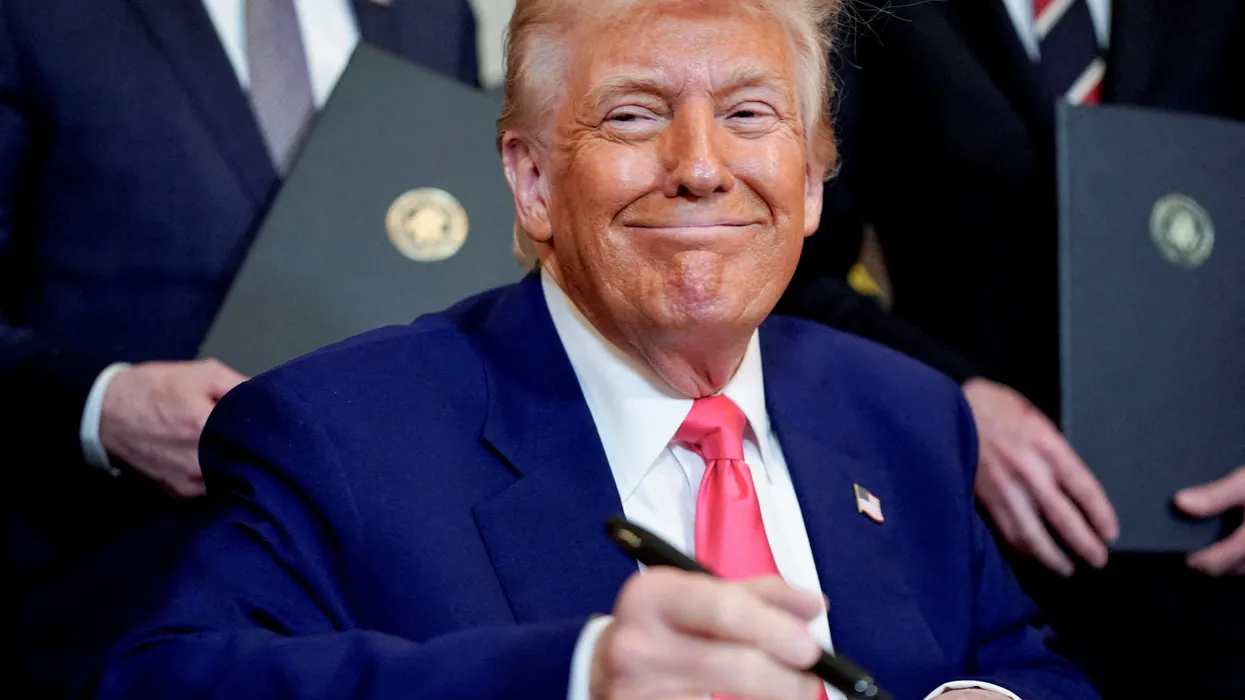
Even as President Donald Trump attempts to influence the midterm elections by restricting mail-in voting, a former Republican strategist argued on Sunday that Republican lawmakers are aware of his weakening political position — even if they are reluctant to say so publicly.
Steve Schmidt, who advised President George W. Bush, laid out a series of examples of Republican candidates quietly removing Trump from their messaging. "Ralph Alvarado campaigned as an 'America First Fighter,'" Schmidt wrote on Sunday. "In a video called 'Triple Trump,' he emphasized that he stood with Donald Trump in 2016, 2020 and 2024. After securing the Republican nomination in Kentucky's Sixth Congressional District, his website suddenly promises 'Independent leadership for Kentucky.' A prominent photograph with Donald Trump and several references to him disappear from the introductory section."
The pattern Schmidt describes — tacking toward the center once a primary is won and the audience widens to general-election voters — is a long-standing feature of American campaigns, but doing so by muting a same-party sitting president is a more pointed signal about how candidates judge Trump's standing with swing voters.
Schmidt noted that "Alvarado says he has not abandoned Donald Trump. His campaign argues that websites routinely change after primaries. That defense deserves to be reported. It also leaves the obvious question unanswered: why is the picture useful before the primary and expendable afterward? Why is 'America First' the identity presented to Republican voters, while 'independent leadership' becomes the message offered to everyone else?"
"Andy Barr made a similar change," Schmidt continued. "His campaign website displayed a prominent photograph with Donald Trump and advertised Barr as '100% America First.' The revised version emphasizes his family and introduces the slogan 'Kentucky Tough, Kentucky First, Always.' References to Donald Trump remain elsewhere, and Barr's campaign says he continues to be proud of the endorsement. The support, according to the campaign, has not changed. Only its prominence has."
Concluding his overview of Republicans distancing themselves from Trump, Schmidt wrote that "that distinction is the entire story. Eric Flores, running in South Texas, previously listed 'SUPPORT PRESIDENT TRUMP'S AGENDA' as a top priority. It has since been replaced by 'LOWER THE COST OF LIVING.' Marty O'Donnell offers a more ambiguous example. In June, the Nevada Republican's campaign website greeted visitors with a large photograph of O'Donnell standing beside Donald Trump. Beneath it were the words, 'President Trump endorsed Marty O'Donnell.' Two months later, that photograph and splash-screen endorsement were gone."
The recalibration comes against a familiar historical backdrop: the president's party has lost House seats in nearly every midterm election since World War II, and candidates in competitive districts routinely calibrate their distance from the White House accordingly. What to watch in the weeks ahead is whether more incumbents and nominees follow the same quiet downgrading of Trump in their messaging — and whether Trump, who has a record of retaliating against Republicans he views as disloyal, responds publicly to the drift.
Campaign websites are not the only sign that Republican lawmakers are pulling away from their own president. The Wall Street Journal reported that Rep. Don Bacon (R-NE) said of Trump that "some of the things he's done, it smells like chaos, it smells destructive," citing Trump renaming Lake Ontario as "Lake America" as an example — an idea Bacon described as "silly" and one that "most people think [is] dumb."
The Journal also reported that Rep. Stephanie Bice (R-OK) "made headlines last week when she was recorded speaking to a group of student Republicans at Oklahoma State University, warning that Republican voters could stay home or even vote for Democrats. According to the Bulwark, which obtained the recording, Bice quoted a business executive who told her that he was a longtime Republican but now has 'Trump fatigue.'"
Retiring Rep. Dan Newhouse (R-WA), who voted to impeach Trump in 2021 after his coup attempt, said the president "certainly has a strong following, but times are tough" and argued that "I can see Republicans not being as motivated as Democrats this year."
One possible explanation for why Trump is not visibly concerned about Republican midterm anxieties, AlterNet reported, involves measures that could affect election administration and voter participation.
"I think there are two things to consider," Pooja Chaudhuri, Senior Counsel and Deputy Legal Director at Democracy Defenders Fund, who specializes in voting rights as well as election law litigation and advocacy, told AlterNet in June. "One is that the election is made up of voters, and so the outcome depends on people turning out to the polls and voting. The problem is ... the chilling effect on voters."
Chaudhuri added, "When voters hear that ICE may be deployed to the polls, that mail-in voting rules are changing close to the election, a lot of voters might say, 'I'm just not going to go out and vote.' That could happen in many different ways. There are vulnerable communities — people may come from mixed-status families — they're US citizens, but they might decide, 'I'm not going to vote.' So one aspect is the chilling effect on voters that all of these actions would have."

