Republicans May Have Taken White Evangelical Voters for Granted — and It Could Backfire
Key Takeaways
- •Conservative leaders warn that Republicans lack an organized machine to turn out White evangelical voters in the final weeks before the Nov. 3 midterm elections.
- •White evangelicals make up about 13 percent of the U.S. population but roughly 20 percent of the electorate, and about 8 in 10 voted for President Trump across the last three presidential elections.
- •The Trump Inc. PAC and the national Republican Party have spent roughly $326 million, but much of that money has gone toward television advertising rather than get-out-the-vote or door-knocking operations.
- •The evangelical vote could prove critical in Texas, Iowa, Kansas, and South Carolina, where Democrat Annie Andrews has mounted a more competitive campaign against Darline Graham than Republicans expected.
- •Since World War II, the party holding the White House has lost House seats in every midterm election except 1998 and 2002, adding to Republican anxiety about base turnout.
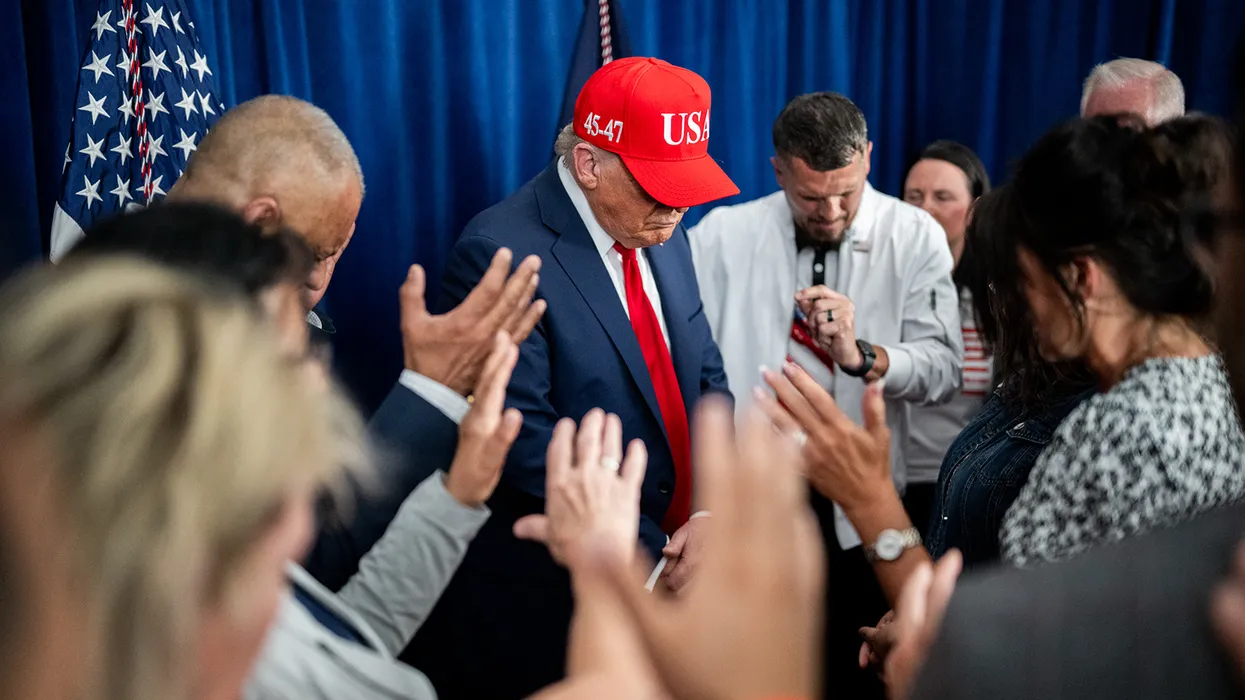
Republicans may be facing trouble after overlooking a voting bloc they depend on both now and in the future.
Conservative leaders are sounding the alarm that the party has not done enough to mobilize White evangelical voters in the final weeks before the Nov. 3 elections, striking fear within the GOP as it struggles to encourage its base to show up at the polls, according to a CNN report published Tuesday. The unease tracks with a durable pattern in American politics: since World War II, the party holding the White House has lost House seats in every midterm election but two — 1998 and 2002.
Although White evangelicals make up only about 13 percent of the U.S. population, they typically account for roughly 20 percent of the electorate and have strongly backed Republican candidates, including President Donald Trump. About 8 in 10 voted for him across the last three presidential elections, and Republican campaign consultants know they cannot win without them. That weight tends to grow in midterm years, when turnout is historically lower and smaller electorates give organized voting blocs proportionally more influence.
"I am not aware of any party machine that is at work right now to turn out evangelical voters," a conservative evangelical pastor in Texas said. "Maybe they are assuming they are going to show up, but that is a dangerous assumption."
Spending has not been the problem. The Trump Inc. PAC and the national Republican Party have poured roughly $326 million into the effort, as MS NOW reported over the weekend. Much of that money, however, appears to have gone toward television advertising rather than "get out the vote" operations, let alone a door-knocking campaign.
The evangelical vote could prove critical in Texas, Iowa, Kansas and even South Carolina. The report noted that Democrat Annie Andrews, who is challenging Sen. Lindsey Graham's sister, Darline, "has mounted a more competitive campaign than Republicans expected," meaning more money has been needed for more ads.
"The evangelical vote is Trump's strongest coalition. Thirty-eight percent of his were White evangelicals. [Republicans] cannot win — I don't care where you are in the country — without the evangelical vote," said Ryan Burge, a professor at the John C. Danforth Center on Religion and Politics at Washington University in St. Louis.
The challenge for Republicans is that while White evangelical voters may love Trump, they also have to pay the bills.
"Evangelicals have to put gas in their cars just like everybody else. They gotta buy groceries just like everyone," North Carolina Rep. Mark Harris told CNN. "But I do think evangelical voters understand what is happening here," the former pastor added.
Chad Connelly, who served as national director of faith engagement at the Republican National Committee, said he has spent the past two months speaking with pastors in more than 20 states. While clergy are barred from telling parishioners who to vote for by the tax code's Johnson Amendment — a 1954 provision prohibiting tax-exempt churches from endorsing or opposing candidates — conservatives have taught faith leaders how to "discuss the issues from the pulpit," CNN described.
"The evangelical turnout is really a difference maker," Connelly said. "I don't think the party has ever done enough in this realm."
"Look, I'm paid to worry. You know, I worry as an occupational hazard and as a professional obligation," Faith and Freedom Coalition founder Ralph Reed told CNN. "We're sailing into headwinds, and we all understand that, we all know the history of midterms for the party holding the White House. But you know, I'm confident that we will do our job and that we will deliver this vote, and we will deliver it in larger numbers than is typical for a midterm election." Turnout figures from the states the report flagged will offer the first concrete read on the size of the evangelical vote once polls close on Nov. 3.

