Republicans Clash Over Economic Agenda as Midterms Near
Key Takeaways
- •President Donald Trump has promised to pay every American adult $5,000 if Republicans win the November midterms, but lawmakers remain divided over whether and how to implement the plan.
- •Sen. Ted Cruz would support the payout only if it is structured as a tax refund restricted to people who work and pay taxes.
- •Sen. Susan Collins, viewed as one of the most vulnerable Republicans this cycle, described the proposal as extraordinarily costly and questioned sending money to people who may not need assistance.
- •Some Republicans are urging quick cost-reduction measures, including passage of the stalled farm bill and a cap on credit card fees, though little time remains to enact them before Election Day.
- •Sen. Josh Hawley has proposed suspending the 18-cent federal gas tax to ease record gasoline prices, but colleagues such as Sen. Rand Paul object to eliminating a major source of government funding.
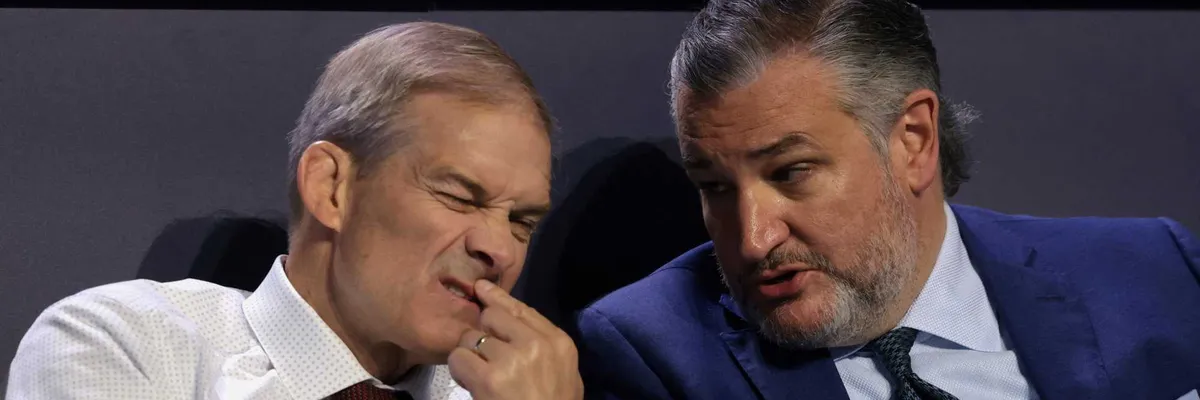
Republicans in Congress are divided over how to address the economic issues voters rank as their top concerns, with less than two months remaining before the midterm elections, according to a report by The Hill.
The Hill reported Monday that conversations with Republican lawmakers in Washington revealed a party "clashing over how to improve their weak polling numbers on the economy less than two months before Election Day." Members are increasingly concerned that persistently "high costs" for consumers could jeopardize Republican congressional majorities.
A central dispute involves President Donald Trump's new promise to pay every American adult $5,000 if Republicans prevail in November. Lawmakers remain divided over whether—and how—the proposal should be implemented.
"Senate Commerce Committee Chair Ted Cruz (R-Texas) says he would support the idea if the $5,000 payout is structured as a tax refund, but he warned that it should only go to people who work and pay taxes," The Hill reported.
"I think we should be incentivizing work. I don’t think we should be paying people that are not working," Cruz told the outlet.
Sen. Susan Collins of Maine, regarded as one of the most vulnerable Republicans in this election cycle, described the proposal as "extraordinarily costly." She also questioned why lawmakers would spend so much money sending payments to people who might not need assistance.
At the same time, many Republicans are "pushing for quick action" to secure an economic achievement before the midterms. Some lawmakers are advocating legislation aimed at reducing costs, including passage of the stalled farm bill and a cap on credit card fees. However, The Hill noted that little time remains to enact measures before Election Day.
The report cited a Senate Republican strategist who said concern is growing among congressional Republicans that economic conditions will not improve before Election Day. That concern, the strategist said, has prompted a scramble among GOP candidates to propose additional ways to reduce costs.
"Affordability and the war in Iran are going to continue on. They’re tied to each other. As long as the war in Iran continues, we will have high energy prices that will bleed over to consumers," the anonymous strategist said. "It just is a bad recipe."
Republicans are also divided over how to respond to soaring gasoline prices, which have again reached historic levels as Trump's Iran war continues. Sen. Josh Hawley of Missouri has proposed suspending the 18-cent federal gas tax to provide immediate relief. Some of his colleagues, however, have questioned whether the government should eliminate a significant source of funding.
"I hate taxes, I wish that there weren’t a gas tax but I also like driving on the road," Sen. Rand Paul of Kentucky said. "It’s a huge amount of money that just quits coming in."
With Election Day approaching, the debate leaves Republicans weighing the speed of any potential action against disagreements over the cost, eligibility rules and funding of the proposals under consideration.

