'We Screwed Up': After 2026 Midterm Losses, Republicans Avoid the Question of Trump
Key Takeaways
- •Republican leaders, including Speaker Mike Johnson, have avoided criticizing President Trump or offering explanations for the party's generational midterm losses, according to a New York Times report.
- •House Republicans chose Representative Jim Jordan, a close Trump ally, as their next leader, while Trump blamed lawmakers for failing to pass his agenda.
- •Senator Josh Hawley of Missouri argued the party must emphasize affordability and working-class voters, warning it will otherwise become a permanent minority party.
- •Few Republicans have called for a new policy agenda, with many viewing the losses as messaging-related and expecting Democratic overreach to help them in the next elections.
- •Iowa strategist David Kochel described the midterms as voters rejecting the president, while separate reporting portrayed Trump as appearing to deny the scale of the defeat.
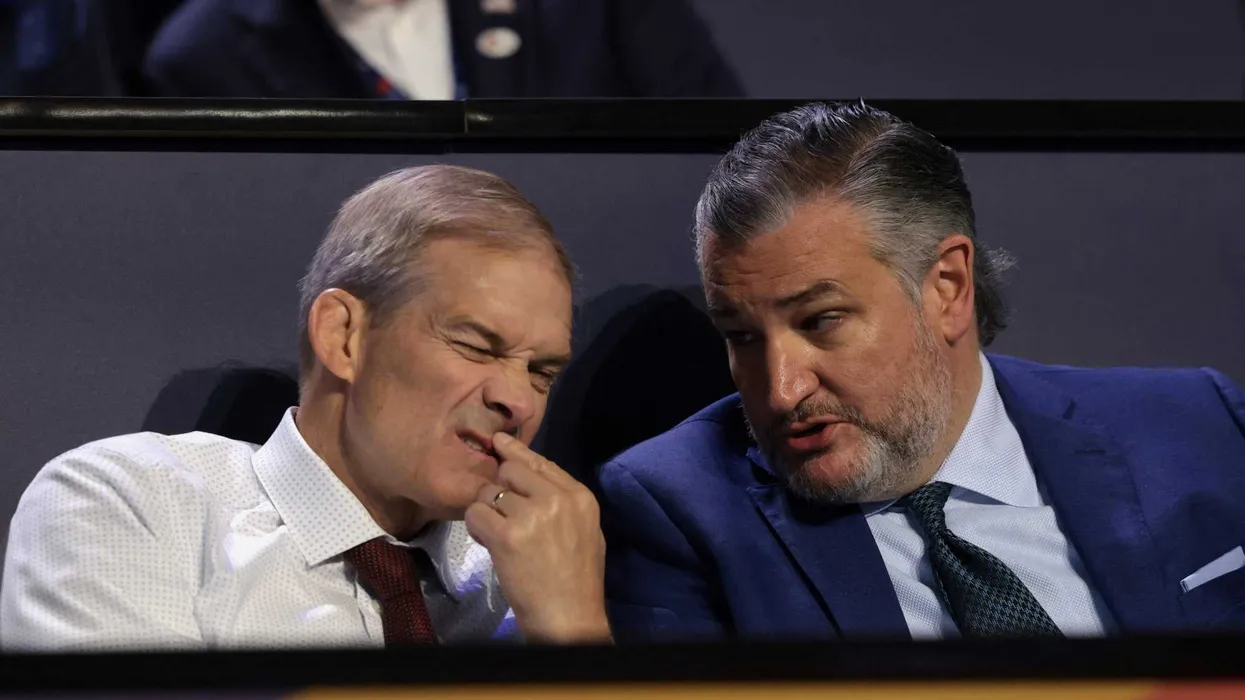
Following generational losses in the 2026 midterm elections, the Republican Party has been trying to determine what went wrong and how it can improve its performance in future contests. Yet according to a recent report in The New York Times, there is one possible mistake the party refuses to consider: whether it was too closely tied to President Donald Trump.
Midterm elections are conventionally read as referendums on the party that controls the White House, which gives the question of Trump's responsibility unusual weight: the answer will shape how the party positions itself for the remainder of his presidency and beyond.
"Mr. Trump's allies in Republican leadership, including Speaker Mike Johnson, have also avoided criticizing him or even offering much explanation of what went wrong," reported The New York Times' Bayliss Wagner on Sunday. "House Republicans just elected a close Trump ally, Representative Jim Jordan of Ohio, to be their next leader. And while Mr. Trump has acknowledged that he may have overstepped on immigration, on Friday he blamed lawmakers for failing to 'get the things that I wanted passed.'"
Wagner added, "The party's limited reckoning over the midterms foreshadows the coming battle over its direction now that Mr. Trump is a lame-duck president — and suggests that influential Republican figures may be reluctant to change course."
In the same report, Wagner described how the party is attempting to separate its messaging from Trump's unpopularity in ways that may not be politically feasible.
"But the messaging problem was hard to untangle from the party's actions," Wagner reported. "Many Republicans became increasingly vocal opponents of Mr. Trump's tariffs and the Iran war, which were a major driver of cost increases, particularly for gas and diesel. And some aspects of Mr. Trump's signature domestic policy law also proved unpopular, notably its cuts to Medicaid benefits."
Senator Josh Hawley, a Missouri Republican and potential 2028 presidential contender, said the election showed that his party must focus more on affordability issues and working-class voters. Wagner noted that Hawley told the Associated Press that "we're a blue-collar state, and I think the Republican Party will either be a blue-collar party or we will be a permanent minority party." With Trump ineligible to run for president again under the Constitution's two-term limit, the early maneuvering toward 2028 is set to be one arena in which competing diagnoses like Hawley's are tested against the party's reluctance to change course.
Overall, Wagner wrote, the party appears to be hoping to continue following Trump's policy path while Democrats undermine themselves.
"Few in the party have called for a new policy agenda, viewing the headwinds they faced in this year's midterms as temporary or strictly related to messaging," Wagner wrote. "Many are counting on Democrats to give them fodder for the campaign trail in two years by overreaching in oversight efforts or failing to deliver on their promises to lower costs."
By contrast, at least one Republican did acknowledge Trump's role in the outcome. David Kochel, an Iowa Republican strategist, told the Times that the midterms represented "a rejection of the president," and that "it felt to me like a bit of a recall election — like, 'We screwed up in 2024 and we're going to try to fix it as best we can.'"
The report was not the first to describe a seismic shift in the political landscape following the midterms. On Saturday, The Times' David French reported that "[Trump] got way over his skis, and so, here come the midterms, and the midterms were a genuine landslide. I mean, they were a genuine landslide. And so, all of a sudden, you've gone from a situation in which you're saying, 'Do we have permission to do investigations?' to 'Do we have a mandate that we must do investigations?'"
Meanwhile, The Times' Peter Baker reported shortly after the election that Trump himself had entered a state of seeming denial about the results.
"In the days since his defeat, he has sounded like a man in denial," Baker wrote. "With his party still picking through the wreckage of a political earthquake, a seemingly oblivious President Trump signed a steel beam for his new White House ballroom and flew to Florida to give a speech on the space program. He seems flat these days, maybe a little dazed."
In the months ahead, observable markers of the party's direction include whether the new House leadership under Representative Jim Jordan maintains the current policy path, whether arguments like Hawley's gain institutional backing ahead of 2028, and whether Democratic oversight produces the openings Republicans are counting on.
This article was originally published on Alternet.

