Towards AI Article Says Reliable AI Text Detection Faces Fundamental Limits
Key Takeaways
- •Demand for AI-text detectors increased in late 2022 as AI systems became capable of producing full essays and articles.
- •Modern detectors often use transformer-based classifiers, but they still lack a decisive rule for separating AI-generated text from human writing.
- •Reported detector gains can depend on benchmarks and training choices that may not reflect real-world conditions.
- •Paraphrasing and detector-guided rewriting can undermine detection tools in practical use.
- •The article concludes that institutions should treat detector scores as weak signals rather than conclusive evidence of authorship.
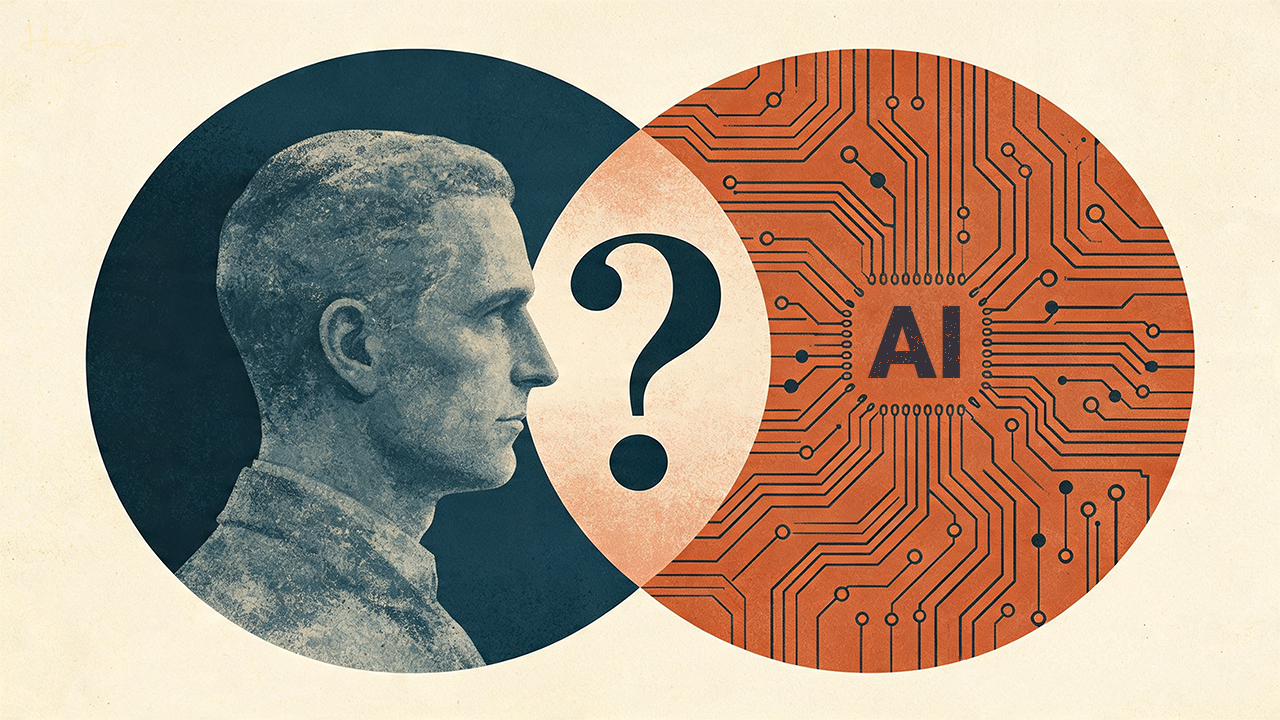
Towards AI published an article updated on July 27, 2026, examining why AI-generated text remains difficult to identify reliably, even as schools, universities, and other institutions continue to seek dependable detection tools. The piece was originally published on Towards AI and is also available on Medium.
The article focuses on the classifiers, watermarks, and theoretical limits behind AI-text detection. It says demand for reliable detectors emerged in late 2022, when AI systems became capable of writing full essays and articles without direct human composition. Educational institutions and other organizations then began looking for tools that could distinguish machine-generated writing from human work, especially in settings where authorship carries academic, professional, or policy consequences.
According to the article, early AI text detectors often relied on simple predictability measures such as perplexity. More recent systems use trained transformer-based classifiers that convert text into an embedding space and return a probability estimate for whether a passage is “AI” or “human.” However, the article notes that even these newer models do not provide a clear rule that can decisively separate AI-generated writing from human-authored writing.
The piece argues that reported improvements in detector performance can depend heavily on benchmark selection and training methods. Those choices may introduce shortcuts and biases, making detectors appear stronger in controlled tests than they are in practical settings. In real-world use, the article says, detectors continue to fail under changing writing conditions and adversarial attacks, including paraphrasing and detector-guided rewriting.
The author also presents a theoretical “ceiling” result. The article says reliable detection is fundamentally constrained by how similar human and AI text distributions can become. As AI-generated writing becomes more fluent and closer to human writing, detectors can be pushed toward performance that resembles random guessing. That framing makes the issue broader than any single product comparison: even improved classifiers may face limits if the text they evaluate no longer contains stable, detectable differences.
The article further describes hands-on tests with a commercial detector. In those tests, the author found surprising false positives on human writing, as well as unexpected results for mixed texts that appeared obvious. The conclusion is that institutions should treat detector scores only as weak signals rather than proof of authorship, because the underlying detection problem is likely not permanently solvable.

