Xiaomi Bets on 10,000mAh Battery as Redmi Note 17 Series Launches in Nigeria on September 30
Key Takeaways
- •The Redmi Note 17 Pro Max 5G carries a 10,000mAh silicon-carbon battery, which Xiaomi describes as the first smartphone sold in Nigeria to feature that capacity.
- •According to Xiaomi's internal laboratory testing, the Pro Max 5G can deliver up to four days of use on a single charge and supports 100W HyperCharge plus 27W wired reverse charging.
- •The series spans three tiers — a standard model with a 7,700mAh battery, a Pro 5G with 8,340mAh and 67W turbo charging, and the Pro Max 5G — enabling Xiaomi to address different price and performance priorities.
- •All three devices run HyperOS 3 based on Android 16 and are specified to receive four years of operating-system updates and six years of security updates.
- •Nigerian pricing, retail availability and the RAM and storage configurations to be offered locally are still unconfirmed ahead of the September 30 launch.
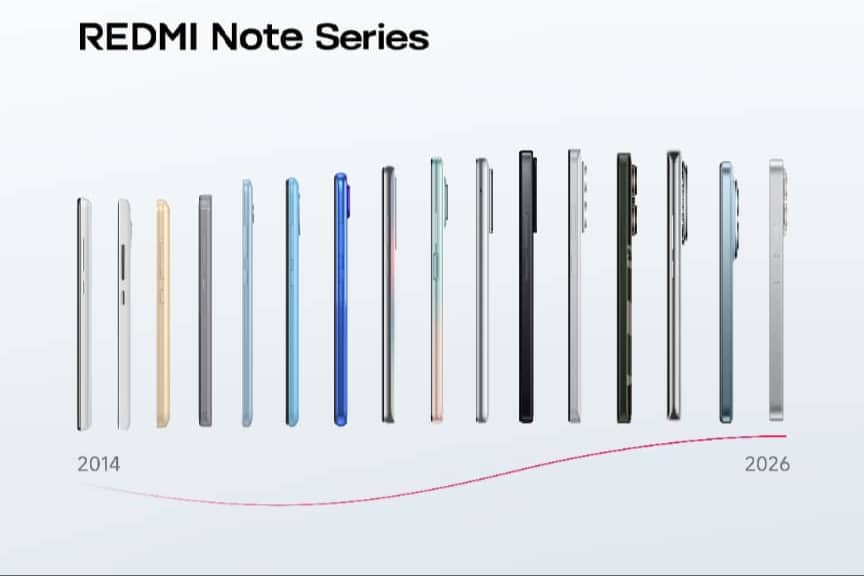
Xiaomi is counting on battery endurance to strengthen its position in Nigeria's competitive smartphone market, with the Redmi Note 17 Series set to launch in the country on September 30. The lineup's top-end model, the Redmi Note 17 Pro Max 5G, carries a 10,000mAh battery — a capacity the company describes as the first of its kind on a smartphone sold in Nigeria.
By leading with battery life, Xiaomi is shifting the terms of competition beyond the camera quality, processors and displays that have traditionally defined the mid-tier segment.
The Redmi Note 17 Series consists of three devices aimed at different parts of the mid-tier market: the Redmi Note 17, the Redmi Note 17 Pro 5G and the Redmi Note 17 Pro Max 5G.
The Pro Max 5G houses the largest smartphone battery Xiaomi has ever built, a 10,000mAh silicon-carbon unit. According to the company's internal laboratory testing, the battery can deliver up to four days of use on a single charge. The device also supports 100W HyperCharge fast charging and 27W wired reverse charging, which allows users to power compatible devices from the phone itself.
The bet on capacity reflects how heavily smartphone users now depend on their devices for mobile data, video streaming, social media, navigation, gaming and mobile work. Xiaomi is positioning battery capacity and endurance as a key differentiator for buyers who want to spend more time away from a charger.
The company said the Redmi Note 17 Series is designed for “power users, content creators, travellers” and others seeking long battery life, fast charging, durability and advanced AI and camera features.
Battery takes centre stage
The 10,000mAh cell marks the biggest departure yet from the capacities conventionally associated with mid-tier smartphones. While 5,000mAh batteries have long been common across the industry, Xiaomi has doubled that figure on the Redmi Note 17 Pro Max 5G.
The company said silicon-carbon battery technology makes it possible to accommodate the larger capacity while still meeting the phone's design and durability requirements. Silicon-carbon cells, which replace part of a conventional graphite anode, have increasingly featured in new smartphone releases as manufacturers look to raise energy density without significantly larger bodies. The 100W HyperCharge system is designed to replenish the battery quickly, while the 27W reverse wired charging feature enables the phone to supply power to other compatible devices.
Xiaomi's specifications state that the 10,000mAh figure represents the phone's typical battery capacity, and that actual charging performance can vary depending on factors including the environment and battery condition.
The battery push extends across the series rather than stopping at the Pro Max model. The Redmi Note 17 Pro 5G comes with an 8,340mAh typical battery and 67W turbo charging, alongside 22.5W reverse charging. The standard Redmi Note 17 has a 7,700mAh typical battery with 45W turbo charging, also paired with 22.5W reverse charging. That gives Xiaomi three distinct battery propositions within one product family, allowing it to target consumers with different performance and price priorities.
Beyond the battery
The Redmi Note 17 Pro Max 5G pairs its large battery with a 6.83-inch 1.5K CrystalRes AMOLED display and a 120Hz refresh rate. The panel is protected by Corning Gorilla Glass Victus 2, and the phone carries IP66, IP68, IP69 and IP69K ratings for dust and water resistance. Xiaomi says the device can withstand water exposure of up to two metres for 72 hours and has certified three-metre resistance. The combination of a high-refresh AMOLED panel, Victus 2 glass and IP69K-level reflects how features once associated with flagship devices continue to reach the mid-tier.
It is powered by Qualcomm's Snapdragon 6 Gen 5 mobile platform, a 4nm processor designed for everyday performance, multitasking and AI workloads. In some markets, the Pro Max 5G is available with up to 8GB of RAM and 512GB of storage, using LPDDR5X memory and UFS 4.1 storage.
For photography, the device features a 50-megapixel main camera with optical image stabilisation and an 8-megapixel ultra-wide camera. The front camera is 32 megapixels, and both the rear and front cameras support 4K video recording at 30 frames per second. Xiaomi is also promoting an AI ultra-clear imaging system as part of the camera experience.
The Redmi Note 17 Pro 5G offers a 6.83-inch 1.5K AMOLED display with a 120Hz refresh rate, up to 3,500 nits peak brightness and 12-bit colour depth. It runs on the Snapdragon 6s 6G Gen 4 processor and supports 5G connectivity. Its camera system comprises a 50-megapixel main camera with OIS, an 8-megapixel ultra-wide camera and a 16-megapixel front camera.
The base Redmi Note 17 features a larger 6.99-inch FHD+ AMOLED display with a 120Hz refresh rate and up to 1,800 nits peak brightness. It runs on the Snapdragon 6s 4G Gen 2 platform and comes in several RAM and storage configurations, including up to 8GB of RAM and 256GB of storage.
Built for longer use
Durability and longer-term use form another pillar of the series' positioning. All three models fall under the company's “Built for Years” branding, while the Pro models combine large batteries with enhanced dust and water protection.
The series runs Xiaomi HyperOS 3 based on Android 16. Xiaomi's specifications also point to four years of operating-system updates and six years of security updates — support that could extend the phones' useful life beyond the typical replacement cycle for mid-tier smartphones.
Entertainment is another part of the product strategy. The Pro 5G and Pro Max 5G feature dual speakers with Dolby Atmos and Hi-Res Audio support. Xiaomi says the Pro Max can deliver up to a 400 percent volume boost, the Pro 5G up to 300 percent and the standard Redmi Note 17 up to 200 percent, although actual performance depends on software and usage conditions.
Nigeria launch
The September 30 launch gives Xiaomi an opportunity to introduce its battery-led proposition to Nigerian consumers, whose smartphones serve as tools for communication, entertainment, navigation, content creation and mobile work. The company is presenting the larger batteries as a way to reduce how often users need to recharge. Details still to be confirmed at the launch include Nigerian pricing, retail availability and which RAM and storage configurations will be offered locally — the Pro Max 5G's top tier of up to 8GB of RAM and 512GB of storage has so far been described as available in some markets.
With battery capacities ranging from 7,700mAh on the standard model to 10,000mAh on the Pro Max 5G, the series also allows Xiaomi to cover multiple market segments through a single product family. Xiaomi has published full specifications on its official Redmi Note 17 Series launch page.
Globally, Xiaomi unveiled the Redmi Note 17 Series in August 2026, with the devices subsequently introduced in markets including India. For Nigeria, however, the September 30 launch marks the arrival of the company's biggest battery proposition yet, with the Redmi Note 17 Pro Max 5G becoming the first smartphone in the country to feature a 10,000mAh battery.
The launch signals Xiaomi's attempt to make battery endurance a more prominent consideration in the mid-tier smartphone market, alongside the specifications that have traditionally shaped competition in the segment.

