The Red Sea Is Becoming Saudi Arabia's Biggest Oil Bottleneck
Key Takeaways
- •The Houthi blockade at Bab El Mandab since late 2023 has exposed a critical gap in Saudi Arabia's assumption that its East-West Pipeline to Yanbu could fully mitigate Strait of Hormuz disruptions.
- •Egypt's SUMED pipeline has an effective throughput of approximately 2.3 to 2.5 million barrels per day, which is roughly half the capacity Saudi Arabia would require if Bab El Mandab remains inaccessible.
- •Fully loaded Very Large Crude Carriers, the backbone of Saudi export logistics, cannot transit the Suez Canal due to draft restrictions despite repeated expansions over the past decade.
- •Asian buyers including China, India, Japan, and South Korea could see crude transit times double from three to six or seven weeks if forced to reroute through Suez and around the Cape of Good Hope.
- •Longer rerouting distances effectively reduce the global tanker fleet's available transport capacity, tightening shipping markets well beyond Saudi exports and compounding constraints already created by sanctions on Russian crude.
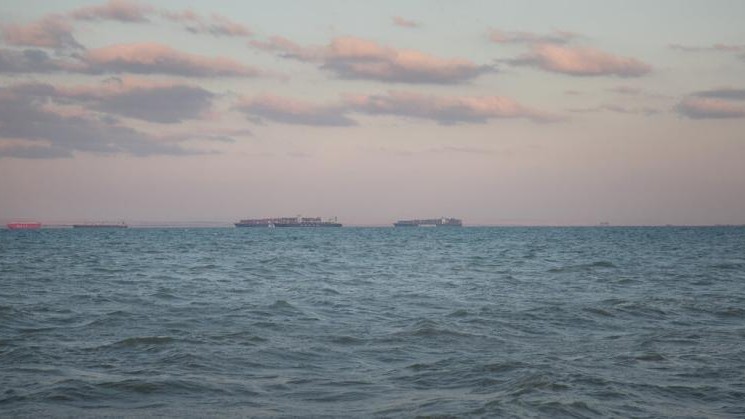
For years, Saudi Arabia's strategic response to any disruption in the Strait of Hormuz has been remarkably straightforward: pump crude westward through the East-West Pipeline to Yanbu on the Red Sea. Markets have long found this reassuring, as it strengthens Saudi energy security and reduces dependence on Hormuz. However, current developments in the Red Sea—particularly at Bab El Mandab, one of the world's most critical maritime oil chokepoints through which roughly 6–8 million barrels per day of crude and refined products normally transit—have exposed a critical weakness in that assumption. The East-West Pipeline does not solve the entire problem, because once crude reaches Yanbu, it still has to exit the Red Sea. Bab El Mandab is now inaccessible due to a sustained Houthi blockade, part of a broader campaign of attacks on commercial shipping in the Red Sea that has been underway since late 2023 and has already forced many container lines and tanker operators to reroute around Africa. The Kingdom faces a logistical challenge with significant geopolitical implications, as a closure could disrupt global oil markets and shift strategic power balances.
The Suez Canal offers an apparent alternative. At first glance, it is an elegant option—the canal continues to operate, and Egypt also controls the SUMED pipeline. The reality, however, is more complicated. The Suez route was never designed to replace unrestricted access through Bab el-Mandab for several million barrels per day of Saudi crude, refined products, and petrochemical exports. It can absorb additional traffic, but not without creating new bottlenecks, longer transit times, and significantly higher costs for global energy markets.
With the East-West Pipeline's nameplate capacity of approximately seven million barrels per day, crude can indeed reach Yanbu on the Red Sea. A substantial portion of this volume feeds domestic refineries and petrochemical facilities in western Saudi Arabia, but the remainder must be exported. Since the Iran war and the Hormuz crisis, Yanbu has rapidly evolved into the Kingdom's principal export outlet, providing strategic flexibility by allowing exports to continue while reducing exposure to Iranian threats in the Gulf. These vulnerabilities, however, highlight the need for policymakers and strategic planners to reassess alternative routes, diversify export infrastructure, and develop contingency plans.
If Bab El Mandab is closed or threatened, the advantage of the Yanbu route disappears. Every cargo loaded there must make a fundamental routing choice. Cargoes bound for Europe or the United States can transit the Suez Canal without major complications. Asian-bound volumes—representing the overwhelming majority of Saudi crude consumption—face a far more circuitous path: north through the entire Red Sea to the Suez Canal, into the Mediterranean, and then around the Cape of Good Hope before eventually returning east toward Asia. These volumes now confront one of the longest energy transport routes in the world.
The physical limitations of the Suez Canal itself pose an additional challenge. Saudi crude exports rely on Very Large Crude Carriers (VLCCs), each capable of transporting roughly two million barrels. For long distances, VLCCs offer the lowest transportation costs and have become the backbone of Saudi export logistics. However, a fully loaded VLCC cannot transit the Suez Canal due to draft restrictions. Despite repeated expansions over the past decade, the canal still cannot accommodate these vessels at full cargo capacity.
The only existing solution is Egypt's SUMED pipeline, a twin pipeline system running from Ain Sokhna on the Red Sea to Sidi Kerir on the Mediterranean. It allows crude to be unloaded from VLCCs before canal transit and reloaded after reaching the Mediterranean. Normally, this operates very efficiently. The question is not whether SUMED functions, but whether it possesses sufficient capacity to absorb a sudden and sustained diversion of several million barrels per day from Yanbu. The answer is no.
SUMED's effective throughput is estimated at 2.3 to 2.5 million bpd—more than adequate for existing commercial flows, but far short of accommodating the potential export volumes that could be redirected if Bab el-Mandeb became unavailable. Based on Yanbu volumes, the Kingdom would require nearly twice that capacity. SUMED also carries existing pipeline commitments, commercial cargoes from other regional producers, and routine operational maintenance requirements. Taken together, SUMED rapidly transforms from a strategic solution into another strategic bottleneck.
The first consequences would surface at Ain Sokhna, where every additional VLCC requiring partial discharge before canal transit would occupy berth space, storage facilities, pumping systems, and loading equipment for longer periods. Congestion and demurrage would become a reality. The same would occur at Sidi Kerir, where crude would need to be reloaded. Each transfer operation adds complexity to what was previously a direct export chain. Hours become days, and days quickly become weeks as queues form.
The Suez Canal itself would act as a further constraint. It remains one of the busiest maritime corridors in the world, carrying container ships, LNG carriers, bulk vessels, cruise ships, naval traffic, and oil tankers in carefully managed convoys. Even after expansion, the canal operates within practical limits—every vessel requires pilots, tug support where necessary, traffic management, and scheduled convoy slots. If several dozen extra crude carriers and product tankers begin entering the canal each week, congestion becomes inevitable, with longer transit schedules, filled anchorage areas, and additional waiting times. Security procedures are also likely to become more stringent, adding further delays and significantly reducing the route's overall efficiency.
For refined petroleum products, the situation is hardly less challenging. Saudi Arabia exports large volumes of diesel, gasoline, jet fuel, naphtha, fuel oil, and liquefied petroleum gas from Yanbu. These products are generally transported by Medium Range and Long Range product tankers, which can transit the Suez Canal without relying on SUMED. However, these additional vessels will compete for canal slots, pilot availability, terminal access, and anchorage capacity alongside crude carriers.
The global impact would be severe and swift, especially for refined products. Refineries and fuel distributors generally operate with smaller storage buffers than upstream crude producers, meaning any delay will disrupt delivery schedules, tighten regional inventories, and increase wholesale prices—much faster than comparable interruptions in crude supply.
For Asian buyers, a closure of Bab El Mandab forcing a Suez reroute is highly significant. China, India, Japan, and South Korea collectively account for the overwhelming majority of Saudi crude exports. Rerouting through Suez before sailing around the Cape of Good Hope would add thousands of nautical miles to each voyage. Transit times could reach six or even seven weeks, compared to the normal three. Each additional week at sea translates directly into higher bunker consumption, higher costs, and significantly higher working capital requirements for both exporters and importers. While these nations hold strategic petroleum reserves, those stockpiles were sized for conventional disruption scenarios—not for a semi-permanent structural rerouting of their primary supply source.
This also creates an often-overlooked structural problem for the global tanker market. Longer distances effectively remove vessels from the available fleet for extended periods. No ships are actually lost, but the industry's effective transport capacity declines sharply. This tightening extends beyond Saudi exports, as VLCCs diverted onto longer routes reduce vessel availability for other Gulf producers. At the same time, demand for Suezmax and Aframax tankers will increase—particularly for vessels serving Mediterranean and European trades. The timing compounds the difficulty: global tanker availability had already tightened as Western sanctions on Russian crude redirected vessels toward longer non-European routes, reducing the pool of ships available to absorb a Red Sea crisis.
The cumulative effect of these operational constraints is far greater than the sum of their individual parts. They fundamentally reduce the flexibility and efficiency upon which modern oil markets depend. Energy security is increasingly determined not only by production capacity but by logistical resilience. In recent years, enormous investments have been made in expanding oil production, constructing pipelines, and developing export terminals. The lack of comparable attention to the resilience of maritime corridors connecting all of these assets is now being felt.
All of this represents a fundamental shift in thinking for energy markets. The world's focus has traditionally been on production losses measured in barrels per day. Saudi Arabia's widely cited spare production capacity of roughly 2–3 million bpd—a traditional stabilizing lever during supply shocks—offers little comfort if the oil cannot physically reach its destination. Increasingly, the decisive factor will be barrels that can actually reach customers on time.
Saudi Arabia's East-West Pipeline remains an extraordinary strategic asset, but it cannot overcome maritime geography. Without secure access through Bab el-Mandab, the Suez Canal and the SUMED pipeline become critical fallback options—not complete solutions. The next major energy crisis may not be determined by how much oil Saudi Arabia can produce, but by how efficiently that oil can leave the Red Sea and reach the markets that depend upon it. At present, oil and product prices are reflecting the impact of these geographic constraints, with no upper limits established.
By Cyril Widdershoven for Oilprice.com

