REalloys and JS Link Partner to Build Fully Integrated Non-Chinese Rare Earth Magnet Platform
Key Takeaways
- •REalloys and JS Link aim to create one of the first fully integrated non-Chinese rare earth magnet platforms, covering every production stage from feedstock to finished magnets within a single North American industrial strategy.
- •The U.S. Army selected REalloys for exclusive negotiations to develop heavy rare earth processing facilities at the Tooele Army Depot in Utah, establishing the processing backbone for a domestic supply chain.
- •REalloys has invested approximately $20.6 million to expand Saskatchewan's rare earth processing facility, securing preferred access to up to 80% of its output with commercial production targeted for early 2027.
- •China's expanding export controls track Chinese-origin materials globally, pressuring worldwide suppliers to halt transfers of designated dual-use products to targeted American firms including MP Materials and USA Rare Earth.
- •Major U.S. defense manufacturers including Boeing, Northrop Grumman, Kratos Defense, and AeroVironment rely heavily on rare earth-intensive components and stand to benefit from a secure domestic magnet supply chain.
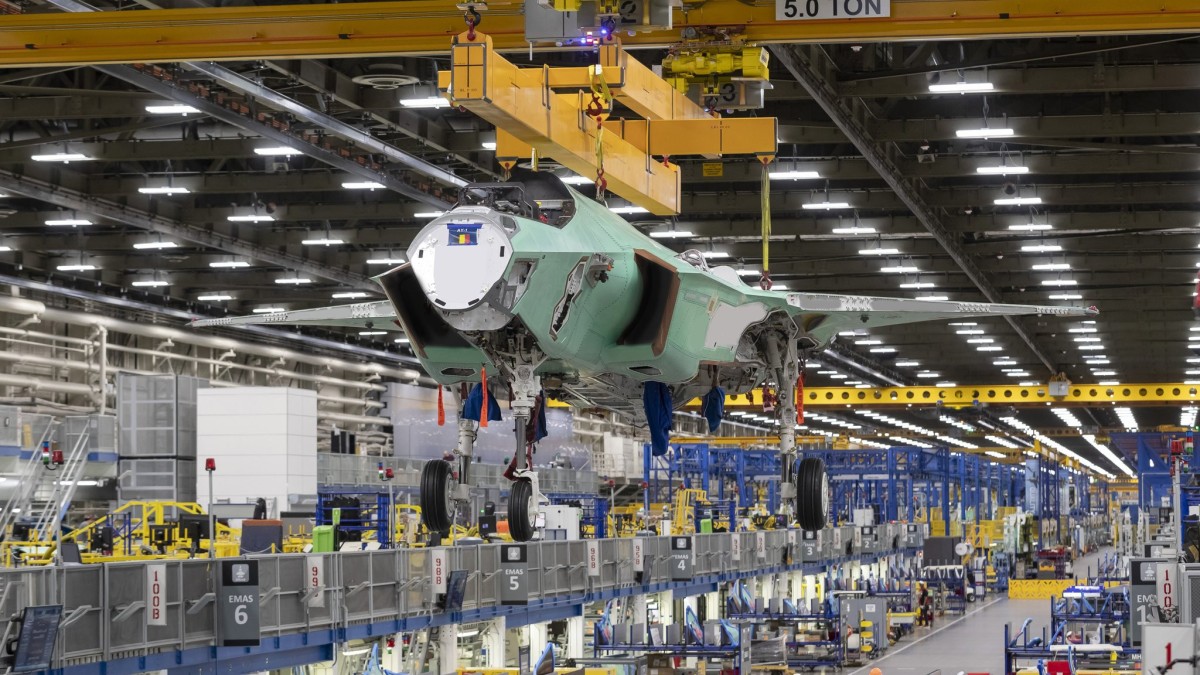
REalloys (NASDAQ: ALOY) has signed a strategic agreement with permanent magnet manufacturer JS Link to develop one of the first fully integrated non-Chinese rare earth magnet platforms, combining feedstock, separation, metallization, and permanent magnet manufacturing under a single North American industrial strategy.
The agreement creates a path to producing American rare earth magnets entirely on U.S. soil, a development with broad implications for national security and industrial independence.
Strategic Context: China's Dominance and U.S. Response
Permanent magnets are essential components in guided missiles, fighter aircraft, submarines, industrial robots, electric vehicles, AI infrastructure, and wind turbines. The most powerful commercial permanent magnets are made from neodymium-iron-boron (NdFeB) alloys, with small additions of dysprosium or terbium to preserve magnetic strength at the high temperatures found in defense systems and electric vehicle motors. These heavy rare earth elements are among the most difficult to source outside China, where nearly all heavy rare earth separation and metallization currently takes place.
China currently manufactures the overwhelming majority of these magnets, giving Beijing significant leverage over industries central to military modernization, advanced manufacturing, and the global energy transition.
The REalloys–JS Link agreement builds on a series of rapid developments. Only weeks earlier, REalloys was selected by the U.S. Army for exclusive negotiations to develop heavy rare earth processing facilities at the Tooele Army Depot in Utah. That project positioned the company at the center of Washington's effort to rebuild domestic rare earth processing capacity ahead of the Department of Defense's January 1, 2027 ban on Chinese-origin rare earth magnets.
The U.S. Army project established the processing backbone, while the JS Link partnership adds permanent magnet manufacturing. Together, the two initiatives encompass every major stage of rare earth production — from feedstock through finished magnets — within a single American industrial platform.
"In rare earths, strategic advantage belongs to the country that builds the magnets. That's the capability we're building here in the United States," REalloys CEO Lipi Sternheim told Oilprice.com.
Building the Industrial Base: Saskatchewan and Beyond
The JS Link agreement adds the final manufacturing capability to a chain that REalloys had been assembling across feedstock, processing, and metallization.
The center of the buildout is Saskatchewan, Canada. REalloys committed approximately $20.6 million to expand the Saskatchewan Research Council's rare earth processing facility, securing preferred rights to up to 80% of its expanded output, including neodymium-praseodymium (NdPr) metal and separated dysprosium and terbium oxides. Commercial production is targeted to begin in early 2027.
Separated oxides remain an intermediate product. Before they can become permanent magnets, they must be converted into high-purity metals, alloyed, and then manufactured into finished magnets. REalloys is also funding a dedicated heavy rare earth metallization facility to convert dysprosium and terbium oxides into metals, creating what is expected to become the largest heavy rare earth metallization operation outside China.
The first qualification-scale materials from this facility are expected in the fourth quarter of 2026, which would place North American-produced dysprosium, terbium, and NdPr into customers' hands for evaluation ahead of commercial production — moving the project from industrial construction into the final pre-sales stage.
Secured Feedstock Supply
REalloys has secured multiple feedstock sources:
- A definitive long-term offtake agreement for 15% of Phase 1 production from Critical Metals' Tanbreez project in Greenland.
- A strategic alliance and offtake commitment tied to the Sheep Creek rare earth deposit in Montana.
- A proposed supply framework with Ramaco Resources for coal-hosted rare earth material from the Brook Mine platform in Wyoming.
The company continues to pursue additional supply from domestic and allied sources.
China's Expanding Export Controls
American rare earth companies are now operating under the assumption that access to Chinese materials can be cut off at any time. Beijing has been expanding its export control regime to police Chinese-origin materials even after they leave China.
Under China's latest export controls, foreign companies and individuals worldwide are prohibited from supplying designated American firms with certain dual-use products. Companies targeted include rare earth producer MP Materials and rare earth magnet manufacturer USA Rare Earth.
The restrictions go beyond blocking exports from Chinese companies. Beijing has instructed organizations and individuals worldwide to suspend existing transactions and halt transfers of designated Chinese-origin dual-use materials to the targeted American firms. In effect, the restrictions follow the material itself rather than the exporter, giving Beijing an additional layer of influence over global supply chains built around Chinese processing.
China's Commerce Ministry justified the measures on national security grounds, describing them as necessary to protect China's strategic interests and fulfill its international non-proliferation obligations.
The threat of supply disruption is not hypothetical for countries dependent on Chinese rare earth output. In 2010, during a diplomatic standoff between Beijing and Tokyo over the Senkaku Islands, China temporarily suspended rare earth exports to Japan, an event that accelerated Japanese investment in alternative supply chains and recycling programs and underscored how quickly access to critical materials could become an instrument of geopolitical pressure.
Implications for U.S. Defense Manufacturers
The strategic importance of a domestic rare earth supply chain extends well beyond the rare earth sector itself. Several major U.S. defense manufacturers rely heavily on rare earth-intensive components:
- Kratos Defense & Security Solutions (NASDAQ: KTOS) — a major supplier of drones, hypersonic systems, and advanced defense technologies — relies on high-performance permanent magnets for many of its next-generation platforms.
- Boeing (NYSE: BA) has a growing interest in securing reliable domestic magnet supplies as it expands production of military aircraft, satellites, and autonomous defense systems.
- Northrop Grumman (NYSE: NOC) depends on rare earth-intensive components across missile defense, radar, electronic warfare, and space programs.
- AeroVironment (NASDAQ: AVAV), one of the Pentagon's leading drone manufacturers, uses permanent magnets in electric propulsion systems, guidance technologies, and precision defense electronics.
As Washington rebuilds a domestic mine-to-magnet ecosystem, these companies stand to benefit from greater supply security and reduced dependence on Chinese processing.
An Industry Taking Shape
For most of the past three decades, the United States operated under the assumption that global supply chains would remain open regardless of geopolitical tensions. The country was once the world's leading rare earth producer, with the Mountain Pass mine in California dominating global supply through the 1980s before China's low-cost production, supported by fewer environmental constraints and state subsidies, gradually displaced American and other Western producers. Export controls, procurement rules, sanctions, and investment restrictions are now becoming permanent features of the industrial economy.
Both the Trump and Biden administrations invoked the Defense Production Act to direct federal capital toward domestic rare earth processing and separation projects, treating critical mineral supply chains as a national security priority on par with semiconductor manufacturing.
In this environment, companies capable of producing defense-qualified rare earth materials entirely within North America occupy a strategically distinct position. An integrated American rare earth industry is taking shape years faster than many anticipated. An industrial base that took China decades to build is now being reconstructed across North America in a matter of years, with REalloys positioned at the center of that effort.
By Charles Kennedy, OilPrice.com

