Pi Network Discussion Highlights Utility, Not Just Token Count, in 10,000 Pi Debate
Key Takeaways
- •Pi Network launched its Open Network on February 20, 2025, removing the enclosed Mainnet boundary and allowing external applications and organizations to connect with the Pi blockchain.
- •A social media post suggesting that holding 10,000 Pi could be comparable to earning a high salary represents an ambitious community prediction rather than a guaranteed financial outcome.
- •The economic value of Pi tokens depends on ecosystem utility factors such as merchant adoption, application usage, transaction volume, and developer activity rather than on token count alone.
- •In June 2026, Pi Network announced new initiatives in computing, AI, and identity, including SoloHost, a framework enabling developers to build applications supporting local AI and future distributed computing use cases.
- •A Pi balance is an asset whose realizable value is affected by market liquidity and actual demand, making it economically distinct from a predictable salary income stream.
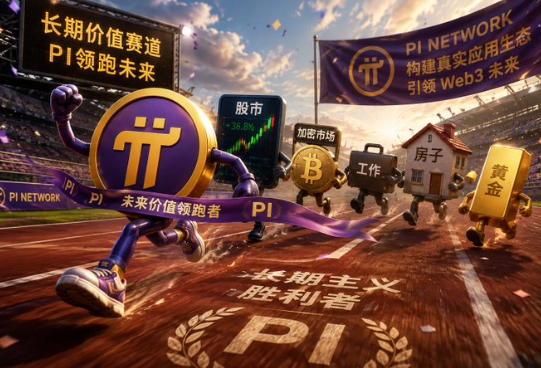
For years, the Pi Network community has debated one major question: what could a large Pi balance eventually be worth?
Pi Network is a cryptocurrency project that allows users — called Pioneers — to mine and earn coins through daily mobile participation rather than through energy-intensive hardware. Since its launch, the project has attracted a global userbase drawn to its low-barrier model, though it remains in a developmental phase with its token not yet widely traded on major exchanges.
A recent discussion shared by X account @Haioesg presented a different way of looking at the issue. The post suggested that holding 10,000 Pi and participating in the development of the Pi ecosystem could eventually represent an economic opportunity comparable to earning a high salary in a developed country.
The claim is ambitious. But behind the speculation is a more important question: what if the future significance of holding Pi is determined less by the number shown in a wallet and more by the economic activity that develops around it?
That distinction matters because Pi Network has consistently described its long-term objective around utility. According to Pi Network's official documentation, the utility of Pi is intended to be supported by the time, attention, goods and services exchanged by members of the network.
In other words, the real story may not be how many Pi a Pioneer owns. The bigger question is what those Pi can eventually be used for.
Why 10,000 Pi Attracts Attention
A balance of 10,000 PI sounds significant because it represents a large number of individual tokens.
However, the number itself does not determine the economic value of the balance.
In cryptocurrency markets, value depends on several factors, including supply, demand, liquidity, utility, adoption and market conditions.
For Pi, there is another important factor: the development of the ecosystem.
If PI becomes widely used for goods and services, applications, digital transactions and other forms of economic activity, a large balance could potentially become more useful. If adoption remains limited, however, simply holding a large number of tokens would not automatically create wealth.
That is why claims about 10,000 PI should be viewed as possible scenarios rather than guaranteed financial outcomes.
Pi Was Designed Around Participation
Pi Network's original economic model places considerable emphasis on participation.
Its whitepaper describes meritocratic mining as a mechanism intended to reward contributions that help build and sustain the network. The model includes different forms of participation, including mining, referrals, ecosystem activity and other contributions.
The idea is fundamentally different from simply purchasing a fixed amount of cryptocurrency at the beginning of a project.
Pioneers were encouraged to participate in the network while it was being developed. That participation could include maintaining daily mining activity, creating Security Circles — groups of mutually trusted users that help validate transactions and strengthen network integrity — operating Nodes, using applications and engaging with the ecosystem.
Pi Network's current support documentation continues to describe several forms of contribution that can affect mining rewards, including Security Circles, referral activity, lockups, application usage and Node operations.
This helps explain why some early community members view their accumulated Pi as more than a conventional cryptocurrency balance. They see it as the result of years of participation.
The Original Idea Was Broader Than Price
The central concept behind Pi was never simply to create another speculative cryptocurrency.
Pi Network's official explanation of utility says the network is intended to bring together goods, services, attention and participation around a common digital currency.
That vision matters when considering the potential significance of a 10,000 PI balance.
In an ecosystem where PI can be used for a growing range of activities, a user could potentially spend Pi on digital services, exchange Pi for goods, use Pi in applications, or receive Pi as payment for services. Businesses could also accept Pi from customers.
In such an environment, a wallet balance could have practical economic meaning beyond its market price.
Utility Is the Real Test
One of the biggest challenges facing any cryptocurrency is utility. Across the broader blockchain industry, thousands of tokens have launched with ambitious promises, yet many have failed to generate lasting economic use beyond initial speculative trading. This pattern makes utility the single most important variable for distinguishing projects with long-term staying power from those that fade.
A token can attract attention because of speculation. But sustainable demand requires reasons for people to actually use it.
Pi Network has repeatedly emphasized this principle. Its official documentation describes a utilities-driven ecosystem in which Pioneers can use Pi through applications and transactions for real goods and services.
That means the future of Pi cannot be measured solely through price charts.
Other indicators could be just as important:
- How many businesses accept Pi?
- How many applications use Pi?
- How frequently are transactions taking place?
- How many developers are building?
- How many users are actively using ecosystem services?
- How much economic activity is taking place?
These questions may ultimately tell a more meaningful story about Pi's long-term potential.
What Makes 10,000 PI Different From a Salary?
The original social media post compares 10,000 PI with the income from a high-paying job in a developed country.
That comparison should be handled carefully.
A salary is an income stream. A Pi balance is an asset. They are economically different.
Someone earning a high salary receives predictable income over time, subject to employment and economic conditions. Someone holding 10,000 PI owns a cryptocurrency balance whose market value can fluctuate significantly.
Therefore, 10,000 PI should not be described as equivalent to a high-paying job today.
The comparison only becomes conceptually interesting when discussing a hypothetical future in which the Pi ecosystem generates substantial economic utility and demand.
In that scenario, a large PI balance could potentially become an economically meaningful asset. But that remains dependent on future developments.
Early Participation Could Become More Important
Pi Network's mining model was designed to reward early participation.
The official whitepaper explains that early members received higher mining rewards because they were contributing to a network that was still small and developing. The mining rate subsequently declined as the network grew and the system moved toward a supply-limited reward model.
This creates an interesting dynamic.
People who accumulated Pi during the early years may hold larger balances than users who joined later. If the network eventually achieves substantial utility, early balances could theoretically become more valuable in economic terms.
But there is another side to this argument.
A large supply of tokens held by early participants can also create potential selling pressure if those holders decide to sell.
Therefore, early accumulation alone does not guarantee future appreciation. The ecosystem still needs genuine demand.
Lockups Show the Importance of Long-Term Participation
Pi Network has also introduced mechanisms designed to encourage long-term engagement.
The Mainnet lockup feature allows migrated Pioneers to voluntarily lock Pi for a selected period in exchange for increased mining rewards according to the network's reward mechanism. Pi says the feature is intended to support ecosystem stability and encourage long-term participation.
This is relevant to the discussion around large Pi balances.
The network is not designed around the assumption that every token should immediately enter the market.
Some Pi can be locked. Some can potentially be used within applications. Some can be held. Some may eventually be spent.
These different behaviors can influence the economic dynamics of the ecosystem.
10,000 PI Does Not Automatically Mean Wealth
This point deserves emphasis.
Owning 10,000 PI does not automatically make someone wealthy.
The value of those tokens depends on the actual market conditions and utility surrounding PI.
Even if a hypothetical price target makes 10,000 PI appear extremely valuable on paper, liquidity matters. A theoretical valuation is different from being able to sell or spend an asset at that valuation.
For example, if someone calculates that 10,000 PI would be worth a large amount at a certain price, that does not necessarily mean the entire balance could be sold immediately at that price without affecting the market.
This distinction is especially important in cryptocurrency. Market capitalization, quoted price and realizable value are not identical concepts. Large theoretical market capitalizations can mask thin order books, meaning that attempting to sell a substantial holding could move the price downward — a well-known challenge in less liquid crypto markets.
The Pi Ecosystem Could Matter More Than the Token Count
The most interesting part of the 10,000 PI discussion may therefore be the ecosystem itself.
Suppose thousands of applications begin using PI. Suppose merchants increasingly accept it. Suppose service providers begin pricing products in Pi. Suppose digital marketplaces use PI for settlement. Suppose developers build applications that require or benefit from Pi transactions.
In that scenario, the cryptocurrency would have more economic functions.
The balance in a Pioneer wallet could become a gateway to a larger digital economy.
This is the type of outcome Pi Network appears to be targeting through its utility-focused development strategy.
Open Network Changed the Environment
The launch of Pi Network's Open Network on February 20, 2025 was an important milestone.
Prior to Open Network, Pi operated in an enclosed Mainnet phase where transactions were restricted to internal transfers among identity-verified Pioneers and external connectivity was deliberately limited. Open Network removed that boundary.
Pi Network described Open Network as a major step that connected its blockchain, identity-verified community and Web3 ecosystem with the external world.
The significance of Open Network is that Pi is no longer being developed solely inside a closed environment.
External applications and organizations can interact with the Pi blockchain under the network's Open Network framework. Pi's official documentation explains that external applications and organizations can connect and transact with the Pi Mainnet blockchain during the Open Network period.
That creates more possibilities for real-world utility. It also creates greater expectations.
The ecosystem must now demonstrate that external connectivity can translate into meaningful economic activity.
Pi Is Expanding Beyond Simple Transactions
Another development worth watching is the expansion of Pi's ecosystem beyond basic payments.
In June 2026, Pi Network announced new initiatives involving computing, AI and identity. One of those developments, SoloHost, is described as an open framework that allows developers to build and list applications capable of supporting local AI and, in the future, distributed computing use cases.
This matters because utility can take many forms.
PI does not necessarily have to be useful only for buying physical products. It could potentially become part of digital services, applications, identity systems, computing markets and other Web3 activities.
The more diverse the utility, the broader the potential economic role of the ecosystem.
A 10,000 PI Holder Could Also Be an Ecosystem Participant
The phrase "holding 10,000 PI" can make people think exclusively about investment.
But Pi Network's design encourages a broader concept of participation.
A Pioneer can potentially contribute through application usage. Another can operate a Node. Another can build an application. Another can provide goods or services. Another can participate in Security Circles.
The ecosystem is intended to connect these different activities.
Pi Network's whitepaper specifically describes mining and reward mechanisms as tools for bootstrapping network growth, security and the development of a utility-based ecosystem.
Therefore, the potential significance of a 10,000 PI balance could depend partly on whether the holder participates in the economy rather than simply holding the tokens.
What Could Create Demand for Pi?
For the 10,000 PI thesis to become meaningful, demand would have to grow.
Several factors could contribute:
- Merchant adoption could increase.
- More applications could require PI transactions.
- Developers could create services with genuine consumer demand.
- Users could begin spending Pi more frequently.
- Businesses could hold PI as part of their ecosystem operations.
- External platforms could integrate Pi-based services.
- Decentralized computing or other infrastructure initiatives could create additional use cases.
None of these outcomes is guaranteed.
But together, they represent the types of developments that could transform PI from a community-held cryptocurrency into a more active digital economic medium.
Why Developers Matter
Developers are often overlooked in discussions about cryptocurrency value.
Yet applications create reasons for people to use a blockchain.
Without useful applications, even a large community can struggle to generate sustainable economic activity.
Pi Network has repeatedly emphasized application development as part of its ecosystem strategy.
Its whitepaper describes app usage rewards as a mechanism intended to help developers gain access to users and create a market environment for testing and improving decentralized applications.
This creates a potential feedback loop.
More developers create applications. More useful applications attract users. More users generate transactions. More transactions create opportunities for businesses. More businesses can attract additional users.
If that cycle becomes strong enough, utility can reinforce ecosystem growth.
The Biggest Risk Is Assuming the Outcome Is Guaranteed
The bullish argument surrounding 10,000 PI is attractive.
But every long-term cryptocurrency thesis has risks.
Adoption may develop more slowly than expected. Applications may fail to attract users. Merchant acceptance may remain limited. Regulatory requirements may affect certain use cases. Liquidity could remain insufficient. The market could value PI differently from what the community expects. Competition from other blockchain ecosystems could also become stronger.
Therefore, the responsible approach is to treat the 10,000 PI narrative as a potential scenario, not a promise.
What Should Pioneers Watch?
Instead of focusing only on future price predictions, Pioneers can monitor several measurable indicators.
The first is actual utility. Are more goods and services being purchased with Pi?
The second is developer activity. Are new applications being created and actively used?
The third is merchant adoption. Are businesses accepting PI because customers genuinely want to use it?
The fourth is transaction activity. Is the network processing meaningful economic transactions?
The fifth is external integration. Are legitimate organizations connecting their services to Pi?
The sixth is infrastructure. Are Nodes, identity systems, computing initiatives and other components becoming more capable?
These indicators provide a much stronger basis for evaluating Pi's development than a single price prediction.
The Meaning of "Original Shares for Ecology"
The source post also refers to participating in the "original shares for ecology."
While the phrase is not an established technical or financial term in Pi Network's official documentation, the broader idea can be interpreted as participation in the ecosystem's development.
Pioneers who contribute time, attention, computing resources, application usage or other forms of participation may help create the network's economic foundation.
Pi Network's official documentation explicitly describes different contribution mechanisms and states that mining rewards are connected to activities such as Security Circles, application usage, Nodes and lockups.
That is a more concrete way to understand the idea.
The ecosystem is not built solely by people holding tokens. It is built through participation.
Could 10,000 PI Become Life-Changing?
It is possible to imagine scenarios where a large Pi balance becomes economically significant.
But whether 10,000 PI could eventually represent life-changing wealth depends on factors that have not yet been determined.
The future price of PI is unknown. Future liquidity is unknown. Future adoption is unknown. The size and distribution of circulating supply will evolve. The number of active users and applications will change. Regulatory conditions can also change.
Therefore, nobody can responsibly guarantee that 10,000 PI will eventually equal the income from a high-paying job in a developed country.
What can be said is that the concept becomes more plausible only if Pi succeeds in building a large, functional and sustainable economy around the cryptocurrency.
The Real Value May Be in the Network
This is perhaps the most important takeaway.
A cryptocurrency's long-term significance is rarely determined solely by the number printed on a wallet screen.
It depends on the network surrounding that asset.
Bitcoin became important because of its decentralized monetary network. Ethereum became important because of the applications and infrastructure built on its blockchain.
Similarly, Pi Network's long-term potential will depend heavily on whether it can transform its large community into a functioning economy.
Pi Network itself describes utility as being backed by the time, attention, goods and services contributed by members of the network.
That makes the ecosystem the central variable.
Conclusion
The idea that holding 10,000 PI could eventually be comparable to having a high-paying job is an ambitious community prediction, not a guaranteed financial outcome.
The more useful question is why such a prediction could become possible at all.
The answer lies in utility.
If Pi Network succeeds in creating an ecosystem where PI is actively used for goods, services, applications, computing, digital experiences and other economic activities, then a large PI balance could potentially become significantly more useful.
Pi's economic model was designed to encourage participation and reward contributions that support network growth, security and utility creation.
The network has also continued expanding its utility strategy through Mainnet applications, Open Network connectivity, identity infrastructure and newer initiatives involving AI and distributed computing.
But the final outcome remains uncertain.
Ten thousand PI is not automatically equivalent to a salary. It is not automatically equivalent to wealth. And no price target can guarantee that result.
The real opportunity, if it exists, will depend on whether Pi Network can turn participation into genuine economic utility.
For Pioneers holding significant balances, the most important question may therefore not be: "How much will my 10,000 PI be worth?"
It may be: "What will I actually be able to do with it?"
If the answer expands significantly over the coming years, then the meaning of holding 10,000 PI could change with it.

