Ray Dalio Warns U.S. Stock Market Bubble Could Rival 1929
Key Takeaways
- •Ray Dalio, who founded Bridgewater Associates in 1975 and stepped back from day-to-day leadership in 2022, says current conditions display classic signs of a market bubble that could eventually rival the one preceding the 1929 crash.
- •U.S. stocks are trading at about 41 times adjusted earnings, compared with roughly 32.6 before the 1929 crash, a level historically exceeded only during the late-1990s dot-com boom.
- •Dalio points to AI-driven euphoria, unusually strong IPO activity, and trillion-dollar company valuations as evidence that investor expectations may have moved far ahead of fundamentals.
- •High valuations do not guarantee a crash and markets can remain expensive for extended periods, but they increase vulnerability to triggers such as weak earnings, higher interest rates, slowing growth, or disappointing AI investment returns.
- •Dalio frames today's environment as one of interconnected risks, pairing his bubble warning with long-standing concerns about U.S. government debt and deficits constraining policymakers' response options.
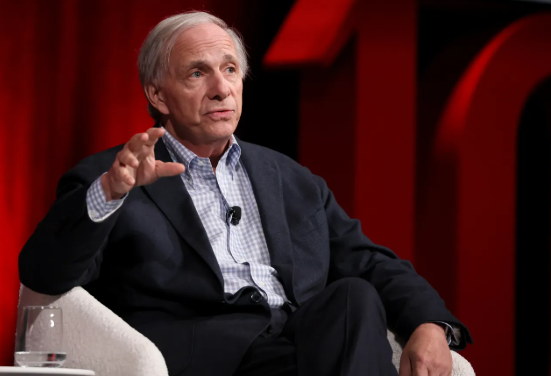
Ray Dalio, founder of Bridgewater Associates, is warning that the U.S. stock market may be approaching one of the most extreme periods of speculation in American financial history, arguing that the current environment could eventually rival the bubble that preceded the 1929 market crash.
The veteran investor has pointed to the extraordinary enthusiasm surrounding artificial intelligence, record-breaking initial public offerings and soaring valuations as signs that investors may be entering a classic market bubble. The warning was highlighted by @coinbureau on X, which cited Dalio's concerns about the current market environment and its similarities to previous periods of excessive speculation.
According to the figures circulating alongside Dalio's warning, U.S. stocks are currently trading at about 41 times adjusted earnings. That compares with approximately 32.6 times adjusted earnings around the peak of the market before the 1929 crash. The comparison has attracted significant attention because the 1929 market collapse ultimately helped trigger a devastating period for financial markets and the wider U.S. economy.
Source: X post
Dalio Sees Classic Signs of a Market Bubble
Dalio has spent decades studying financial cycles, debt and the behavior of markets during periods of extreme optimism. He founded Bridgewater in 1975 and built it into one of the world's largest hedge funds before stepping back from day-to-day leadership in 2022, and much of his framework for understanding markets comes from his study of economic history, laid out in books such as "Principles" and "Principles for Navigating Big Debt Crises." Over the years he has also described a systematic way of identifying bubbles, looking at how prices compare with traditional valuation measures, whether new buyers are flooding into the market, how broadly bullish sentiment has become, how much purchasing is financed with debt, and whether large forward commitments are being made to capitalize on rising prices — a lens he has applied to episodes including 1929, the dot-com era and 2007.
His latest warning centers on the idea that investors may be assigning exceptionally high valuations to companies based on expectations of future growth rather than current earnings.
Artificial intelligence has become a major driver of that optimism. Investors have poured enormous amounts of capital into companies involved in AI chips, cloud computing, data centers, software and other parts of the emerging technology ecosystem, and some of the world's largest companies now carry valuations measured in the trillions of dollars. That scale of enthusiasm can create opportunities, but it can also increase the risk that expectations move far ahead of fundamentals.
AI Euphoria Is Driving Investor Optimism
The rapid development of generative AI has created one of the strongest technology investment cycles in years, with companies connected to AI attracting enormous amounts of capital as investors attempt to identify the next major winners.
The excitement is not limited to established technology giants. Private AI companies have attracted multibillion-dollar valuations, while newly listed companies have also benefited from intense investor demand.
Dalio argues that this type of enthusiasm can create the conditions associated with historical bubbles. When investors believe a new technology will fundamentally transform the economy, traditional valuation measures can become less important, and that can lead to increasingly aggressive assumptions about future earnings. The danger emerges when those expectations become impossible to meet.
Stock Valuations Are Raising Concerns
The reported 41-times adjusted earnings valuation is one of the key figures behind the latest warning. For comparison, the market's adjusted price-to-earnings ratio was estimated at around 32.6 before the 1929 crash.
The "adjusted earnings" framing echoes the cyclically adjusted price-to-earnings ratio popularized by economist Robert Shiller, which compares stock prices with a ten-year average of inflation-adjusted earnings to smooth out the swings of the business cycle. On that longer-run measure, the 1929 peak of roughly 32.6 has been exceeded only once in U.S. market history — during the dot-com boom of the late 1990s, when the ratio reached the mid-40s — which would place today's reported reading of about 41 near the very top of the historical range.
The comparison does not mean a market crash is guaranteed. Valuation levels alone cannot predict precisely when a downturn will occur, and markets can remain expensive for extended periods, particularly when corporate earnings continue to grow and investors remain willing to pay high prices for future growth.
However, elevated valuations can make markets more vulnerable to negative surprises. If earnings disappoint, interest rates rise unexpectedly or investors suddenly become less willing to pay premium prices, highly valued stocks can experience sharp declines.
Why the 1929 Comparison Matters
The 1929 comparison carries enormous historical significance. The stock market boom of the 1920s was characterized by strong economic optimism, rising share prices and widespread speculation. When confidence eventually collapsed, the market suffered a dramatic decline, and the resulting economic damage became closely associated with the Great Depression.
Today's economy is fundamentally different from the economy of the 1920s. Financial regulation has changed substantially, central banks have far more tools, and modern markets operate under different structures. For that reason, comparing today's market directly with 1929 has important limitations. Still, the comparison is useful as a warning about what can happen when investor expectations become disconnected from sustainable fundamentals.
Record IPO Activity Adds to the Concern
Dalio has also pointed to unusually strong activity in the initial public offering market. When investors are highly optimistic, companies often find it easier to raise money by going public, and demand for new shares can become extremely strong — particularly when investors believe they are getting exposure to the next major technology company.
A surge in IPO activity can therefore be a sign that risk appetite is elevated. Companies can take advantage of favorable market conditions to raise capital at higher valuations, but if sentiment changes, newly listed companies can also become vulnerable to sharp price declines. This is especially true for businesses whose valuations depend heavily on expectations of future growth.
Trillion-Dollar Valuations Are Becoming More Common
Another defining feature of the current market is the number of companies reaching extraordinary valuations. Trillion-dollar companies are no longer unusual among the world's largest technology businesses, and artificial intelligence has pushed expectations even higher as investors anticipate enormous future demand for computing power, software and automation.
The market has rewarded companies positioned to benefit from the AI boom, creating a powerful feedback loop: higher stock prices attract more investor attention, while growing enthusiasm can push valuations even higher. Eventually, however, companies must deliver earnings capable of supporting those valuations, and the larger the valuation becomes, the greater the amount of future growth investors may already have priced into the stock.
The AI Boom Could Still Be Real
Dalio's warning does not necessarily mean artificial intelligence is a fad. AI technology could genuinely transform productivity, business operations and entire industries. The issue is valuation rather than technology: a revolutionary technology can exist at the same time as an investment bubble.
History provides several examples of investors correctly identifying a major technological transformation but paying too much for the companies expected to benefit from it. The dot-com boom of the late 1990s is one of the most familiar cases — the internet transformed the economy, but many internet stocks were nevertheless dramatically overvalued before the 2000 crash. Some companies disappeared, while a smaller group eventually became dominant global businesses. The same distinction could apply to artificial intelligence.
What Could Trigger a Market Correction?
A market bubble can continue expanding until something changes investor expectations. Possible triggers include weaker-than-expected corporate earnings, higher interest rates, slowing economic growth or disappointing AI investment returns. Geopolitical shocks could also accelerate a shift in sentiment.
Another risk is that companies spend enormous amounts on AI infrastructure without generating sufficient revenue or profits to justify the investment. If investors begin questioning the returns on those investments, valuations could come under pressure. Because major technology companies now represent a substantial portion of major stock indexes, weakness in the AI sector could potentially have a broader impact on the overall market.
Dalio's market warnings also come alongside his long-running concerns about U.S. government debt and deficits. He has argued in public commentary over several years that heavy indebtedness can constrain the room policymakers have to respond when downturns arrive, which is part of why he frames today's environment as a question of interconnected risks rather than a single overvalued sector.
Investors Face a Difficult Environment
The challenge for investors is balancing the potential of AI against the risks created by elevated valuations. Selling too early can mean missing substantial gains if the technology boom continues, while ignoring valuation risks can leave investors vulnerable if market sentiment suddenly reverses.
Dalio's warning therefore does not necessarily provide a precise prediction about when stocks will fall. Instead, it highlights the importance of understanding how much optimism is already embedded in current prices. Markets can remain irrational longer than many investors expect, but when expectations become extremely high, even a relatively small disappointment can trigger a much larger reaction.
Is This the Biggest Bubble in American History?
Dalio's suggestion that the current market could become the biggest bubble in American history is a striking claim. Whether that prediction ultimately proves correct will depend on how markets evolve, how AI earnings develop and whether investor enthusiasm continues at its current pace.
The 41-times adjusted earnings figure certainly places today's market in historically expensive territory, but valuation comparisons across different eras must be treated carefully. Interest rates, corporate profitability, market composition and accounting standards have all changed significantly since 1929.
Still, the broader warning remains relevant. Investors are paying exceptionally high prices for companies expected to dominate the AI-driven economy of the future. If those expectations are met, today's valuations may eventually appear more reasonable. If they are not, the market could face a significant repricing.
For now, Ray Dalio's message is less about predicting an exact crash date and more about recognizing the risks created when optimism, speculation and valuations reach extreme levels. As AI continues to dominate investor attention, the biggest question for Wall Street may be whether the technology can generate enough real economic value to justify the enormous expectations already reflected in stock prices.

