Ray Dalio Explains Why He Prefers Gold Over Bitcoin Despite Holding Both
Key Takeaways
- •Ray Dalio recommends investors allocate between 5% and 15% of their portfolios to hard money assets that central banks cannot print in unlimited quantities, including gold and Bitcoin.
- •Dalio disclosed holding approximately 1% of his personal portfolio in Bitcoin, representing a notable shift from his earlier public skepticism toward the cryptocurrency.
- •Dalio considers gold a safer haven than Bitcoin because central banks worldwide collectively hold tens of thousands of tonnes of gold, while governments have the authority to tax, restrict, or control cryptocurrencies.
- •Dalio warned that a serious bubble centered around artificial intelligence is forming in markets, alongside broader risks from high debt, income inequality, and geopolitical tensions that strain the prevailing economic order.
- •Dalio advocates for balanced diversification across multiple asset classes including stocks, bonds, real estate, gold, and Bitcoin rather than relying on any single asset to weather financial fluctuations.
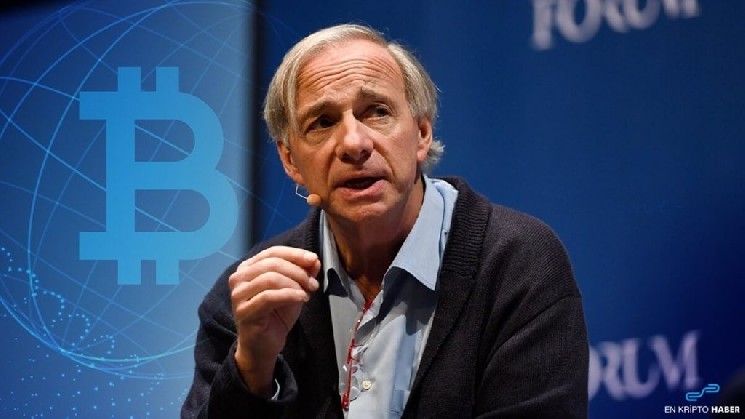
Ray Dalio Explains Why He Prefers Gold Over Bitcoin Despite Holding Both
Ray Dalio, the billionaire investor and founder of Bridgewater Associates — the world's largest hedge fund — has offered detailed remarks on the global financial system, mounting economic risks, and how investors should approach asset allocation in uncertain times. Dalio recommended that investors turn to "solid money" assets such as Bitcoin and gold, which cannot be arbitrarily printed, as a hedge against potential financial collapse, while also articulating his personal preferences and reservations regarding cryptocurrencies. His stance marks a notable evolution from his earlier skepticism toward Bitcoin, which he publicly questioned before gradually acknowledging its merits as a non-sovereign store of value.
Dalio, who is widely recognized for predicting the 2008 global financial crisis, cautioned that a serious bubble centered around artificial intelligence is forming in the markets. He further warned that the combination of high debt levels, income inequality, and geopolitical tensions places the prevailing economic order under significant strain. His concerns echo the historical debt-cycle framework he laid out in his book Principles for Dealing with the Changing World Order, which traces how rising indebtedness and internal conflict have preceded declines of past reserve currencies.
The renowned investor emphasized that capital should not be allowed to erode under inflationary pressures and that investors need to prepare for periods of crisis through portfolio diversification.
Dalio disclosed that he holds approximately 1% of his personal portfolio in Bitcoin. He recommended that investors allocate between 5% and 15% of their portfolios to "hard money" assets — those that cannot be printed in unlimited quantities by central banks. The recommendation places him among a growing roster of mainstream institutional voices who have publicly endorsed allocating to Bitcoin, a shift that has accelerated since the approval of spot Bitcoin exchange-traded funds in the United States.
Despite classifying Bitcoin as a non-printable currency, Dalio stated that he considers gold a safer haven than Bitcoin. He outlined several key reasons for his cautious stance:
Dalio argued that governments possess the authority to tax, restrict, or control Bitcoin, and that central banks are unlikely to hold significant amounts of the cryptocurrency due to privacy and control concerns. By contrast, central banks around the world collectively hold tens of thousands of tonnes of gold in their reserves, a practice that has continued for decades and underscores gold's entrenched institutional role.
He also cited the potential for emerging technologies such as quantum computing to damage cryptocurrency infrastructure, along with a perceived lack of privacy, as major risk factors for Bitcoin.
Gold, by contrast, benefits from millennia of accumulated historical precedent, Dalio noted. He described it as the most tangible financial asset that is not the sole liability of any single party.
Rather than relying on a single asset to weather financial fluctuations, Dalio advocated for balanced diversification across multiple asset classes — including stocks, bonds, real estate, gold, and Bitcoin.
This is not investment advice.

