Trump Calls Ramaswamy's Attack Ad on Amy Acton 'Hitting Pay Dirt' as Ohio Republicans Rebel
Key Takeaways
- •Vivek Ramaswamy put $4 million into an attack ad in which his opponent Amy Acton's mother accused her of lying about her traumatic childhood.
- •Acton countered by producing court documents showing a grand jury indicted her stepfather in 1978 for raping her at age 12; he fled Ohio and died in Pennsylvania in 2004.
- •The Columbus Dispatch endorsed Acton and called the ad 'revolting and unsettling,' while leading Ohio Republicans, including Senator Jon Husted and Governor Mike DeWine, publicly condemned it even as DeWine kept his endorsement of Ramaswamy.
- •Vice President JD Vance defended the ad and said he considers Acton unfit to be governor, and President Trump embraced the spot as 'hitting pay dirt.'
- •An Alternet commentary reads the backlash as a sign that public patience with a decade of norm-breaking politics may be reaching a tipping point and as a poor omen for JD Vance's hopes of inheriting leadership of Trump's movement.
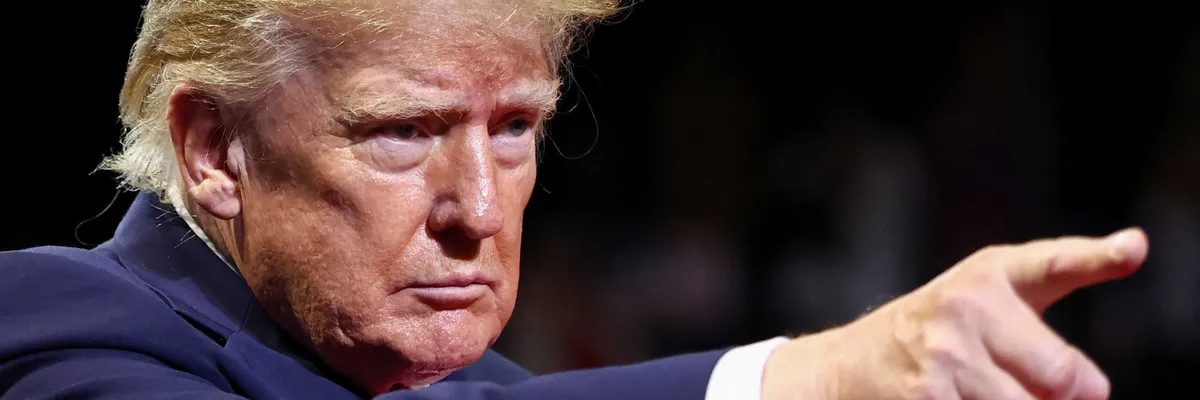
An attack ad in Ohio's race for governor — funded with $4 million by Republican candidate Vivek Ramaswamy and featuring his opponent's own mother accusing her of lying about a traumatic childhood — has provoked an extraordinary backlash in the heart of Trump country. The state's flagship newspaper has endorsed his Democratic rival, leading Republicans have lined up to denounce the spot, and President Donald Trump has intervened personally, praising the ad as proof of "hitting pay dirt."
According to a commentary published by Alternet, the fight has become something larger: a test of whether public tolerance for a decade of norm-breaking politics is finally reaching a tipping point, and an early warning for Vice President JD Vance's ambitions to one day lead the movement Trump built.
The ad and its target
Ramaswamy, the Republican candidate for governor of Ohio, put $4 million into an effort to attack his opponent, Dr. Amy Acton, with an ad featuring her own mother accusing her of lying about her traumatic childhood.
Acton responded by producing court documents showing that her stepfather raped her when she was 12 years old, and that her mother had said she lied about it. Donna Arthur lost custody of Acton and her brother, and the two have not been in contact since. A grand jury indicted the stepfather, Cledith Arthur, in 1978; he fled the state and later died in Pennsylvania in 2004.
A rebellion inside the GOP
The ad generated an enormous backlash across Ohio. The Columbus Dispatch, the state's flagship paper, endorsed Acton in response, calling it "revolting and unsettling." Ohio's Republican elites lined up to denounce it: the state's secretary of state, the former speaker of the state House, and U.S. Senator Jon Husted.
Even Ramaswamy's primary challenger, Casey Putsch — beloved of Buckeye State neo-Nazis, by the columnist's description — said he would vote for the Democratic candidate as a consequence of seeing the ad. Ohio's sitting Republican governor, Mike DeWine, called it "deeply, deeply troubling" and, while standing by his endorsement of Ramaswamy, urged him to take it down. The split was striking: a sitting governor pressing the candidate he had endorsed to pull an ad that candidate had paid millions to distribute.
Ramaswamy had a chance earlier in the week to distance himself from the spot; when it went viral, it was not clear that his campaign had anything to do with it. Then, on Wednesday, he removed all doubt by pouring millions into distributing it. At that point, the columnist writes, what was done was done: even if he took it down, he was already known for embracing the ad after it sparked outrage.
Vance defends the ad
The ad was already drawing fire by the time Vance — who represented Ohio in the Senate before becoming vice president — arrived. During a stump speech, he said Ramaswamy "calls it out like it is, and calls Amy Acton a liar." To reporters, he said he is "disgusted when I see Republicans across the country who are whining more about that advertisement than they are about what the congressional Democrats and other Democrats want to do to the United States of America. I would say to Ohio Republicans, do you actually think that Amy Acton is unfit to serve as governor of the state of Ohio? I do."
A clip of the remarks circulated on Bluesky via journalist Aaron Rupar:
Trump: 'hitting pay dirt'
Trump himself embraced the strategy, writing: "The press is lying to convince everyone that this Ad is bad, because it's so good! Who wouldn't use such an Ad? I would. It's called 'hitting pay dirt.'"
The succession question
The commentary opens with a question the columnist says he is often asked: would it be better to leave Trump alone, since impeaching and removing him would make JD Vance president? He agrees with the subtext. Vance, in his assessment, is cunning and zealous, a true believer in the cause of Christian nationalism, and if anyone can realize the "fashy" dreams of Big Tech, it is him.
Yet the columnist says he is not concerned about succession, for two reasons. First, removing Trump would be good in and of itself. Second, no one likes JD Vance, however frightening the prospect. Apart from the vice presidency, Vance is best known as a junior senator from Ohio who changed his identity as often as he changed his socks. Trump's supporters are not his. Vance's biggest audience is manosphere podcasters and conservatives who believe the Pope isn't Catholic enough — loud, the columnist argues, but not a constituency.
Vance's main problem, the column continues, is his reputation as a mercenary: a politician willing to sell his mind, body and soul for power, even to the point of self-humiliation. And the trouble with self-humiliation is eventually no one trusts you or takes you seriously, not even the people for whom you are humiliating yourself. Vance does not see it that way, because there are no limits to his ambition; honor, decency and self-respect are, in this reading, mere tools for achieving goals.
But Trump has been on the scene for a long time — a decade of disgusting displays, as the columnist puts it — and with his disapproval rating shattering records, public tolerance for disgust may be nearing a tipping point. He is careful not to overstate the case: the hole, he writes, is deep. Still, he points to Ohio as evidence.
Students of authoritarian history, he notes, say successors are rarely successful. A leader cannot tolerate the idea of someone coming after him, because if that were true, his power would slowly diminish as his coalition prepared for the future. Trump, the argument runs, is on the same track. Vance will not inherit MAGA; his boss will sabotage any attempt to hand it to him.
In the columnist's view, Vance is doomed anyway — which is why he does not fret much about the consequences of removing the president. Vance is the product of a politics that treats people as a means rather than an end in themselves. There is nothing Trump's people will not say to "own the libs," and no principle they will not profane in pursuit of power: accuse the victim of child rape of lying? Yes. Weaponize her estranged and clearly troubled mother against her? Yes.
These displays have played out for 10 long years, the columnist writes; the routine is familiar and patience is wearing thin. All pretense is gone — there really is no sense of decency. It is fitting that Vance is from Ohio, he concludes, because in Ohio there are intimations of a lasting reaction.

