Qatar Ports Report Sharp Growth in Bulk Cargo and Livestock Handling in August
Key Takeaways
- •Qatar's ports handled about 120,000 tonnes of bulk cargo in August 2026, a 168% increase from the previous month, with livestock and vessel calls up roughly 191% and 13%, respectively.
- •Combined August throughput across Hamad, Ruwais and Doha ports totaled 49,040 TEUs of containers, 30,011 tonnes of general cargo, 30 RORO units, 5,989 head of livestock and 133 vessel calls.
- •In the first half of 2026, Qatar's ports processed over 493,000 TEUs, more than 324,000 tonnes of bulk cargo, nearly 25,000 RORO units, over 112,000 head of livestock and 866 vessel calls.
- •Qatar's Ministry of Transport automated 11 additional maritime services, raising the number of e-services on its website to 21, in line with the Digital Agenda and National Vision 2030.
- •Port throughput is a key indicator of trade flows and food security for Qatar, which imports most of its food and consumer goods.
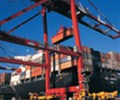
Qatar's ports recorded strong growth in bulk cargo and livestock handling in August 2026 compared to the previous month, according to port operator Mwani Qatar.
Hamad, Ruwais and Doha ports all witnessed increased activity. In a post on its X platform, Mwani Qatar stated: "Qatar ports handled approximately 120,000 tonnes of bulk cargo in August 2026, marking a 168% increase compared to the previous month. Livestock and vessel calls also rose by approximately 191% and 13%, respectively."
Across the three ports, August 2026 throughput totaled 49,040 twenty-foot equivalent units (TEU) of containers, 30,011 tonnes of general cargo, 119,963 tonnes of bulk cargo, 30 units of RORO, and 5,989 head of livestock. The ports received 133 vessels during the month.
The figures underscore the continuing importance of Hamad, Doha and Al Ruwais ports to Qatar's supply chain and wider economic activity. For a country that imports the large majority of its food and consumer goods, port throughput is a closely watched indicator of trade flows and food security, and livestock imports in particular support Qatar's efforts to maintain stable domestic supply.
First-Half 2026 Performance
During the first half of 2026, Qatar's ports handled more than 493,000 TEUs and nearly 273,000 tonnes of general cargo. Between January and June, the ports also processed more than 324,000 tonnes of bulk cargo, almost 25,000 RORO units, and more than 112,000 head of livestock, while receiving 866 vessel calls. Placed against this half-year baseline, August's roughly 120,000 tonnes of bulk cargo represents a substantial single-month share of the total, highlighting how uneven monthly cargo patterns can be as individual bulk consignments arrive in concentrated shipments.
Ministry of Transport Expands E-Services
Recently, Qatar's Ministry of Transport (MoT) completed the automation of 11 additional maritime transportation affairs services. The new e-services, now available electronically via the MoT's official website, cover transactions related to large vessels and seafarers' affairs.
This brings the total number of e-services on the MoT's website to 21, as the ministry continues its plans to simplify transactions, reduce time and effort, and improve user experience. The digitization push is part of a broader national drive, under Qatar's Digital Agenda and National Vision 2030, to move government services online and streamline bureaucratic processes.
Hamad Port and Supporting Infrastructure
Hamad Port, Qatar's main gateway to world trade, offers world-class infrastructure, a growing shipping network, flexible operational processes, and capacity that adapts to market shifts, providing integrated logistics solutions with greater speed, higher efficiency, and broader access to global markets. Since its opening, Hamad Port has progressively taken over commercial traffic from the older Doha Port, allowing Doha to focus on cruise and passenger operations while Hamad handles the bulk of the country's container and cargo volumes.
The Centralized Customs Inspection Area (CCIA) at Hamad Port plays a key role in facilitating cargo movement and expediting procedures through a smart operational system designed to ensure precise inspection and reduced clearance times. This supports seamless trade flows and supply chain efficiency, reinforcing Qatar's position as a logistics hub on the global trade map.
The Container Management Station at Jery Musabbeh, located around 27 km from Hamad Port, spans 88,375 square meters and has a capacity exceeding 5,000 TEUs. The station offers integrated services including storage, inspection, maintenance, and washing for various types of containers, supporting supply chain efficiency and Qatar's broader logistics ecosystem.
Ruwais Port, Qatar's northern gateway to trade, is playing an increasingly strategic role as a regional commercial hub. Through infrastructure development and streamlined cargo operations, the port enhances supply chain resilience and drives commercial exchange, in line with the country's economic diversification plans and strategic goals. Its location on the northern coast positions it as a connection point for trade with neighboring Gulf markets.
Source: The Peninsula Newspaper, via Hellenic Shipping News

