Putin Signs Russia's First Comprehensive Cryptocurrency Law, Enabling Regulated Digital Asset Trading from September 1
Key Takeaways
- •Regulated cryptocurrency trading in Russia is set to begin on September 1 under a new legal framework signed by Vladimir Putin.
- •Russia’s central bank will supervise licensed exchanges and enforce standards intended to improve transparency and lower investor risk.
- •The law does not allow cryptocurrencies to be used as payment for goods and services, leaving the ruble as the preferred legal currency.
- •The framework is expected to prioritize highly liquid assets such as Bitcoin, Ethereum, and USDT.
- •The new rules could encourage more domestic participation in crypto markets while keeping restrictions on cryptocurrency payments in place.
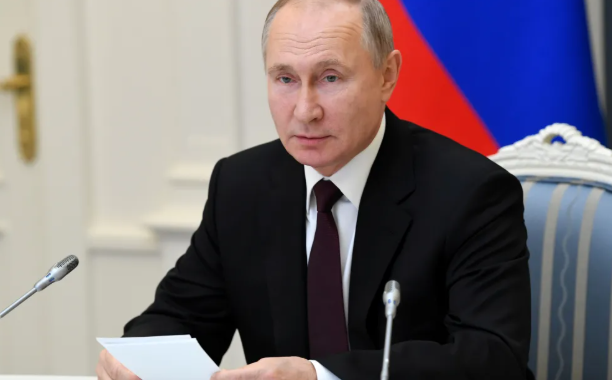
Russian President Vladimir Putin has signed landmark legislation establishing the country's first comprehensive regulatory framework for digital asset trading, a move that signals a major shift in Moscow's posture toward the cryptocurrency sector.
The new law permits regulated cryptocurrency trading to commence on September 1, creating a supervised environment in which approved digital assets can be traded through licensed platforms under the oversight of Russia's central bank. The announcement drew attention from digital asset communities worldwide after being highlighted by the X account Coin Bureau.
For years, Russia's crypto market has operated within a murky regulatory landscape offering limited legal clarity. A 2020 law on digital financial assets had prohibited cryptocurrency payments but stopped short of establishing a comprehensive trading framework, leaving exchanges and investors in a legal gray zone. Russian officials had long debated how to treat digital assets — some viewing them as instruments of innovation and cross-border commerce, others warning of money laundering, capital flight, and threats to financial stability. The new legislation attempts to reconcile these competing concerns by permitting controlled market participation while preserving restrictions on cryptocurrency payments.
Approved Assets and Trading Scope
Under the framework, only cryptocurrencies deemed sufficiently liquid and suitable for regulated markets will receive approval. Among the assets expected to qualify are Bitcoin, Ethereum, and USDT — the world's largest stablecoin by market capitalization.
Bitcoin, the largest cryptocurrency by market value, is expected to remain one of the most prominent assets under the new system. Its decentralized architecture and finite supply have driven growing institutional and governmental recognition worldwide. Ethereum, the second-largest cryptocurrency, is also anticipated to play a significant role given its status as the foundational layer for decentralized finance platforms, digital applications, and smart contract technology.
USDT's prospective inclusion carries particular significance because stablecoins serve a distinct function. Unlike Bitcoin and Ethereum, which exhibit price volatility, USDT is engineered to maintain a stable value pegged to the U.S. dollar. Stablecoins are widely used for trading, international transfers, and liquidity management across cryptocurrency markets.
By concentrating on highly liquid assets, regulators aim to mitigate risks tied to market manipulation and unstable projects. Major cryptocurrencies typically feature deeper order books, higher trading volumes, and broader global acceptance compared to smaller tokens.
Crypto Payments Remain Banned
Despite authorizing regulated trading, the legislation does not recognize cryptocurrencies as legal payment methods. Payments for goods and services using digital assets will remain prohibited. Cryptocurrencies may be traded as investment instruments but cannot replace traditional currencies for everyday transactions.
The decision reflects concerns among policymakers about safeguarding the primacy of the Russian ruble. The Bank of Russia has been developing its own central bank digital currency, the digital ruble, which entered pilot testing in 2023 — a sovereign digital payment instrument that stands apart from decentralized cryptocurrencies. Central banks worldwide have exhibited similar caution — while digital assets have gained traction among investors, many governments remain reluctant to allow cryptocurrencies to compete directly with sovereign currencies. Russia's approach creates a middle ground between outright prohibition and unrestricted adoption.
Central Bank Oversight
Russia's central bank will exercise a key supervisory role under the new framework. Licensed cryptocurrency exchanges will be required to operate under regulatory standards intended to enhance transparency and reduce investor risk. The central bank's involvement signals that Moscow intends to treat cryptocurrency trading as a regulated financial activity rather than a free-flowing digital marketplace.
Context: Sanctions and Financial Innovation
The new law carries potential implications for Russia's engagement with global financial markets. Digital assets have become increasingly relevant in international finance, particularly as nations explore alternative payment systems and financial technologies. Russia has confronted significant changes in its financial environment due to international sanctions affecting traditional banking channels. Putin himself signaled a public shift in 2024, stating that cryptocurrencies were impossible to ignore in the context of international settlements, particularly as sanctions constrained conventional cross-border payment routes. Some analysts believe digital assets could offer additional options for cross-border transactions, though the new law does not directly legalize cryptocurrency payments.
The Russian government has previously demonstrated interest in blockchain technology and digital financial innovation, exploring ways to leverage digital systems to improve financial efficiency while maintaining regulatory oversight. Russia is also home to a substantial cryptocurrency mining sector, particularly in Siberian regions where cold climates and abundant energy resources have attracted large-scale operations. The introduction of cryptocurrency trading rules forms part of a broader effort to modernize aspects of the country's financial sector.
Regulatory Challenges Ahead
Substantial challenges persist. Regulating cryptocurrency markets requires addressing complex issues including cybersecurity, investor protection, taxation, and compliance with international standards. Because digital asset markets operate globally, effective regulation presents difficulties for any single jurisdiction. Russia will need to develop systems capable of monitoring exchanges, preventing illicit activity, and ensuring that licensed platforms adhere to required standards.
Impact on Domestic Investors and Businesses
The legislation may reshape the behavior of Russian cryptocurrency investors. Previously, many users accessed digital asset markets through foreign exchanges or unofficial channels owing to limited domestic regulation. A licensed domestic framework could encourage greater participation through approved platforms.
Enhanced regulatory clarity may also attract companies interested in developing cryptocurrency-related services within Russia. Firms operating in blockchain technology, financial software, and digital asset infrastructure stand to benefit from clearer legal guidelines. At the same time, the payment ban limits one of the most widely discussed practical applications of cryptocurrencies — faster, more flexible payments — which advocates have long championed.
Global Trend and Broader Significance
Russia's decision mirrors a broader international pattern. Many governments have separated cryptocurrency investment from the use of digital assets as money, treating trading platforms and payment systems as distinct regulatory challenges. Allowing investment activity grants individuals and businesses access to digital asset markets while enabling governments to preserve control over national monetary systems.
The move adds Russia to a growing roster of countries developing formal cryptocurrency regulations. Governments worldwide increasingly acknowledge that digital assets are becoming part of the modern financial landscape, crafting rules designed to manage risks while permitting innovation.
Financial analysts will closely monitor several metrics following implementation: the number of licensed exchanges, investor participation levels, trading volumes, and the rigor of regulatory enforcement. Key indicators to watch include whether Russia's framework successfully channels trading from unofficial platforms into licensed venues, how the central bank delineates permissible cross-border activity, and whether other sanctioned or sanction-exposed economies adopt comparable models. Although Russia represents a major economy, global crypto markets are shaped by numerous factors including institutional investment, regulatory developments worldwide, and technological advancement.
Russia's new law demonstrates the continuing evolution of government attitudes toward digital assets. The country has transitioned from prolonged uncertainty toward a more structured regulatory approach, though significant restrictions remain. The trajectory of Russia's cryptocurrency industry will hinge on how effectively regulators calibrate the balance between fostering innovation and safeguarding financial security.
Source: Hokanews | Coin Bureau on X

