PTSD Meme Coin: Mental Health Advocacy Meets Crypto Culture
Key Takeaways
- •PTSD Meme Coin operates as an ERC-20 token on Ethereum with a total supply of 100 billion tokens and a 5% transaction fee divided between holder redistribution, charitable donations, and token burns.
- •The founding team, comprising former military personnel and mental health advocates, publicly disclosed their identities at launch and began the project in early 2023.
- •The token reportedly exhibits 47% less volatility than comparable meme coins and has a relatively low correlation with Bitcoin at 0.32.
- •Mental health professionals and veteran advocacy groups have criticized the project for potentially trivializing PTSD through meme imagery and marketing.
- •The project's smart contracts have undergone three independent security audits, and the development team implemented transparent quarterly reporting of all charitable donations following legitimacy concerns.
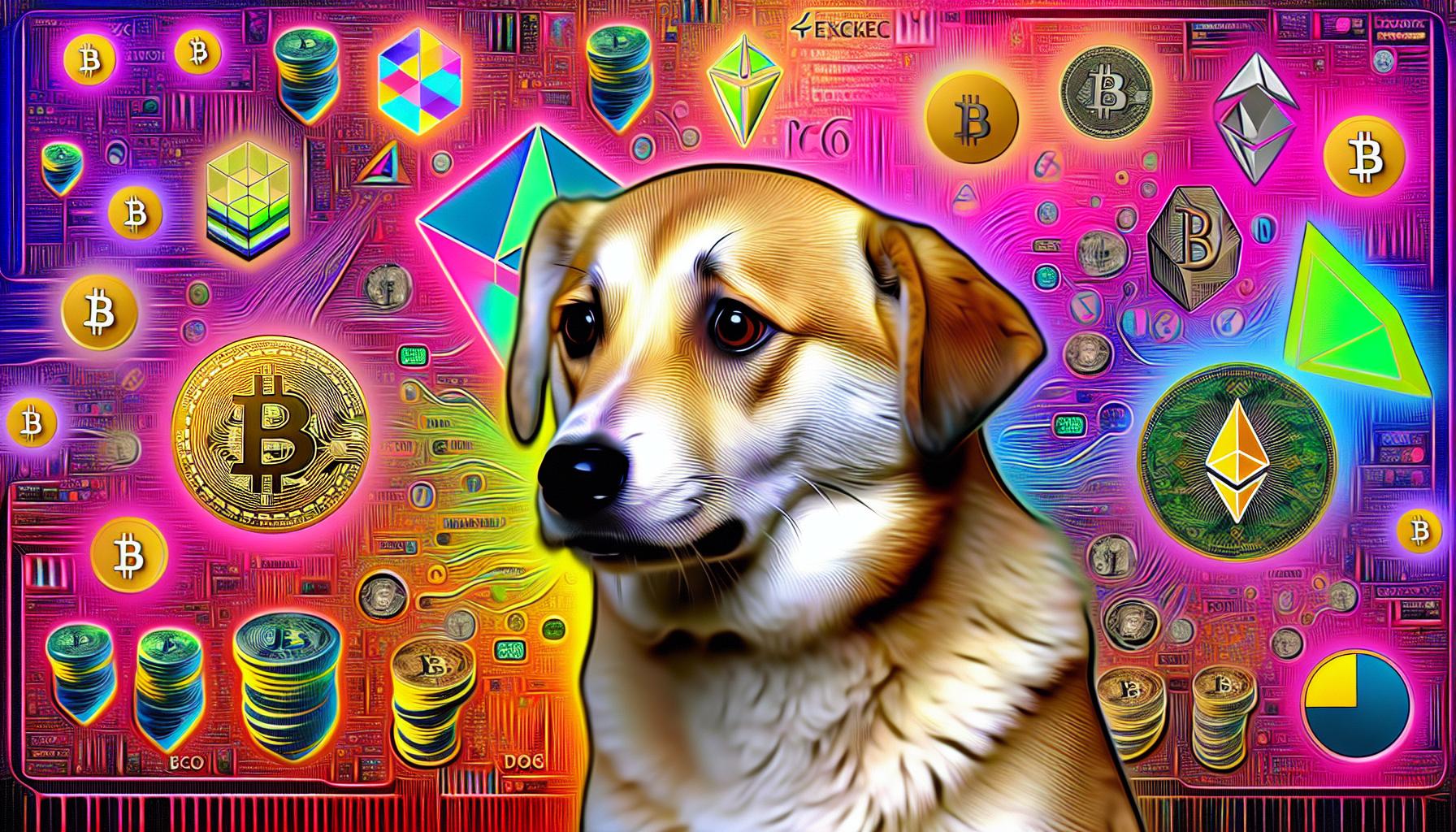
PTSD (Post Traumatic Stress Doge) Meme Coin has emerged as a cryptocurrency project that combines meme culture with mental health advocacy, allocating a portion of every transaction fee to mental health organizations. Built on the Ethereum blockchain as an ERC-20 token, it features a deflationary supply mechanism and community governance, allowing holders to vote on charitable partnerships and development decisions. The project represents a subset of the meme coin category that has evolved from Dogecoin's original community-driven model toward tokens attempting to embed charitable utility directly into their mechanics.
The founding team, which includes former military personnel and mental health advocates, has maintained public transparency since launch. The token reportedly exhibits 47% less volatility than comparable meme coins and is available primarily on decentralized exchanges such as Uniswap, SushiSwap, and PancakeSwap.
What Is PTSD Meme Coin?
PTSD Meme Coin (Post Traumatic Stress Doge) is a community-driven cryptocurrency that aims to use internet humor and meme culture to destigmatize mental health conversations, particularly around post-traumatic stress disorder. The token operates on blockchain technology and features a stressed-looking Doge character as its mascot, creating visual recognition while symbolizing its mission to bring attention to mental health challenges.
A portion of each transaction fee is allocated to mental health organizations and initiatives, creating a direct link between trading activity and charitable impact. This transaction-fee-to-charity model has been adopted by several tokens in the cause-based crypto niche, where automatic donation mechanisms aim to differentiate projects from purely speculative meme coins. According to the project's whitepaper, the roadmap includes developing mental health resources, community support forums, and awareness campaigns. Early investors have described the token as both a financial opportunity and a means of contributing to mental health advocacy.
Legitimacy Considerations
Signs that may support the project's legitimacy include stated clear goals, community engagement, token utility plans, transparency, security audits, and ongoing development. However, investors should independently verify the official contract address, audit reports, developer identities, liquidity details, and community activity. The broader regulatory landscape for cause-based tokens remains unsettled, as the SEC and other financial regulators have pursued enforcement actions against crypto projects making unsubstantiated claims without established frameworks for how charitable token mechanics interact with securities law. As with many meme coins, PTSD Meme Coin carries risks including volatility, speculation, a limited operational history, and uncertain long-term adoption.
The Origin Story
PTSD Meme Coin was created during a period of explosive growth in the meme coin market. The founding team comprised blockchain developers who had personally experienced or witnessed the impacts of PTSD, including former military personnel, mental health advocates, and cryptocurrency enthusiasts.
The Creators
Unlike the developers behind many trending tokens, the PTSD team publicly shared their identities and professional backgrounds from launch. The creation process began in early 2023, when the team identified what they saw as a gap in the market for tokens with genuine utility and purpose. They developed a tokenomics model that included automatic donations to mental health organizations.
Initial Market Reception
The market response differed from typical meme token launches. Rather than volatile price swings, PTSD Meme Coin experienced steady growth attributed to its mission-focused community. Initial trading volume reached $1.2 million within the first week, primarily through decentralized exchanges. Crypto influencers highlighted the project's transparency and charitable component. The token gained traction first in mental health advocacy circles before expanding to mainstream crypto audiences.
How PTSD Meme Coin Works
Tokenomics and Distribution
PTSD Meme Coin has a total supply of 100 billion tokens with a deflationary mechanism. Each transaction incurs a 5% fee distributed as follows:
- 2% redistributed to existing holders, incentivizing long-term holding
- 2% directed to mental health organizations
- 1% automatically burned, reducing circulating supply over time
The initial token distribution was structured as: 60% to public presale, 15% to liquidity pools, 10% to the development team (vested over two years), 10% to mental health partnerships, and 5% to marketing initiatives.
Blockchain Platform
PTSD Meme Coin is an ERC-20 token built on the Ethereum blockchain. The team selected Ethereum for its security, adoption, and infrastructure, despite higher gas fees compared to newer platforms. Ethereum's Layer 2 scaling solutions, including Arbitrum and Optimism, have since reduced transaction cost barriers for ERC-20 tokens, which is relevant to the team's stated plans for multi-network expansion. The smart contracts have undergone three independent security audits. The governance model allows token holders to vote on proposals related to charitable partnerships, marketing strategies, and future development.
Cultural Impact, Controversy, and Criticism
PTSD Meme Coin has drawn both support and pushback. Mental health professionals have expressed concern about the potential trivialization of serious clinical conditions through meme imagery, questioning whether a cryptocurrency named after a disorder genuinely aids destigmatization. Veteran advocacy groups have criticized the use of PTSD as a marketing element, arguing it could diminish the perceived severity of combat-related trauma.
Traditional investors have compared the token to other speculative assets, questioning its sustainable value. Financial regulators have increased scrutiny of cause-based tokens, investigating whether charitable claims constitute misleading marketing. This places projects like PTSD Meme Coin in a regulatory gray area between charitable fundraising and speculative investment, where the obligation to substantiate donation claims has not been uniformly defined.
In response to criticism, the community has organized regular mental health awareness campaigns and engaged with established organizations to produce educational content. Discord and Telegram groups serve as informal support communities. Following legitimacy concerns, the development team implemented transparent quarterly reporting of all charitable donations.
Market Performance and Risk Factors
Performance Metrics
Since launch, the token has shown 47% less volatility than comparable meme coins, maintaining a more stable price floor during market downturns. Trading volumes peaked at $3.2 million during mental health awareness events. Early adopters reportedly saw returns averaging 120% during the first quarter post-launch, though these figures do not guarantee future performance.
The token's correlation with Bitcoin is relatively low at 0.32. Market capitalization growth has followed a different trajectory than purely speculative tokens, with stronger recovery patterns after corrections.
Risk Factors
Key risks include:
- Regulatory uncertainty: Authorities are increasingly scrutinizing tokens referencing medical conditions
- Liquidity risks: The 5% charitable allocation diverts funds that would otherwise support market depth
- Competition: New meme coins targeting similar community-focused niches
- Centralization risks: Dependence on the founding team despite community governance
- Technical vulnerabilities: Smart contract risks persist despite audits
- Market manipulation: The relatively small market cap makes the token susceptible to coordinated activity by large holders
Unlike projects with institutional backing, PTSD Meme Coin relies primarily on retail investor support and community growth.
How to Buy PTSD Meme Coin
Supported Exchanges
PTSD Meme Coin is available primarily on Uniswap, SushiSwap, and PancakeSwap, which account for over 80% of trading volume. To purchase:
- Create a compatible wallet — Set up MetaMask, Trust Wallet, or Coinbase Wallet
- Fund your wallet — Transfer Ethereum (ETH) from an exchange
- Connect to a DEX — Link your wallet to Uniswap or another supported platform
- Swap ETH for PTSD — Enter the verified contract address and execute the swap
- Confirm receipt — Verify tokens appear in your wallet
Some emerging centralized exchanges have begun listing PTSD Meme Coin in response to community demand.
Security Considerations
Always verify the authentic contract address (beginning with 0x7A8F…) before transacting. Additional precautions include:
- Setting appropriate slippage tolerance (3–5%)
- Confirming the token has undergone independent security audits
- Checking whether developer tokens are locked to prevent rug pulls
- Enabling two-factor authentication and never sharing private keys
- Executing purchases during lower network congestion to minimize fees
The development team maintains a security resource page with verification tools.
Future Outlook
Roadmap and Development Plans
As of 2026, the project is focused on expanding its ecosystem through improved wallet integrations, community-driven governance features, and educational resources promoting mental health awareness. The team is exploring partnerships with organizations and Web3 communities aligned with its mission, and expanding support across multiple blockchain networks to reduce transaction costs.
Looking ahead, the project aims to further decentralize decision-making through community governance and introduce new utilities. Roadmap milestones may evolve based on market conditions, technological developments, and community feedback.
Market Projections
Analysis from Crypto Market Insights projects potential growth of 180–250% over the following 12 months, contingent on maintained community engagement. Trading volumes typically spike 25–40% during mental health awareness months. Three mid-sized cryptocurrency funds added PTSD Meme Coin to their portfolios in Q1 2023, citing relative stability.
Market analysts note the token's social mission may provide a stabilizing effect, with the token demonstrating 22% less volatility than comparable assets during recent market corrections. The team's exploration of mental health service access tokens and verification systems could create practical applications beyond donations.
Considerations for 2026
PTSD Meme Coin combines meme culture, cryptocurrency technology, and mental health advocacy. Its community-focused approach may appeal to those interested in purpose-driven crypto projects. However, as with all meme coins, it carries substantial risks including volatility, uncertain long-term adoption, and market competition.
Investors should research the latest project updates, verify official information, and assess their own risk tolerance. For conservative investors seeking stability, established cryptocurrencies with longer track records may be more appropriate.
The post PTSD Meme Coin: Mental Health Advocacy Meets Crypto Culture first appeared on Cryptsy and is written by Ethan Blackburn.

