Psychologist Details What May Lie Behind Trump's 'Very Severe Problems' Health Remark
Key Takeaways
- •President Trump stated at a Rose Garden event on Thursday that he has "very severe problems" with his health, unrelated to alcohol, tobacco, or drugs, from which he has abstained his entire life.
- •The comment stirred concern amid growing public questions about the president's declining health and fitness for office, while the White House insists he is in good shape for his age and has dismissed rumors about his condition.
- •Clinical and forensic psychologist Dr. John Paul Garrison argued the admission appeared impulsive, citing Trump's rapid backpedaling and a temporary shift to complimenting the media as signs of reduced impulse control consistent with certain forms of cognitive decline.
- •Garrison's assessments are observational rather clinical, drawn from interpreting video of public events rather than any direct examination of the president, and he has suggested Trump may be experiencing severe decline possibly accelerated by a stroke.
- •At a separate event honoring firefighters, Garrison identified minor and more significant involuntary spasms, including one in which Trump appeared to jerk backwards, and claimed to have noticed a recurring look toward cameras before notable spasm episodes.
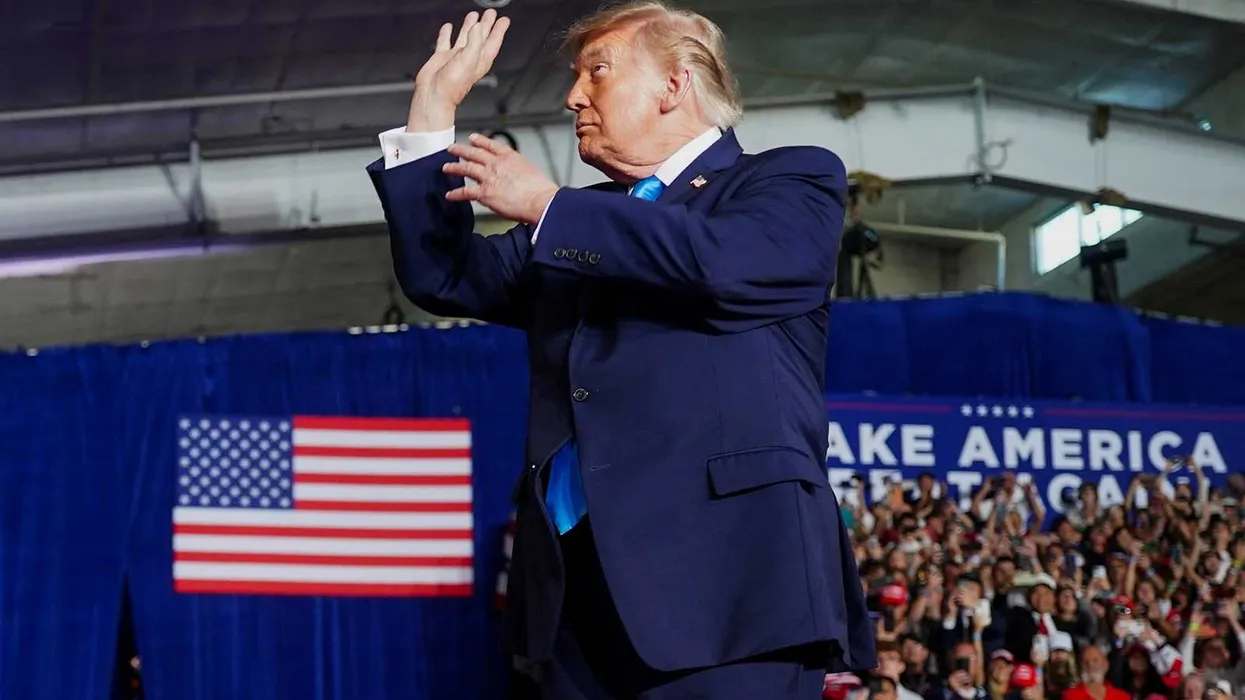
President Donald Trump's admission that he suffers from "very severe problems" with his health has drawn widespread attention, and a psychologist has now offered an interpretation of what some of those problems could involve.
The remarks came during a Rose Garden event at the White House on Thursday, as Trump discussed his lifelong abstention from alcohol, tobacco, and drugs. He argued that those habits had spared him from the health problems many of his friends have begun to confront in old age.
"But if you don't drink, or if you don't take drugs, or if you don't smoke, there's no problem," Trump said. "I have other problems. I have some very severe problems. But those are not one of them. I don't want to add them to the list."
The comment stirred concern, arriving amid mounting public questions about Trump's declining health and fitness for office. While the White House has publicly disclosed some of the health conditions the president manages, it has also repeatedly shut down rumors about his condition and insisted that he is in good shape for his age. The stakes of that back-and-forth are inherent to the office itself: a president's physical and cognitive condition bears directly on the ability to carry out the duties of the executive branch, which is why the health of sitting presidents has long been treated as a matter of public accountability rather than purely private concern. Presidents routinely undergo medical evaluations while in office, and it falls to each administration to decide how much of the results to make public.
Dr. John Paul Garrison, a clinical and forensic psychologist who specializes in body language, produces a series of YouTube videos applying his professional insights to the behavior of public figures. Many of his recent videos have focused on Trump, with Garrison suggesting the president is suffering a severe decline, one that may have been accelerated by a stroke.
Reacting to the "severe problems" comment, Garrison reviewed several of Trump's recent public appearances for evidence of what those issues might be. His conclusions are observational rather than clinical, drawn from interpreting video of public events rather than any direct examination of the president. In the absence of further official detail, those public appearances have become the main window through which outside observers are assessing the condition Trump alluded to. Garrison also argued that the admission itself appeared to stem from the president's recent struggles with impulsivity. Shortly after making the remarks, Trump seemed to begin "backpedaling," which Garrison took as a sign that he recognized he had said something he should not have. In Garrison's view, this loss of impulse control is consistent with certain forms of cognitive decline.
"As I've said on many videos recently, he is impulsive," Garrison explained. "He makes statements without thinking. And this is one of the rare times he's really talking about himself and providing information that people don't already have. So, immediately upon reflecting on it, when he took just a second to think about what he just said, now he's starting to backpedal."
Garrison further noted that while backpedaling, Trump began complimenting members of the media — a striking departure from his habit of attacking outlets as "fake news." In that moment of apparent vulnerability, Garrison suggested, the shift in tone pointed to some truth in what Trump had admitted.
"Another thing that I want you to pay attention to is how wide open his arms are when he said that. That does suggest, right now, as he's talking about this, he is very open," Garrison added. "He is very vulnerable as he's talking about this. And as I said, this was an impulsive decision to state this."
Turning to footage from a separate event at which Trump received an honor from firefighters, Garrison highlighted more of what he described as "unusual behaviors," including the president's continuing struggles with involuntary spasms. Several times throughout the event, Trump appeared to experience minor and "more significant" spasms, including one episode in which he seemed to jerk backwards. Garrison also identified a potential tell that, he says, signals when Trump is about to suffer a spasm.
"Now, this behavior may just be a coincidence, but I have noticed it a number of times before there is a significant spasm," Garrison said. "Sometimes he does look out and look at cameras, or there may be somebody he's looking at off camera. But this look right here, I've seen a number of times before he has a noticeable spasm."

