Psychologist warns Trump's confusion and seizure-like episodes are not improving
Key Takeaways
- •Clinical and forensic psychologist Dr. John Paul Garrison says President Trump is displaying signs of cognitive and physical decline that he assesses are not improving.
- •Garrison identified what he describes as a seizure-like episode at Trump's White House event on a women's health executive order, with activity moving from one arm to his eyes, mouth, and the other arm.
- •Garrison also cited apparent microsleeps and an emerging pattern of faster speech after episodes, which he links to difficulty sustaining attention unless Trump is speaking himself.
- •At a Kentucky rally, Garrison said Trump appeared confused while retelling a claimed Biden gaffe involving Maine and palm trees that Garrison says he could not verify anywhere.
- •Garrison acknowledged he has not personally evaluated the president, basing his analysis solely on publicly available footage and citing stroke or vascular dementia only as general possibilities, not a diagnosis.
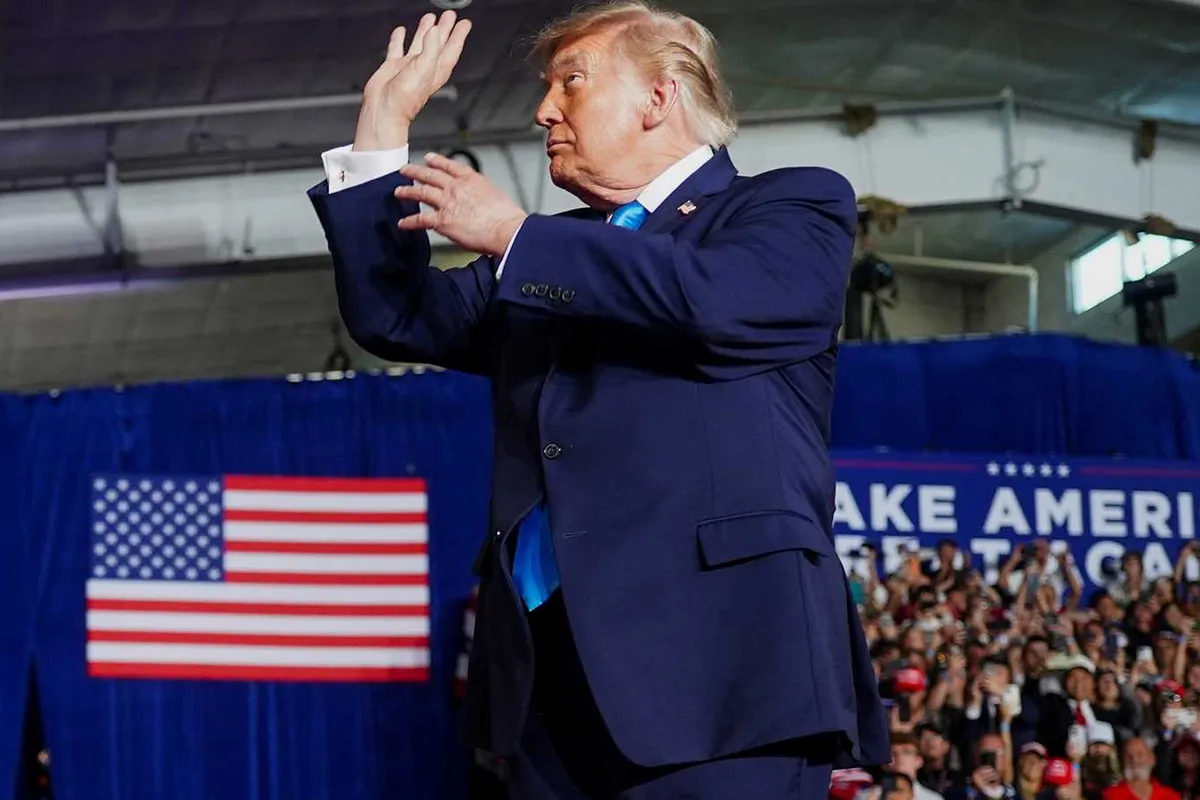
President Donald Trump continues to display what a clinical psychologist calls "highly concerning" signs of confusion and "seizure-like episodes" during public events, and in the specialist's assessment the symptoms are not improving.
Dr. John Paul Garrison is a clinical and forensic psychologist who specializes in body language cues. He produces numerous YouTube videos in which he applies his professional insights to the behavior of public figures, and much of his recent output has centered on Trump. Garrison contends that the president is experiencing unavoidable physical and cognitive decline, a conclusion he bases on several recurring symptoms.
In his latest video, Garrison reviewed a series of Trump's recent appearances, pointing to "more highly concerning behaviors" that he ties to the president's "apparent neurological decline."
He began with Trump's White House event on an executive order concerning women's health, at which the president appeared to suffer another of the seizure-like episodes Garrison says he has observed in a growing number of the president's public addresses. Because the appearance was an official, publicly broadcast White House function, viewers can review the same footage on which his reading rests.
"I've shown something very similar a couple of times before where we saw activity go from his right arm to his eyes to his mouth to his left arm," Garrison explained. "Now, I've shown a wide variety of... neurological glitches, but this is the one that appears to be most seizure-like."
He added later: "Now, obviously, I have not personally evaluated President Trump, but what we are observing certainly appears like seizure activity. We're seeing it spread from one side of his body to his face to the other side. There are many different reasons that people can experience this kind of neurological dysfunction. A couple of examples being the effects of a stroke or vascular dementia." He presented both as general possibilities for such symptoms rather than a diagnosis of the president.
Garrison noted that Trump also appeared to begin speaking somewhat faster after the apparent episode — an emerging "pattern" in these behaviors that he said he has noticed more and more often lately.
Earlier in the same event, Garrison highlighted Trump once again appearing to slip into "microsleeps" — brief, involuntary lapses into sleep that can last only a few seconds — including moments when the president seemed to close his eyes while someone else was speaking. He suggested the problem may be exacerbated by Trump's "absurdly short attention span," noting that the president lately appears to struggle "to sustain attention for more than a few seconds unless he's the one talking."
Garrison then turned to a rally appearance Trump made in Kentucky, where he identified signs of confusion in the president's remarks — including a segment in which Trump attempted to mock former President Joe Biden by invoking a supposed gaffe in which Biden seemed to believe he was in Florida while visiting Maine, even referencing "the palm trees all over the place."
"What he's talking about makes no sense because I've researched this," Garrison said. "I can't find where this gaffe that he's claiming happened actually occurred. And on top of that, if he was in Maine, there wouldn't be palm trees. What he's saying really makes no sense... But even President Trump seems to be confused by his own story. He starts trailing off there. Doesn't seem to know what he's talking about."
Garrison acknowledged that he has not personally evaluated the president; his analysis is based on publicly available footage of Trump's appearances. That caveat positions his videos as outside observation of the recordings rather than clinical judgment, leaving readers to weigh his interpretations against the same public footage.
Source: Alternet

