Psychologist Warns of Worsening 'Glitches' at Trump Rallies, Citing Possible Neurodegenerative Disease
Key Takeaways
- •Psychologist Dr. John Garrison stated on Thursday that, in his assessment, President Donald Trump's behavior at recent rallies points to some form of severe neurodegenerative disease.
- •Garrison cited footage from Wednesday's Texas rallies showing spasms, stammering, mispronounced words, and momentary freezes during Trump's remarks about Senate candidates James Talarico and Ken Paxton.
- •He claimed the episodes, which he described as including seizure-like activity, have increased in frequency and now occur at almost every rally.
- •Garrison suggested a range of possible explanations, including recovery from a stroke, vascular dementia, or another type of dementia, rather than identifying a single diagnosis.
- •The report includes no medical examination, diagnostic testing, or statement from the president's medical team, and Garrison's claims are based solely on his interpretation of rally footage.
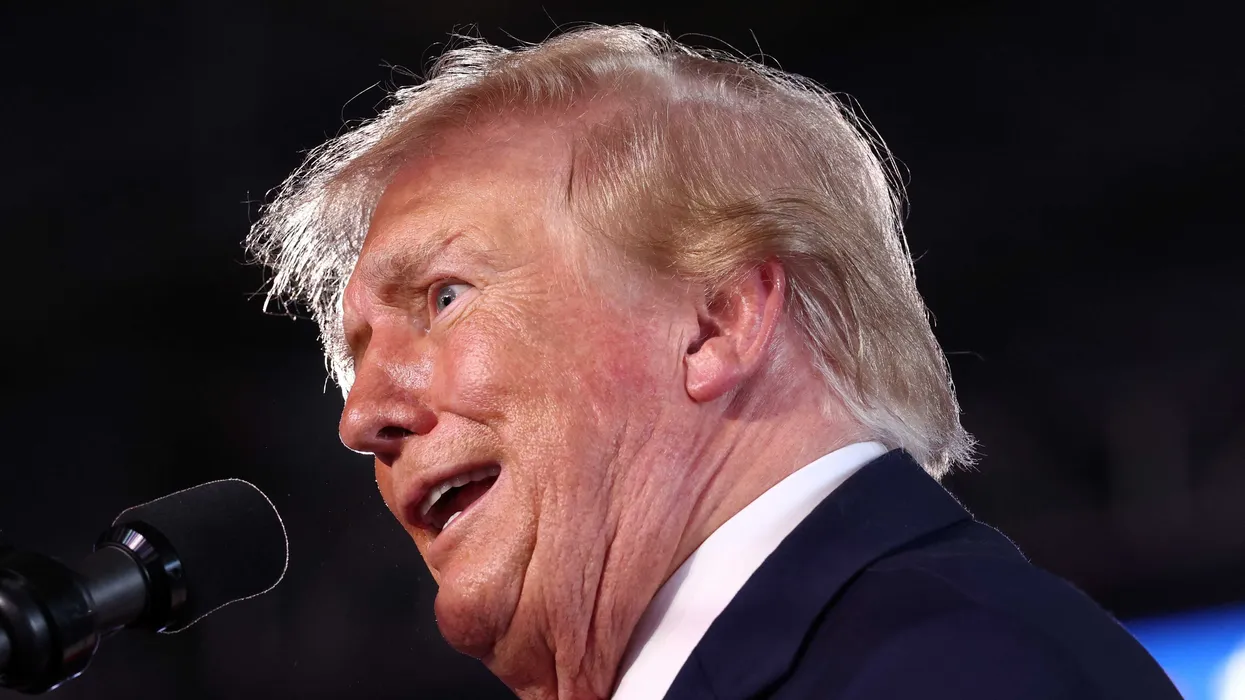
On Thursday, psychologist Dr. John Garrison warned that President Donald Trump has displayed "glitches" at his recent rallies that, in his assessment, point to some form of severe "neurodegenerative disease." According to Garrison, Trump has not only been "struggling tremendously lately," but his condition is "getting worse." His comments reflect his own interpretation of rally footage rather than any medical evaluation.
Garrison's reading rests on symptoms he says have included involuntary vocalizations, confusion, motor difficulties, and disinhibition — all of which he characterized as suggestive of significant cognitive decline. At the president's rallies in Texas on Wednesday, he said, these "strange behaviors" were on full display, including "what appears to be seizure-like activity." The frequency of such episodes is "getting worse," he added, and they now occur at "almost every single rally." Reviewing footage from Wednesday, Garrison observed that what was once an occasional twitch has progressed to an "entire body spasm."
One highlighted incident came as Trump, in the middle of railing against Democratic Senate candidate James Talarico, appeared to spasm and stammer. "You could hear the interruption in his voice," Garrison said, "but if you watch the body, if you watch his left hand, you actually see it moving up his arm to his face to the other side." A close look at the footage, he suggested, shows the spasm beginning in Trump's hand before passing through his entire body as he struggles to speak. "It's the exact same pattern I've pointed out over and over again: one limb, to the eyebrows, to the voice, to the other limb," Garrison said. "We have seen this pattern repeatedly over the past few months."
As the recording continues, Trump launches into a tirade about Talarico being a vegan, mispronouncing the word as "vagan." "I know that he's joking right now, but I don't think that the word of vegan was necessarily a joke," Garrison said. "I think that he is just coming up with strange words because I don't think his brain is functioning properly right now." Immediately afterward, he noted, Trump stutters while saying "Second Amendment." "He's struggling again. He's struggling to get these words out," Garrison said. Trump's next line, in Garrison's view, is "completely incoherent." "That last statement made absolutely no sense in this context. And I think that he's getting lost right now because that really makes absolutely no sense." Garrison argued the episode "could be related to a wide variety of issues, whether it's recovering from a stroke or something like vascular dementia or another type of dementia."
Moments later, the footage shows Trump "glitch" while trying to say the name of Republican Senate candidate Ken Paxton, who, like Talarico, is a Senate candidate in Texas. As the president speaks, his left hand gives a sudden twitch, and for a moment he appears frozen. "What you're observing is a spread of this neurological dysfunction," Garrison explained. "You're seeing it spread throughout his body. You can hear it in his voice, that part is very obvious, but if you pay attention to his hand, you can see it there as well." He added, "For a very brief moment there, it appeared that he couldn't speak." From there, Trump displays several similar spasms and at one point says something that "made absolutely no sense."
"What's so concerning about some of these language production issues is that they are located in different areas of the brain than some of the motor issues," Garrison warned. "And so what we're talking about is dysfunction in multiple areas, and this dysfunction seems to be very pervasive. We're seeing it over and over again… He seems to be consistently having more and more significant word-finding issues."
In Garrison's assessment, all of these symptoms "could be attributed to some type of neurodegenerative disease. Whether we're talking about vascular dementia, whether we're talking about a lesion that's occurred due to a stroke, there are a wide variety of problems that could be contributing to this behavior, but all of them are quite concerning, and they do seem to be progressing and getting worse."
The report cites no medical examination, diagnostic testing, or statement from the president's medical team, and Garrison pointed to a range of possible explanations rather than a single diagnosis — leaving the rally footage itself as the record against which his claims can be weighed.
This report was originally published by Alternet.

