Psychologist Warns Trump Is Showing Signs of “Neurological Decline,” Cites Stroke-Like Symptoms
Key Takeaways
- •Dr. John Garrison, a widely cited psychologist, released a video analysis on Friday evening suggesting that President Trump's recent public behaviors may indicate neurological decline consistent with a stroke or similar condition.
- •The assessment is an interpretation of publicly available campaign and White House footage rather than the product of any medical examination of the president.
- •Garrison identifies increasingly frequent spasm clusters that have spread from the right side of Trump's body to the left, which he interprets as dysfunctional pathways crossing the brain.
- •He also cites impulsive behavior at a Texas campaign stop, apparent disorientation and facial control lapses during an executive order signing, and a stiffer right leg that he suggests could stem from a knee-ankle-foot brace for one-sided weakness.
- •Because Trump is actively campaigning ahead of the midterms, claims about his health carry immediate political weight, and the analysis does not include any official medical update from the White House or the president's physician.
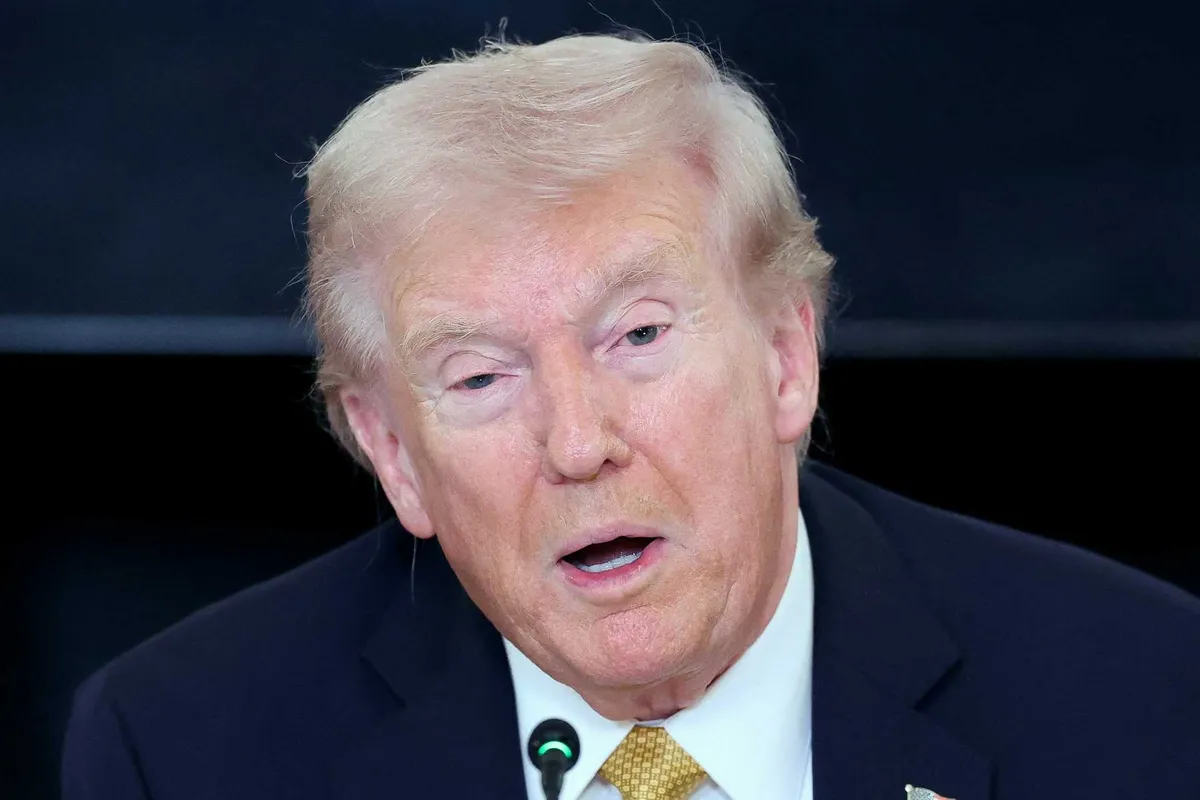
A widely cited psychologist on Friday evening flagged a series of “concerning” and “strange” behaviors by President Donald Trump, suggesting that the 80-year-old commander-in-chief may be experiencing some form of “neurological decline.” According to Dr. John Garrison, Trump exhibited symptoms consistent with a stroke or a similar condition during his recent appearances on the midterm campaign trail. Garrison’s assessment, as presented in the video, is an interpretation of publicly available campaign and White House footage rather than the product of a medical examination.
Garrison’s analysis begins with footage of Trump campaigning at a Texas Peterbilt factory, where the president stands by as a speaker introduces him. Midway through the introduction, Trump licks his lips in a provocative manner and runs his hands down the speaker’s shoulders.
“What we just observed ... was both impulsivity as well as a loss of motor control,” Garrison said, adding that both functions “are controlled up here in the front of the brain.”
“This is the most complex and most advanced part of our brain, and when people have neurodegenerative diseases, when people have strokes or something similar, it can cause damage up here and it can be difficult to inhibit certain behaviors,” he explained. “Sometimes when people are too excited, we see motor issues spill over into other areas.”
After replaying the clip, Garrison noted: “Right now, he’s feeling so excited. He’s biting his bottom lip. He feels so enthusiastic about this that he almost can’t stop himself.” In his assessment, the behavior could point to evidence of “sort of brain injury, a lesion, brain damage.”
As the video continues, Garrison identifies a number of spasm “clusters” that have become increasingly frequent. While these issues were once limited to the right side of Trump’s body, he observes that the involuntary motions now move from right to left, “which means that the dysfunctional pathways are crossing the brain.” At one point, the president appears to momentarily lose his balance, then suddenly clenches his hand into a fist before raising it to his face, examining it and rubbing it with the other hand.
“I don’t think that was voluntary,” Garrison asserts. “I think his hand closed on its own, and it surprised him because you’re going to see right after that happened, he lifted his hand up and actually looks at his hand. I think he’s used to some of these symptoms. I think he’s used to the right arm spasm. This one I don’t think he’s so used to and it caught him off guard.”
Garrison then turns to a clip of an executive order signing in the Oval Office, during which an official lavishes the president with praise. According to Garrison, Trump — who normally lights up at such talk — appears to be “checking out,” “disoriented,” and on the verge of falling asleep. Suddenly, Trump’s face twists into an expression that Garrison asserts indicates “he actually can’t control the right side of his mouth.”
The analysis closes with a much-discussed video in which Trump strikes a strange, off-balance stance while speaking with reporters. “If you’re looking closely, you can see his right leg does appear stiffer than his left when he’s walking,” Garrison says. “The reason for this could be that he’s wearing some sort of knee-ankle-foot brace or something similar to that. Some kind of device to help him with unilateral weakness. In other words, weakness on one side of the body.”
He notes there could be a variety of explanations for this. “Sometimes, for example, if someone has a stroke, they need to wear a knee-ankle-foot device in order to help them with coordination with rehabilitation,” Garrison says, adding that it could also involve some other form of “neurological illness or damage.”
Concerns about Trump’s physical and cognitive decline have been raised frequently over the course of his second term, and with the president actively campaigning ahead of the midterms, claims about his health carry immediate political weight. Garrison concludes with a warning: “There seems to be real motor dysfunction with the right side of his body. There seems to be a lot of involuntary behaviors that are happening over and over again… and it does appear to be something distinctly neurological.”
Because the clips Garrison analyzes are drawn from public appearances, readers can review each moment he cites and weigh his interpretations directly. Any official medical update from the White House or the president’s physician would provide context that the video analysis itself does not include. The full video analysis is available on YouTube: https://www.youtube.com/watch?v=P3TAGzAN_MI

