Forensic psychologist: Trump's 'judgment is getting much, much worse' on the campaign trail
Key Takeaways
- •Clinical and forensic psychologist Dr. John Paul Garrison says President Trump's behavior at a recent Nebraska rally shows mounting impulsivity and poor judgment, which he attributes to cognitive and physical decline.
- •Trump drew controversy by suggesting Los Angeles and San Diego could serve as nuclear targets for Iran, a remark carrying added weight because the president holds sole authority to order a nuclear strike.
- •The White House has dismissed the criticism by saying it was a joke, while Garrison argued that Trump's body language, including the absence of a smile or laughter, showed no signs of humor.
- •Garrison, a psychologist rather than a psychiatrist, is not bound by the American Psychiatric Association's Goldwater rule, which bars its members from offering professional opinions on public figures they have not personally examined.
- •Garrison also cited apparent difficulty Trump had controlling his right hand and jaw while signing an order alongside Natalie Harp, an aide whose fixation on the president reportedly unnerved his chief of staff and Secret Service members.
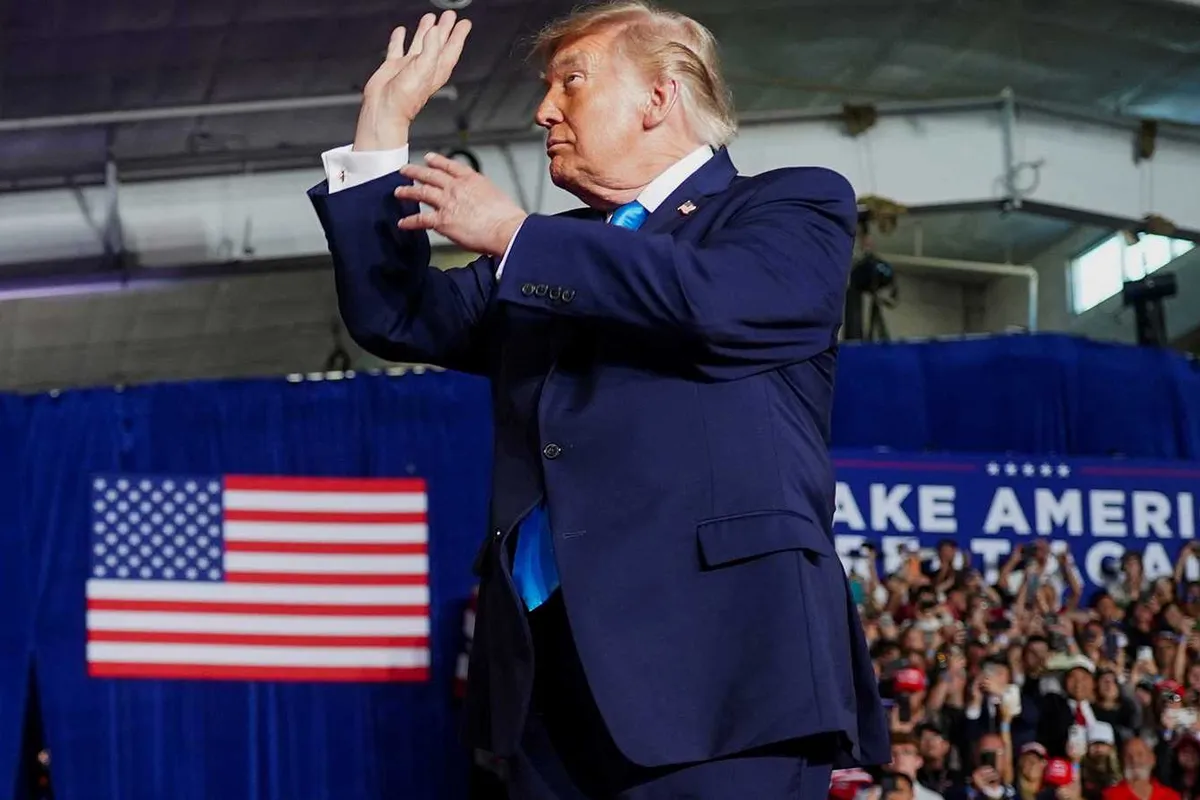
Clinical and forensic psychologist Dr. John Paul Garrison says President Donald Trump is displaying mounting signs of impulsivity and deteriorating judgment as he hits the campaign trail — behavior the psychologist describes as the outward expression of cognitive and physical decline.
Garrison, known as "Dr. G." on social media, regularly analyzes nonverbal communication, detailing social and physical cues that he believes point to possible health concerns. Offering his assessment of footage from Trump's recent rally in Nebraska, Garrison said he noticed "Trump's increase in impulsivity as well as his poor judgment."
Remote, video-based assessments of political figures occupy contested ground in the mental-health professions: the American Psychiatric Association's ethics code — the so-called Goldwater rule, adopted after psychiatrists publicly questioned Barry Goldwater's fitness during the 1964 campaign — bars its members from offering professional opinions on public figures they have not personally examined. Garrison, a psychologist rather than a psychiatrist, is not bound by that rule.
The remark drawing the most attention came when Trump floated cities such as Los Angeles and San Diego as possible nuclear targets for Iran. The comment exploded across the internet and the political class, with many questioning whether it would have been treated as a "joke" had former President Barack Obama said the same about places like Oklahoma and Alabama.
Comments about nuclear targeting carry added weight from any occupant of the Oval Office, given that long-standing U.S. practice vests sole authority in the president to order a nuclear strike — one reason such remarks are examined more closely than ordinary campaign rhetoric.
According to Garrison, these impulse-control issues are part of what he calls "the physical manifestations of [Trump's] decline."
"We've seen him slurring words. We've seen his arm spasming over and over again. And what we're going to be looking at today is significantly poor judgment," he said in setting up his analysis.
Trump's suggestion that American adversaries be allowed to "take out" Los Angeles and San Diego, Garrison argued, "not only demonstrate impulsivity but severely poor judgment. And that's exactly what we look for when someone is experiencing neurological decline. I've been showing you a lot of physical manifestations."
Earlier in the week, Garrison flagged what he described as slack-jaw problems that make it difficult for Trump to pronounce words properly, noting that the vocal slips appear to occur at or after a jerking motion in the president's body.
"But the judgment is also getting much, much worse," Garrison said.
The White House has sought to deflect the criticism by deploying the familiar claim that it is "just a joke" and that the "left can't take a joke."
Questions of age and fitness have become recurring political flash points: Trump, who at 78 became the oldest person ever elected president, has brushed aside questions about his stamina, while predecessor Joe Biden exited the 2024 race after a widely panned debate performance set off pressure from within his own party.
Garrison rejected that explanation based on Trump's demeanor. "There was nothing body language-wise that would suggest that he was joking," he said. "There was no smile. He wasn't looking around at the audience and laughing or putting his arms up or doing anything that would make you believe that what he said was a joke. This goes to show how impaired his decision-making abilities are because he seems to think that's an acceptable loss. A small price to pay to put it in his words."
Garrison added that he found it even more troubling that the rally audience appeared to regard the prospect of nuclear strikes on two of America's largest cities as acceptable.
The second clip he examined showed Trump bringing Natalie Harp on stage with him. Harp has become controversial lately after a book detailed her obsession with Trump, a fixation that unnerved his chief of staff and members of the Secret Service.
Garrison pointed to further signs of trouble regulating Trump's behavior, citing "over-the-top reactions," words said "too loudly," and a tendency to "react more than he intends to because he's not able to inhibit it as well as used to."
"Another thing that we saw is that he was having a hard time putting his hand in his jacket to get his pen because he has a hard time controlling his right hand," Garrison added.
In Garrison's view, Trump brought Harp out as if he wanted to show her off. "And there's something he says at the end that shows that that's actually factually exactly how he's thinking about this. But to him, this is exactly what he wants. He wants somebody to come and present this to him. He wants this to be a spectacle. And given all of the talk about Natalie Harp, this is an extremely poor idea."
Ironically, Trump used the appearance to make a backhanded comment about former President Joe Biden, saying that Biden could "never sign anything." What Garrison observed, however, is that while Trump signed the order, he appeared to struggle to "keep his mouth closed and his jaw keeps shifting to the left."
When Harp walked away, Trump appeared to be "checking her out, which once again shows impulsivity and extreme lack of judgment," Garrison said.
Garrison went on to describe an increase in Trump's agitation when reporters confront his assertions with facts, including his claims of widespread voter fraud.
Source: Alternet

