Psychologist Points to 'Very Telling' Behaviors in Trump's Heated Exchange With Reuters Reporter
Key Takeaways
- •President Trump berated Reuters White House correspondent Jacob Bogage at Joint Base Andrews after apparently misreading a question about being 'sick of traveling' — connected to his canceled Kansas midterm rally — as one about his health, demanding to know his employer and disparaging his weight.
- •Clinical and forensic psychologist Dr. John Paul Garrison, whose assessments are based on public footage rather than a direct medical examination, described the president's behavior in the exchange as revealing.
- •Garrison said Trump fully facing away from the reporter signaled a deliberate disconnect after the health-related answer, and that the hedged phrase 'Good, I think very good' indicated uncertainty about how to respond.
- •Garrison noted that Trump corrected his own wording from 'I think we're going to have a good Tuesday night' to a more direct statement, which he said reinforced the significance of the earlier hedging.
- •Garrison argued that the immediacy of the president's anger reflects growing difficulty managing emotions and predicted such outbursts will become increasingly common in unscripted settings.
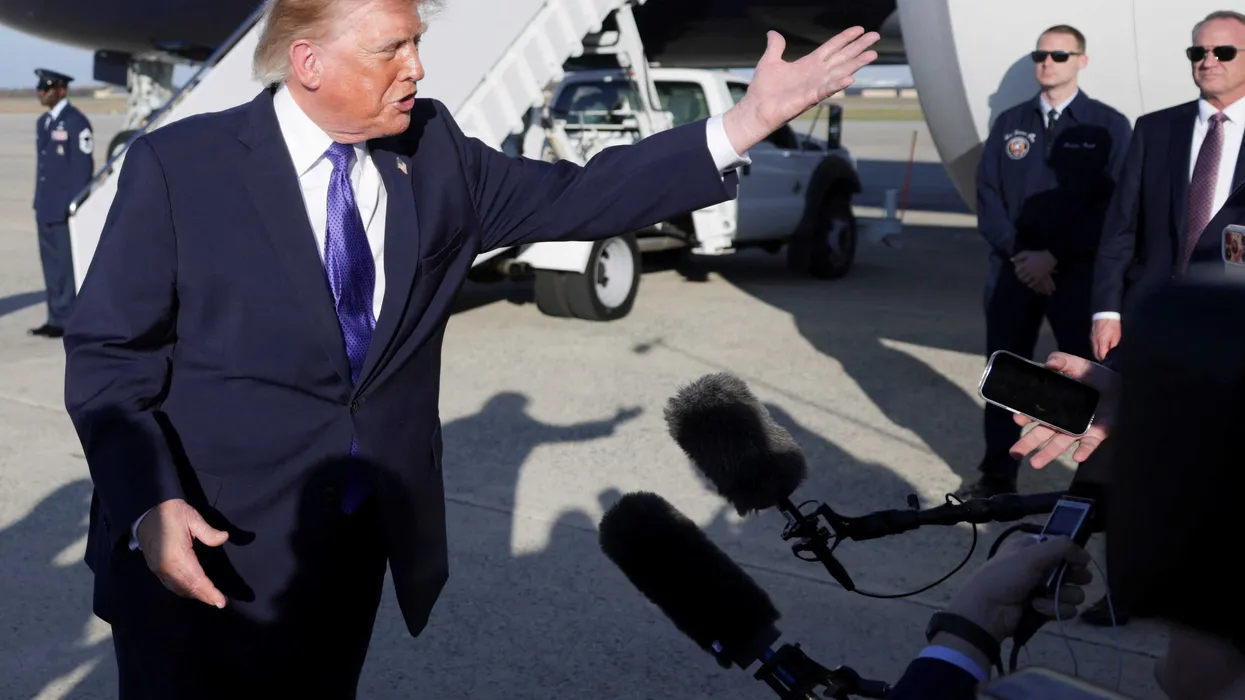
President Donald Trump lashed out at a reporter this week after apparently mistaking a routine travel question for one about his health, and a psychologist who analyzes the behavior of public figures says the exchange revealed details he considers "very telling."
Dr. John Paul Garrison, a clinical and forensic psychologist who specializes in interpreting body language — the practice of drawing behavioral inferences from cues like posture, orientation, and word choice — publishes videos online offering professional analysis of the behavior of prominent public figures. His assessments rest on his professional reading of public footage rather than any direct medical examination of the president. Many of his recent videos have focused on Trump's public appearances, in which Garrison argues there is a growing number of indications of potentially significant physical and neurological decline.
In his latest video (available on YouTube), Garrison examined viral footage of Trump erupting at Jacob Bogage, a White House correspondent for Reuters, the international news agency, during a press scrum — an informal, on-the-spot question-and-answer session between the president and reporters — on the tarmac at Joint Base Andrews in Maryland. Bogage asked the president whether his decision to cancel a midterm rally in Kansas was because he was "sick of traveling." Trump responded angrily, saying he was "sick to ask that question," demanding to know who Bogage worked for, and disparaging him for being overweight.
The moment turned on the double meaning of "sick" — weariness from the road versus physical illness. Many observers have since argued that Trump appeared to have misunderstood the question, taking it as an inquiry into whether he was feeling unwell. Some have further suggested that the exchange indicates his health has become a sore subject.
Reviewing the clip, Garrison said the footage of Trump lashing out at Bogage exposed two behaviors that he found "very telling."
"One is that he fully faced away from the reporter after answering that, and we do that as a way to disconnect," Garrison explained. "He does not want to be facing the reporter and disconnects from him after talking about his health. Second is that when speaking about his health, he said it's 'Good, I think very good.' Now, he doesn't typically use phrases like 'I think,' because it makes it sound weak. So, to respond that way, to me, says that there is some uncertainty there and some uncertainty about how to answer that question."
Moments later in the clip, Garrison noted, Trump appeared to correct his own wording while making a similar remark — a shift he said reinforced the significance of the earlier phrasing.
"You notice he even corrected his own language right there. He started to say, 'I think we're going to have a good Tuesday night,' to just being more direct and saying, 'We're going to have a good Tuesday night,'" Garrison explained. "So it's very telling that he was using the phrase 'I think.'"
Garrison also flagged the immediacy of Trump's outburst at Bogage as a point of concern, linking it to what he described as a growing lack of emotional control in the president's recent behavior. In his view, such displays are set to become more common as Trump continues to take questions in unscripted settings.
"And you notice the anger is so immediate," he explained. "And this is what we've talked about is that the more challenges he has managing his emotions, the more you're going to see anger, agitation, confusion, frustration. Something like this is going to come out more and more."

