Psychologist John Paul Garrison Raises Questions About Trump's Daytime Drowsiness and 'Neurological Quirks'
Key Takeaways
- •Dr. John Paul Garrison, a clinical and forensic psychologist who is not a psychiatrist, released a video analyzing President Trump's body language at two recent White House events and framed his commentary as informed speculation rather than diagnosis.
- •Garrison claimed Trump appeared to doze off multiple times during an Oval Office event and seemed disoriented upon waking, and said he does not find Trump's long-reported short sleep schedule an adequate explanation for daytime drowsiness.
- •Garrison also described observing involuntary spasms, verbal slurring that worsens with emotion, and repeated downward glances at Trump's right hand, which he noted was not covered by a watch.
- •Trump, at 79, is the oldest person elected to the U.S. presidency, and no independent medical examination has substantiated or ruled out any of the conditions Garrison raises.
- •The American Psychiatric Association's Goldwater Rule discourages its members from publicly commenting on public figures' mental health from afar, and experts caution remote observation cannot substitute for in-person clinical assessment.
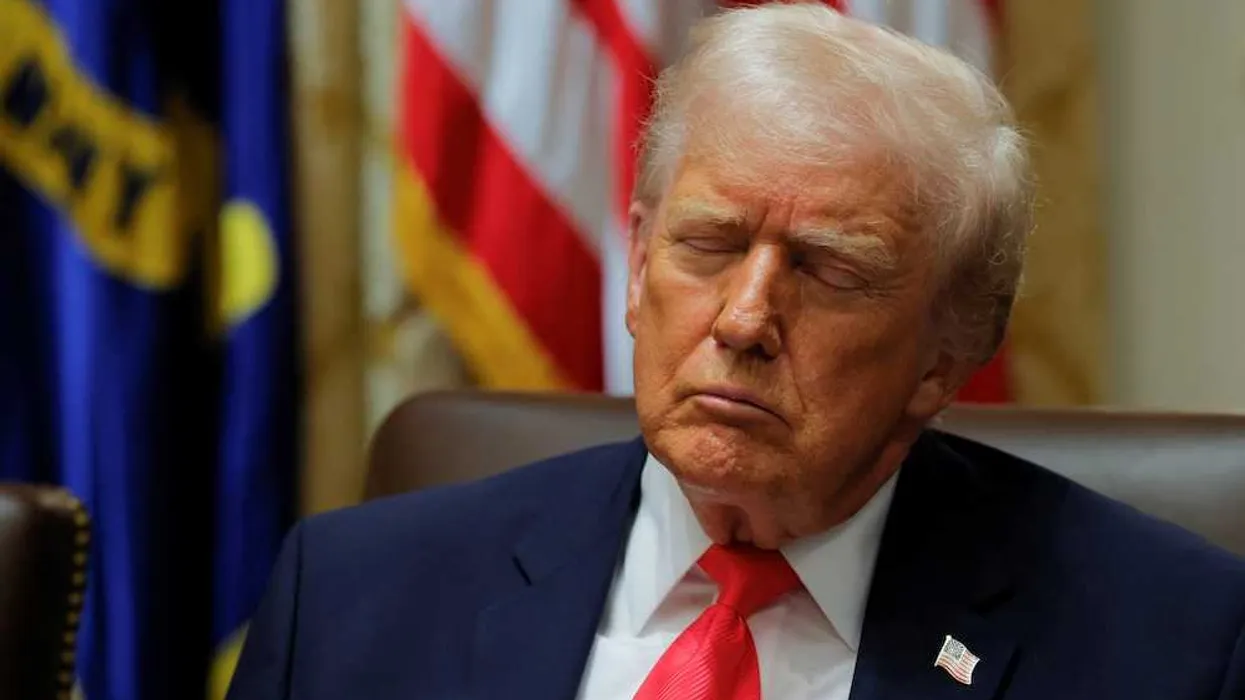
Clinical and forensic psychologist Dr. John Paul Garrison has published a new video analyzing President Donald Trump's body language during an Oval Office event this week with his "Make America Healthy Again" appointees and at a White House Rose Garden gathering. Garrison, known as "Dr. G" on his YouTube channel, pointed to a series of unusual behaviors at the recent events that left him with more questions than answers. Garrison is one of a number of mental-health professionals who have publicly commented on Trump's behavior from afar during his second term, a practice the American Psychiatric Association's Goldwater Rule discourages among its members; Garrison is not a psychiatrist and has repeatedly framed his commentary as informed speculation rather than diagnosis.
In the Oval Office, Garrison said Trump appeared to be dozing off again as Robert Kennedy praised him, and that when he reopened his eyes, he appeared "disoriented."
"Watch this again," Garrison replays. "He's going to fall asleep many times throughout this and I know I've shown videos of him falling asleep before, but I think the fact that this is happening in the middle of the day in a bright room full of people is so, so concerning."
"You can notice his breathing is starting to change. And as you can see, he's trying to reorient himself after he wakes up," Garrison continued. "Now, as you can see, as he's getting tired again, you're noticing this side of his mouth is starting to droop down."
Garrison stressed that his analysis is "not a psychological evaluation of any kind," saying he is merely using his professional knowledge to speculate about what could be happening with the president's health. Trump, at 79, is the oldest person elected to the U.S. presidency, an age at which the White House has historically released routine medical summaries; no independent medical examination of the president has substantiated or ruled out any of the conditions Garrison raises.
"So the big question is: why is he falling asleep? Is it related to health issues?" he asked. "Is it related to neurological issues? Is it related to medication? Because as I talked about in the last video, if he's potentially having a seizure, he could be on anti-seizure medication and that can have sedating effects. So, it's possible if he's being treated for seizures, that could result in something like this."
Cabinet officials have observed in the past that Trump will call them at all hours of the night. Previous reporting on his "bizarre sleep habits", including comments from his daughter-in-law, suggested it could explain why he has trouble staying awake during the day. Trump has long said he sleeps only a few hours a night, a routine he has described as a habit from his decades in business.
Garrison, however, does not find that a sufficient explanation for Trump falling asleep "in the middle of a meeting like this with all of the lighting, all of the reporters. That really is not an adequate explanation."
The psychologist also said he is observing a continuing pattern of repeated involuntary spasms and jerking movements, along with some verbal slurring and confusion. He then noted that Trump repeatedly looked down at his right hand.
"He's not wearing a watch, by the way, I checked. You can see very clearly, later on, he is not wearing a watch," said Garrison. "Him looking at his right hand is not unique. He has been doing this repeatedly over the past few meetings. So, there's something going on. Whether it's that he's had an injection in his right hand, whether there's bruising there, he continues to look at it over and over again."
Garrison further observed that the more emotional Trump becomes about a subject, the more he appears to slur his words. When a female reporter asked whether he would be willing to drop a nuclear weapon on Iran, Trump claimed, "I would never say that," then said he would not do it, before attacking the reporter for asking a "stupid question."
"When he starts getting more emotional, his language skills start to fall apart more. We've seen this very consistently. When he gets agitated, when he gets angry, he has a much harder time articulating himself," Garrison observed.
At the Rose Garden meeting, Garrison said Trump "doesn't seem to know where to look anymore. Part of what President Trump used to always do is he used to always actually have great eye contact." Now, the doctor said, Trump appears to be looking "all over the place" and "appear[s] confused once anybody speaks for more than a few seconds."
Garrison noted that while all of the business people present were looking at Trump's face, the president was looking down and away.
"It's very, very peculiar behavior. There is most definitely something very, very wrong right now," he said.
Turning to the jerking motions, Garrison added: "The more agitated people are, the more exhausted they are, the more likely you're going to see these neurological quirks like that right there. Again, I know I've pointed this out many times, but it's so important that you see how frequently this happens. Whether or not this by itself could be some sort of myoclonic seizure activity or something else. We are seeing these involuntary neurological spasms over and over again." Garrison's videos have drawn a growing online audience, and similar armchair analysis of political figures has become a recurring feature of recent campaign coverage, though experts caution that remote observation cannot substitute for an in-person clinical assessment.
