Psychiatrist David Reiss challenges media ‘sanewashing’ of Donald Trump
Key Takeaways
- •Dr. David Reiss says the press normalizes President Trump's conduct by treating it as personal style rather than a possible mental health concern.
- •Reiss argues that the specific diagnosis matters less than whether the behavior would prompt urgent concern if displayed by a friend or family member.
- •He rejects explanations like the New York Times' 'the weave' and 'four-dimensional chess,' noting the same pattern appears even in trivial statements involving no strategy.
- •Reiss believes the warning signs with Trump are much greater than those with Biden, whose issues were contained by aides, while Trump faces no guardrails.
- •He attributes the media and public pass to differing forms of fear, including fear of retaliation and partisan political consequences.
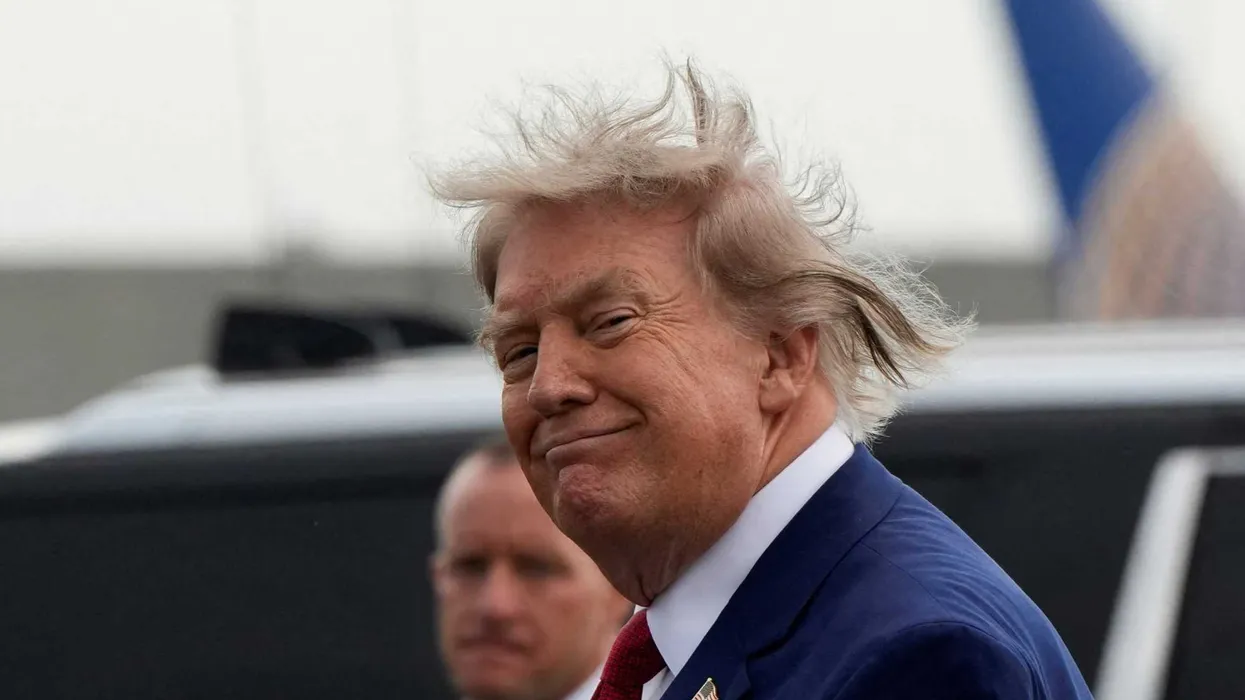
President Donald Trump’s public behavior is frequently normalized by the mainstream media, a practice critics describe as “sanewashing”—presenting irrational or psychologically unhealthy conduct as lucid or ordinary.
Journalists have appeared reluctant to characterize Trump’s fixation on putting his name on the Kennedy Center, his plans to build a White House ballroom, and his unprovoked conflicts with Canada, Denmark and Iran as possible signs of poor mental health. By contrast, President Joe Biden’s stumbling and incoherent performance in the 2024 presidential debate prompted widespread calls for him to leave the race, which ultimately succeeded.
To discuss the perceived double standard, AlterNet spoke with Dr. David Reiss, a psychiatrist who contributed to The Dangerous Case of Donald Trump: 27 Psychiatrists and Mental Health Experts Assess a President. The interview was lightly edited for clarity, context and length. The original interview is available at https://www.alternet.org/alternet-exclusives/sanewashing-trump-reiss/.
Breaking the silence on ‘sanewashing’
ROZSA: I feel that the press tends to sanewash President Trump.
REISS: Slightly.
ROZSA: I feel like you’re using “slightly” sarcastically.
REISS: Definitely. (Reiss laughs.)
ROZSA: Why do you agree?
The family dinner test
REISS: At this point, the diagnosis itself is not that important. Is it one condition or another? Is it dementia, medication, or some other illness? That is not really relevant. What matters is one simple question: If you were sitting at a family dinner and someone acted and spoke like him, how long would it take you to get that person to an emergency room?
The press treats this as if it is simply who he is. No, this is a very disturbed person—“deranged” in the vernacular. He says things that do not make sense and speaks for two hours. This is not normal or productive behavior, and much of it is obviously false.
The relevant question is whether, if this were a friend or relative, you would say that person needed help. If they were already receiving help, you might say they needed to see a different doctor because the problem was not being treated effectively. That is not how the press discusses Trump. Instead, it treats his conduct as a personal style, invents bizarre explanations for it or ignores it.
ROZSA: You contributed to a book arguing that President Trump was unfit for office. You have said your analysis is somewhat different now. Why?
REISS: My analysis has not fundamentally changed. What we warned about ten years ago still applies, and the possible diagnoses remain possible. But he has now been in the public eye for four years and then another two years. There is more everyday evidence, as you say, and the press is ignoring it.
Does he seem worse? Yes, he seems worse. Is that because of stress? We do not know, and it does not matter why. The issue is whether this is a functional human being who should have the responsibilities he holds. Back then, based on his history, he did not look like someone who should have them. Now there are six years of increasing evidence that he is not doing the job.
ROZSA: The New York Times called his verbal style “the weave,” and the hosts of the Flagrant podcast, Andrew Schulz and Akaash Singh, reinforced that explanation. Others describe him as playing four-dimensional chess when he does something seemingly irrational, such as threatening Canada or Greenland.
REISS: That explanation does not hold. Some people are more concrete and others are looser in their thinking; there is a spectrum. But this is so many standard deviations from normal that calling it “a weave” does not make sense.
To say it is a strategy assumes he has not learned that it is not working. But it goes far beyond that. The same pattern appears in statements unrelated to anything important, where no strategy is involved. Just yesterday, I saw—without taking a deep dive—that he again said most people do not know that “dumb” has a B in it. Does he not realize that makes him look stupid? Even if it was a joke the first time, common sense says you do not repeat the same joke 200 times when it is going over badly.
ROZSA: There is a difference between not knowing how to spell “dumb”—Vice President Dan Quayle did not know how to spell “potato”—and engaging in destructive irrational behavior. Trump appears obsessed with putting his name on the Kennedy Center and building a White House ballroom. He picks fights with allies such as Canada and Denmark because of his narcissism. Those actions have destructive consequences.
REISS: Exactly. My point is that the same pattern appears even in examples that are not destructive, which shows that it is not a strategy. You are right that the other actions are dangerous. Spelling a word correctly or incorrectly is not dangerous. But even in matters with no real weight, the pattern is the same.
The most important question is what worst-case scenarios could follow from his displayed behavior in terms of policy. Predicting exactly where things will go is not my area of expertise, but he will continue damaging international relationships. Who is involved or who comes next will depend on his emotions that day.
He will continue aggrandizing himself, whether through gold or the Kennedy Center. If it were one thing, that would be different, but this is everything, and it will continue. The more frustrated he becomes, the more he raises the stakes. I cannot predict what comes next, but without restraints, the behavior will continue and intensify.
Comparing Trump and Biden
ROZSA: Why has Trump been treated differently from President Biden?
REISS: I wish I knew.
ROZSA: Are the warning signs with Trump greater than, less than or equal to those that existed with Biden?
REISS: Much greater. I personally met Biden in 2019. Toward the end, there were signs that he was not functioning as well and that his age was showing. But he was never that disorganized, and he had people around him who contained the problem.
If there was anything worse, it did not affect policy because there were good people around him. Trump, by contrast, intentionally chooses people who are even worse than he is. There are no guardrails and no one containing the behavior. I am not equating the two; they are different. Biden probably had some issues, but people around him were containing them.
ROZSA: Based on what we have seen, what do you think the cameras are not showing?
REISS: Not much, because we have seen almost everything. We probably are not seeing the tantrums. You hear reports that he threw a tantrum at someone the other day, and I do not think we are seeing the angry explosiveness he is said to display. Otherwise, we are seeing it. It is simply not being discussed in the right way.
Fear and the public response
ROZSA: I am not referring to corruption or far-right policies. I oppose those things, but they do not make someone literally insane. Benjamin Netanyahu in Israel is corrupt and far-right, but he is not literally insane.
REISS: He may act like a war criminal, but he is not insane. He is not detached from reality.
ROZSA: He is a genocidal maniac. Trump is also a genocidal maniac, but he may be detached from reality as well.
REISS: Exactly.
ROZSA: Why do the media and the public seem to give Trump a pass?
REISS: I think the public is increasingly recognizing it. People who watch only one side of the media may not examine the issue deeply or think about it. As for the media, I think some people are being paid off, while others are afraid of what Trump will do to them if they do not comply.
The larger question is why everyone does not come together and say that, while each of us may have an individual reason to give in when alone, we do not have to give in collectively. I do not know why that is not happening.
ROZSA: My theory is that fear is the primary motivation. There is partisan fear among Republicans and other Trump supporters who have tied themselves to this political project and fear that if it fails, they will fail with it. There is also fear among the general public of being attacked by Trump supporters for pointing out that the emperor has no clothes—or, more precisely, has no brain. (Reiss laughs.) Does that theory have merit, and what is the antidote?
REISS: Absolutely. It is fear, but the specific fear is not the same for everyone. That is what keeps people divided instead of bringing them together. One person is afraid for one reason and another person for a different reason, rather than recognizing that they are both acting out of fear and joining together.
They remain in their own corners defending their fear. I cannot explain why this has lasted so long because it seems obvious. But I think you are right: it is fear, even though the fear differs from one group or person to another.

