Kalshi and Polymarket Face First Real Test as Prediction Markets Scale Up for the Midterms
Key Takeaways
- •Combined monthly trading volume on Kalshi and Polymarket more than doubled from $26 billion in May to $53 billion in July, driven mostly by sports rather than politics.
- •The Commodity Futures Trading Commission withdrew its 2024 proposal to classify election contracts as gaming and in June proposed a framework under which elections would not count as gaming, leaving the rules in flux for the November vote.
- •Chuck Todd will host the NEXTPredict summit in New York on October 22-23, focusing on how much pollsters and prediction markets need and influence each other.
- •Research from the Anti-Corruption Data Collective found that a $3,500 bet can move 97% of midterm-related markets by five cents or more, underscoring thin liquidity in most congressional markets.
- •Morgan Stanley's Counterpoint Global analyzed more than 72 million Kalshi trades and found that prices tracked outcomes closely, reflecting growing institutional interest in prediction markets.
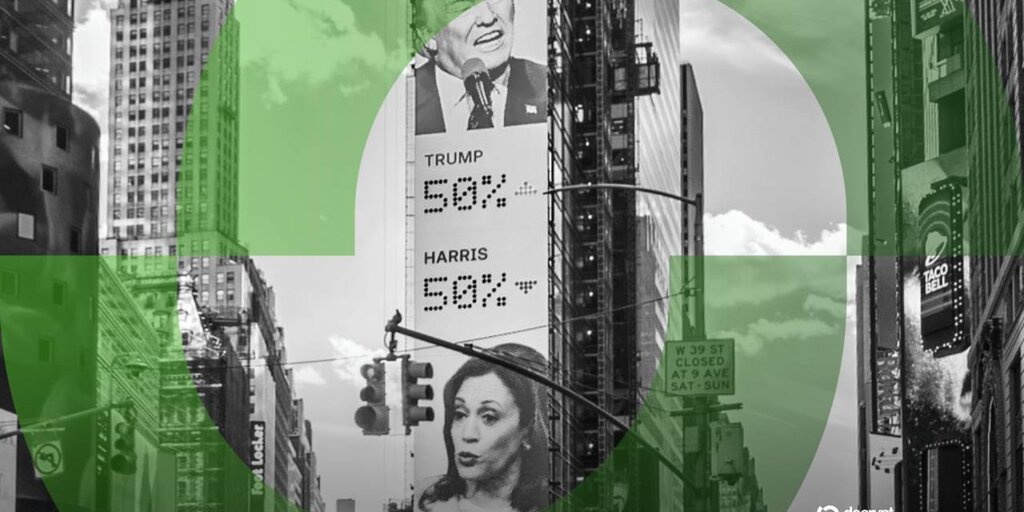
Kalshi and Polymarket head into the November midterm elections with combined monthly trading volume that topped $50 billion in July — more than double May's figure — setting up the first major U.S. vote in which the platforms have had a full runway to operate legally.
Former "Meet the Press" moderator Chuck Todd will host the NEXTPredict summit in New York on October 22 and 23, two weeks before the November 3 vote. He says he wants to examine how much pollsters and prediction markets need each other, and whether markets will be healthy for politics.
The moment marks a sharp contrast with the last presidential cycle. In 2024, election contracts became legal in the United States only a month before the presidential vote. This time, Benjamin Freeman, Kalshi's head of politics growth, told CNBC, "there's a much longer runway to plan."
A Much Larger Footprint
The platforms arrive at the November 3 vote far larger than they were in 2024. Combined monthly trading volume on the two exchanges more than doubled from $26 billion in May to $53 billion in July, driven mostly by sports, according to a Pew Research Center analysis. Politics remains a small slice of that activity, averaging about $2 billion a month Polymarket this year and under $300 million on Kalshi, Pew found. Even so, by July more than $30 million had been traded on which party will win the House and the Senate, as CNBC reported.
The regulatory backdrop has shifted as well. The Commodity Futures Trading Commission once barred Kalshi from listing contracts on which party would control Congress, finding that they involved "gaming," and in 2024 proposed a rule that would have classed election contracts as gaming. The agency withdrew that proposal in February, and on June 10 it published a proposed "structured framework" for event contracts under which elections would not count as gaming, according to a Congressional Research Service analysis. The proposal also argues that by "harnessing the wisdom of the crowds," event contracts can produce information more reliable than other forecasting methods, the CRS noted. Because the framework remains a proposal, the November vote will unfold while the rules governing election contracts are still in flux.
Kalshi launched its Midterms Hub that same month, placing traders' odds for individual races alongside polling averages — a layout that stages, in miniature, the pollsters-versus-markets comparison Todd plans to probe in New York.
Pollsters Versus Prediction Markets
Todd, who previously served as NBC News political director, is the official host of the NEXTPredict summit. Organizers have also booked CNBC correspondent Contessa Brewer and CNN senior reporter Marshall Cohen around the midterms, putting working reporters on the program alongside the exchanges.
Asked in a September 18 interview by NEXTPredict co-founder Pierre Lindh what he hoped to learn at the event, Todd framed its central question as "the pollsters versus the prediction markets."
"How much do they need each other? How much do they feed each other?" Todd said. He also wants to know how much of the trading is hedging and how much is entertainment. "I'm open minded on this. Is this going to be healthy for politics that it's subject to markets like this, or is it going to create a different class of politician?"
On some races, he has come around. Of the Texas Senate race, where Democrat James Talarico faces Republican Ken Paxton, he said: "I'm with the prediction markets here. I'll be more surprised if Talarico loses than if he wins."
"If I were advising people on prediction markets, the Trump voter tunes in much later than the Democrat," Todd added. "I've seen a lot of September optimism drown in October realism."
Thin Congressional Markets
Liquidity remains a weak point. Prices on event contracts are quoted in cents that function as implied odds, so even small moves translate into meaningful shifts in a race's apparent likelihood. A $3,500 bet — the maximum personal campaign contribution under federal law — can move 97% of midterm-related markets by five cents or more, the Anti-Corruption Data Collective found in research shared with CNBC. "The thinness of most congressional markets demonstrates that too often this just doesn't exist," said co-director Michael Hornsby, referring to the active trading needed to correct prices.
"In any liquid market, mispricing is free money on the ground," Kalshi spokesperson Dani Lever said.
Institutional interest is building. Morgan Stanley's Counterpoint Global studied more than 72 million Kalshi trades and found that prices tracked outcomes closely, Decrypt reported. Bank research desks want to know whether market odds offer a better read on the world than polling, Lindh said.
Morgan Stanley will lead a panel on institutional capital on the summit's second day, with about 2,500 attendees expected. That morning, Todd will moderate a session titled "Who Calls the Midterms: Polls, Models or the Markets?" featuring Columbia University professor Rajiv Sethi, Decision Desk HQ chief elections analyst Geoffrey Skelley and PredictIt CEO John Phillips. The panel will compare where polls, models and prediction markets break down — and which signal to trust when results begin arriving on November 3.

