Pope Leo Draws on John Paul II's Anti-Authoritarian Playbook in Clash With MAGA, Writer Argues
Key Takeaways
- •Christopher Hale links Pope Leo XIV’s defense of immigrants and independence from Trump to John Paul II’s earlier resistance to communism.
- •Leo wrote that protecting life includes welcoming, protecting and assisting immigrants.
- •Trump has made warnings about communist influence and newcomers a major element of his 2026 election message.
- •Leo spent a day with migrants in Lampedusa rather than attending events connected to the America 250 celebrations.
- •The Pentagon brought in Cardinal Christophe Pierre to address concerns that the pope’s language was anti-Trump.
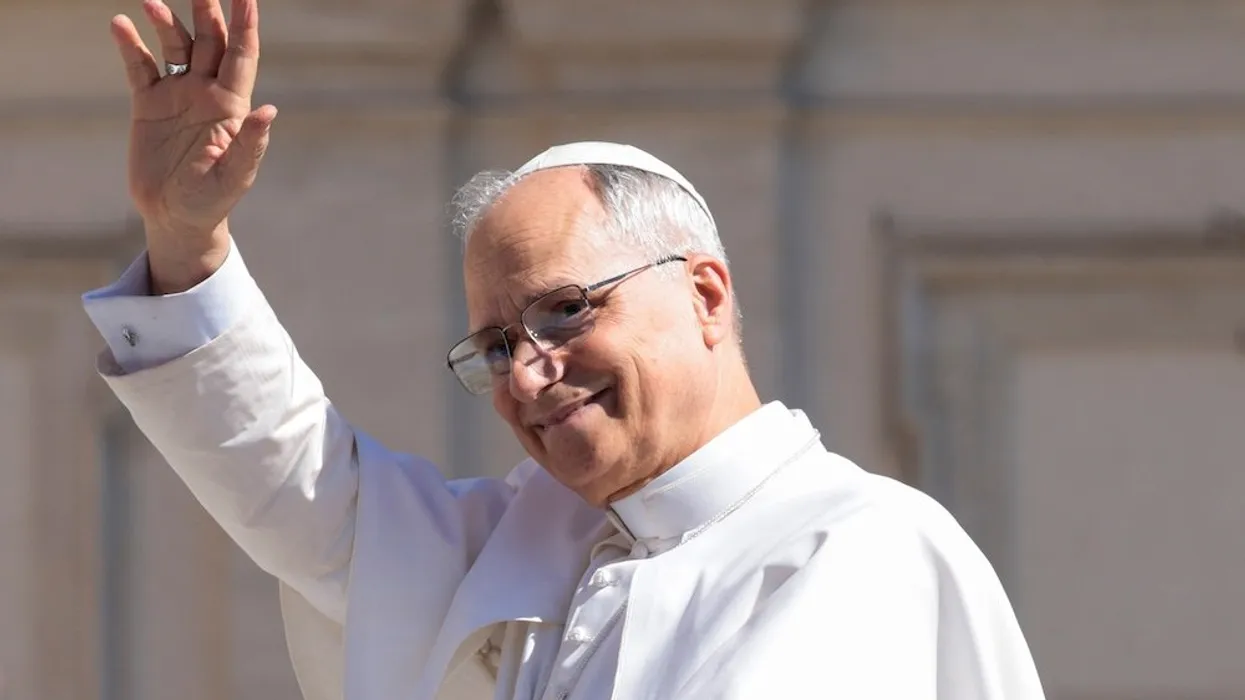
Pope Leo XIV has taken up the anti-authoritarian mantle once carried by Pope John Paul II, the Polish-born pontiff — only this time it is directed not at Soviet communism but at President Donald Trump's MAGA movement, according to Catholic writer Christopher Hale.
Hale, who writes a Substack newsletter on Pope Leo, argued in his latest column that John Paul II's resistance to authoritarianism connects directly with Pope Leo XIV's defense of immigrants and his refusal to bend to Trump.
The parallel, Hale wrote, began with John Paul's inaugural message in October 1978, when he told the crowds in St. Peter's Square: "Do not be afraid. Open wide the doors for Christ. To his saving power open the boundaries of States, economic and political systems."
Top communist leaders, Hale said, knew exactly what the new pope meant. Less than a year later, John Paul knelt and kissed the tarmac at Warsaw's airport, and that afternoon celebrated Mass in Victory Square — a plaza the communists had renamed — before hundreds of thousands of Poles. A little over a year after that, Hale's account continues, the Berlin Wall came down.
Pope Leo, Hale argued, has taken up that same mantle, confronting a different adversary. "The danger to human dignity wears a red hat and speaks the language of the right," Hale wrote. "Just as God raised up John Paul II behind the Iron Curtain to stand up to communism, God has raised up a pope from the Americas, from inside the walls of MAGA authoritarianism, to stand up to it."
In his first year in office, Leo — the first American pope — has used his position to urge Americans to uphold the value of loving their neighbor. In a June letter, Leo wrote that defending life includes "welcoming, protecting and assisting immigrants." The disagreement matters well beyond church circles: it pits the moral authority of the papacy against a sitting administration's core campaign theme, with immigration — a polarizing issue in American politics — as the point of friction.
Hale contrasts that language with Trump's warnings of a communist threat tied to newcomers. The pope who opposed communism also welcomed immigrants, Hale wrote, while Trump invokes communism to cast suspicion on them.
The Trump administration, meanwhile, has been sounding the alarm that communists are coming. The 21st-century "red scare" has been a major element of Trump's 2026 election message. During a speech at Mount Rushmore, Trump claimed there is "a resurgence of the communist menace in our land, including from newcomers to our country."
Hale pointed out how uniquely inverted that framing is compared with the pope's.
While the president wanted Pope Leo to attend some of the America 250 events, the pontiff instead spent the day with migrants on Lampedusa, a small island off the coast of Sicily that has experienced an influx of people fleeing poverty, war and persecution. Leo recalled the biblical parable of the Good Samaritan: "before any intellectual consideration or ideological conviction, the encounter with those who lie before us, stripped of everything, calls us to be close to them."
Back in the United States, the Pentagon brought in Cardinal Christophe Pierre to lecture on the pope's language, which some saw as anti-Trump. Leo has not been deterred, much less intimidated, and has refused to trade moral independence for whatever political access he has been promised.
With America 250 — the celebrations marking the 250th anniversary of American independence in 2026 — anchoring the administration's political calendar, the standoff offers concrete markers to watch: whether Trump's 2026 message continues pairing immigration with warnings of communist influence, and what role, if any, Leo plays in official events after choosing Lampedusa over an invitation to attend.
Hale closed his column by concluding that Catholics should recognize that resistance to MAGA authoritarianism is also a defense of human dignity — and far from a departure from their faith. Where Pope John Paul II offered encouragement, Hale wrote, Pope Leo XIV is speaking plainly to power while reminding Americans that welcoming the vulnerable is a responsibility, not a weakness.

