Pope Leo XIV Draws 'Ontological' Line Between Human Art and AI-Generated Images
Key Takeaways
- •Pope Leo XIV argued in an. 2 X post that a fundamental, not merely aesthetic, difference separates human art from machine-generated images, since algorithms rely on statistical calculation over millions of images made by others.
- •The pope urged a renewed alliance between the Church, artists, and cultural institutions in order to safeguard humanity, reframing an AI debate usually argued in technical and legal terms.
- •Earlier in May, Leo dedicated his first encyclical, Magnifica Humanitas, to protecting people in the AI era, arguing technology is never neutral, while the Vatican established an AI commission spanning seven of its bodies.
- •AI-detection tools have proven unreliable, with Pangram Labs flagging some of the pope's own X posts as likely AI-generated in April and ZeroGPT having labeled the U.S. Declaration of Independence as largely AI-written in 2024.
- •A U.S. appeals court ruling that copyright requires a human author now stands after the Supreme Court declined to hear Thaler v. Perlmutter, and the anti-AI portfolio network Cara reached nearly 900,000 users by June 2024.
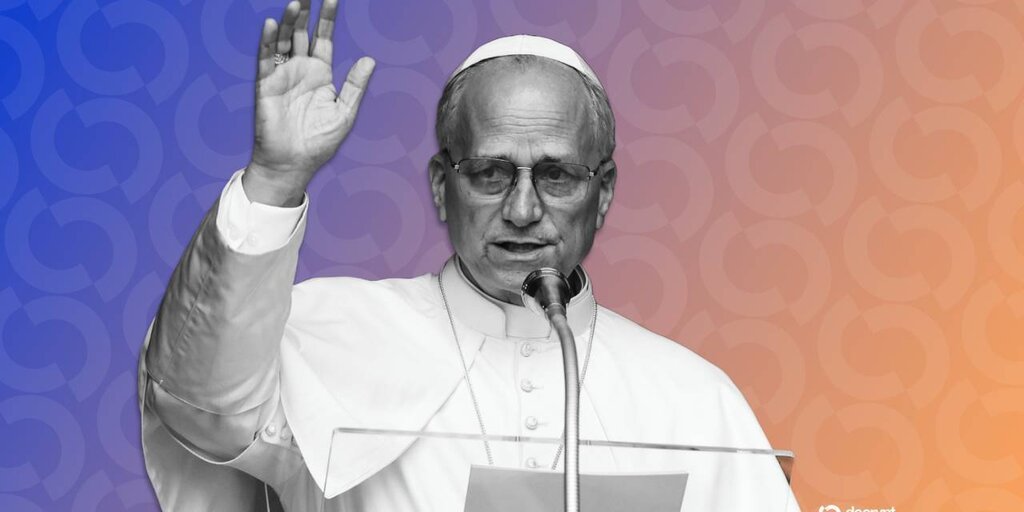
Pope Leo XIV said there is an "ontological difference" between human art and what machines generate, and that the Church wants to renew its alliance with artists and cultural institutions in order to "safeguard our humanity."
The remarks came in an Oct. 2 post on X, where the pontiff has shared warnings about artificial intelligence before. "There is an ontological difference, even before an aesthetic one, between art and what a machine can generate through statistical calculation based on millions of images created by others. Algorithms lack the spark of humanity," the Pope wrote.
The intervention puts a philosophical frame around a debate usually argued in technical and legal terms—and it comes from a pontiff who has already made AI one of the defining themes of his office.
What "ontological" means here
"Ontological" is philosophy-speak for what something fundamentally is, as opposed to how it looks. The Pope's point, essentially, is that a painting by a person and an image from a model can look alike while still being totally different things, and that the gap exists before any question of style.
His reasoning is blunt. A machine, he wrote, works through "statistical calculation" built on millions of images made by others. In plain terms, AI image generators are trained on enormous collections of existing pictures, learn which patterns tend to show up together, and predict what a new image should look like. There is no hand and no lived experience behind the result.
He didn't use the term, but the remarks land squarely in the fight over "AI slop"—low-quality AI content produced in bulk, which Merriam-Webster named its 2025 word of the year. The Pope's argument is that the problem isn't only quality, but what the thing actually is.
A pope with a long AI file
This isn't a one-off. In May, Pope Leo released his first encyclical—a formal teaching letter to the whole Church—titled Magnifica Humanitas, on protecting people in the age of AI. It argued that technology is never neutral and that data should be treated as a common good.
The same month, the Vatican set up an AI commission spanning seven Vatican bodies, meant to coordinate how the Holy See's offices approach AI, including internal policies on its use. How that commission translates the encyclical's stated principles into concrete Vatican policy is a natural thread to follow as the Holy See's position on AI takes institutional shape.
On Sept. 25, the Pope told French authorities at the Élysée Palace in Paris that he found it indispensable to make AI the subject of his first encyclical. In the Paris speech, he also warned that science and technology without guidance from conscience can steer people away from the good.
An AI-detection wrinkle
There is a wrinkle. In April, Pangram Labs' AI-detection extension flagged several posts from the Pope's own X account as likely AI-generated. The Vatican didn't respond to requests for comment at the time.
Detectors are shaky. In 2024, ZeroGPT labeled the U.S. Declaration of Independence 97.93% AI-generated, according to that report. In July, a firm called Proudly Human said a collection of Leo's speeches and writings on education and AI earned its human-authored mark, per its press release. That mixed record speaks directly to the Pope's post: if telling machine output from human work by appearance alone remains unreliable, arguments about what a work fundamentally is—rather than how it looks—carry that much more weight.
Authorship, copyright, and the artist backlash
Over the past couple of years, the question "who made this?" has been turning into a legal and money question. In March, the U.S. Supreme Court declined to hear Thaler v. Perlmutter, leaving in place an appeals court ruling that copyright—legal ownership of a creative work—requires a human author, in a case over art entirely by an AI system. That human-author requirement now stands as a fixed legal reference point while the Pope, artists, and courts each press the same underlying question from different directions.
Artists have been voting with their feet, too. Cara, a portfolio network built to keep AI images out, reached nearly 900,000 users by June 2024. Between a Pope defining the terms philosophically, courts defining them legally, and artists organizing outside traditional platforms, the fight over what counts as human creativity is now being waged on every front at once.

