Poolin, Once the World's Largest Bitcoin Mining Pool, Files for Chapter 11 Bankruptcy
Key Takeaways
- •Poolin filed for Chapter 11 bankruptcy with liabilities between $100 million and $500 million and assets of no more than $10 million.
- •The company is pursuing a court-supervised sale of its West Texas mining sites, with a $52 million stalking-horse bid from Thor CALAP LLC setting the auction floor.
- •Approximately $163.7 million of Poolin's $173.1 million in obligations consists of IOUs owed to Poolin Wallet customers following a withdrawal freeze initiated in September 2022.
- •Publicly listed Bitcoin mining companies have sold over 15,000 BTC this year to finance AI and high-performance computing infrastructure buildouts.
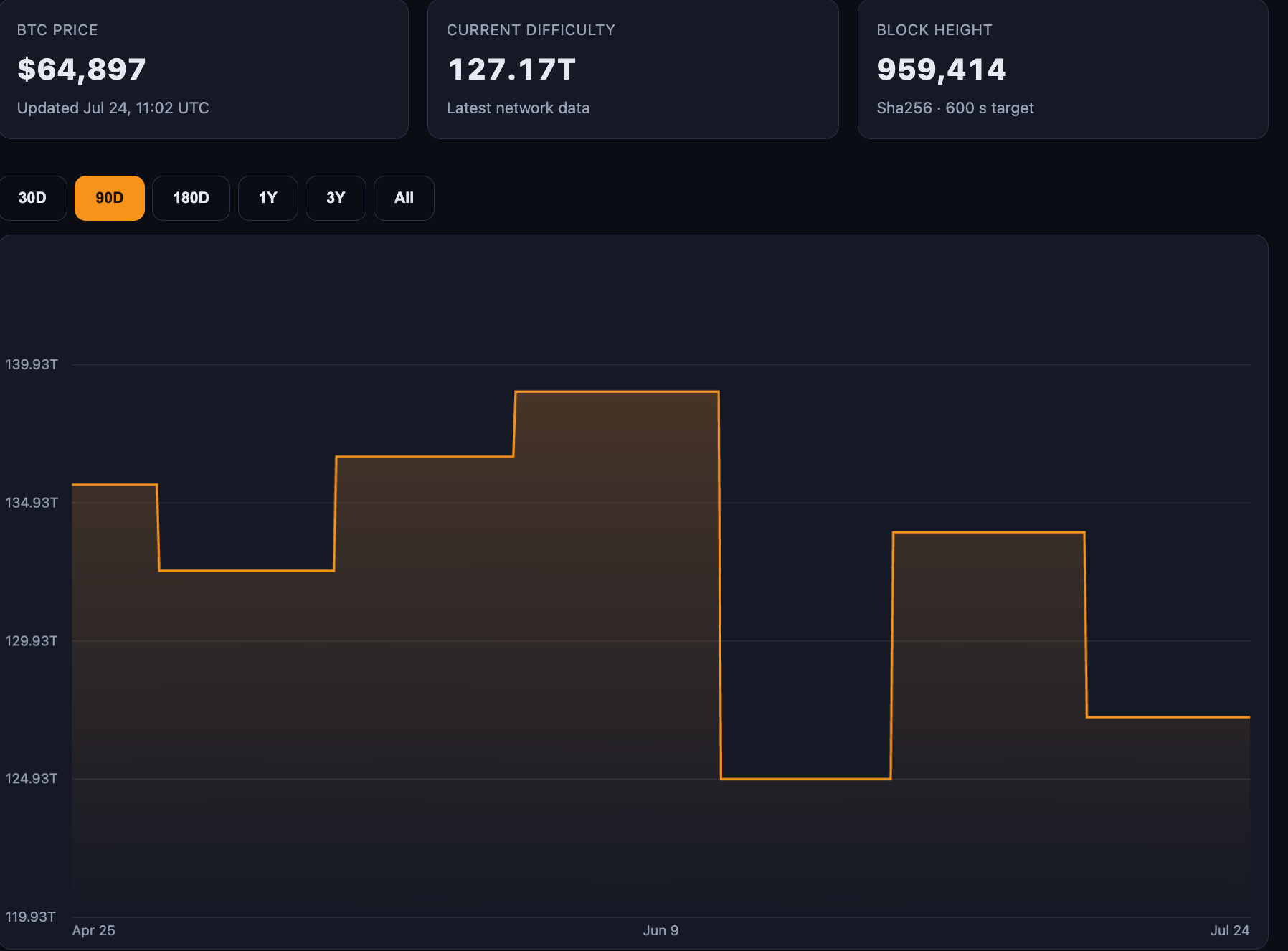
- •Bitcoin network difficulty declined 8.48% and total hashrate dropped approximately 13% as the April 2024 halving and falling hashprice pressured operators.
Poolin, formerly the world's largest Bitcoin mining pool, filed for Chapter 11 bankruptcy protection on July 22 in New Jersey. The filing lists liabilities ranging from $100 million to $500 million, with assets of no more than $10 million.
The Singapore-based firm is seeking a court-supervised sale of its West Texas mining sites rather than pursuing a reorganization. West Texas has become a hub for large-scale mining and compute operations thanks to abundant wind and solar generation and a deregulated power market under the ERCOT grid. A $52 million stalking-horse bid from Thor CALAP LLC — a mechanism that sets a floor price to discourage below-market offers in bankruptcy auctions — establishes the threshold for the upcoming sale.
Details of the Chapter 11 Filing
Poolin filed jointly with its US affiliates, Lonestar Dream and Lonestar Taproot. Both units ceased mining operations at their Pyote and Tarbush sites on July 10.
According to a declaration from Chief Restructuring Officer Michael DuFrayne, the company's prepetition obligations total approximately $173.1 million. Of that amount, roughly $163.7 million comprises IOUs issued to Poolin Wallet customers. The company halted withdrawals in September 2022, impacting approximately 11,700 users holding balances above $100. That freeze prompted an exodus of miners to competing pools, collapsing Poolin's hashpower share from roughly 15% of the network to negligible levels.
Established in China in 2017, Poolin became the world's leading mining pool by September 2019. However, China's 2021 cryptocurrency mining ban combined with the 2022 market downturn dismantled the company's lending-dependent business model.
The sale outreach targeted AI and high-performance computing (HPC) operators in addition to traditional mining firms. Advisers reached out to more than 335 prospective buyers, resulting in 28 nondisclosure agreements and seven letters of intent, per TheEnergyMag.
Bitcoin Miners Pivot Toward AI and HPC
Poolin's liquidation marks the culmination of a difficult period for a Bitcoin mining sector under significant strain. The April 2024 halving cut per-block subsidies from 6.25 BTC to 3.125 BTC, permanently reducing mining revenue and intensifying pressure on operators with older hardware or elevated energy costs. According to VanEck, publicly listed mining companies have sold over 15,000 BTC from their treasury holdings this year to finance AI and HPC infrastructure buildouts. These sellers include Bitdeer, Bitfarms, Core Scientific, Riot, and MARA Holdings.
Bitdeer liquidated its entire Bitcoin treasury as profit margins contracted. Similarly, Riot is funding its pivot toward Texas data centers by selling newly mined Bitcoin. Investors have responded positively, with mining stocks outperforming BTC amid accelerating AI infrastructure investment.
Network difficulty declined 8.48%, from 138.96 trillion in June to 127.17 trillion on July 11, marking its most recent downward adjustment. Bitcoin's total hashrate dropped approximately 13%, falling from 1.03 zetahash/second to 883 exahash/second.
Hashprice — the daily revenue miners earn per petahash — closed near $31.10 on July 11. That figure represents a roughly 37% decline from its October 2025 peak of $49.40, even after a 12.5% rebound this month.
As a result, mining conditions have improved for operators who remain active. Bitcoin (BTC) traded near $65,069 on Friday, down 0.8% over 24 hours and approximately 45% over the past year.
VanEck notes, however, that miner-held Bitcoin remains near 1.785 million BTC, essentially flat year over year. This trend points to consistent selling of newly mined coins rather than wholesale capitulation.
The forthcoming auction will ultimately determine whether Poolin's power assets carry greater value for AI operators than for cryptocurrency miners.

