Pony.ai Targets 100,000 Autonomous Trucks on Chinese Roads by 2030
Key Takeaways
- •Pony.ai aims to deploy 100,000 light-duty autonomous trucks in China by 2030, with heavy-duty truck numbers growing to 500–1,000 within the next two to three years.
- •Hardware costs for the company's latest generation of heavy-duty autonomous trucks have decreased by approximately 70%, enabling the push toward mass production.
- •Pony.ai's robotaxis and light-duty trucks share roughly 90% of their core technology stack because both operate primarily in urban environments.
- •The company has partnered with Sany Truck for heavy-duty robotrucks and CATL for light-duty autonomous vehicles.
- •China's government supports autonomous vehicle development through designated intelligent connected vehicle pilot zones in cities including Beijing, Shanghai, and Guangzhou.
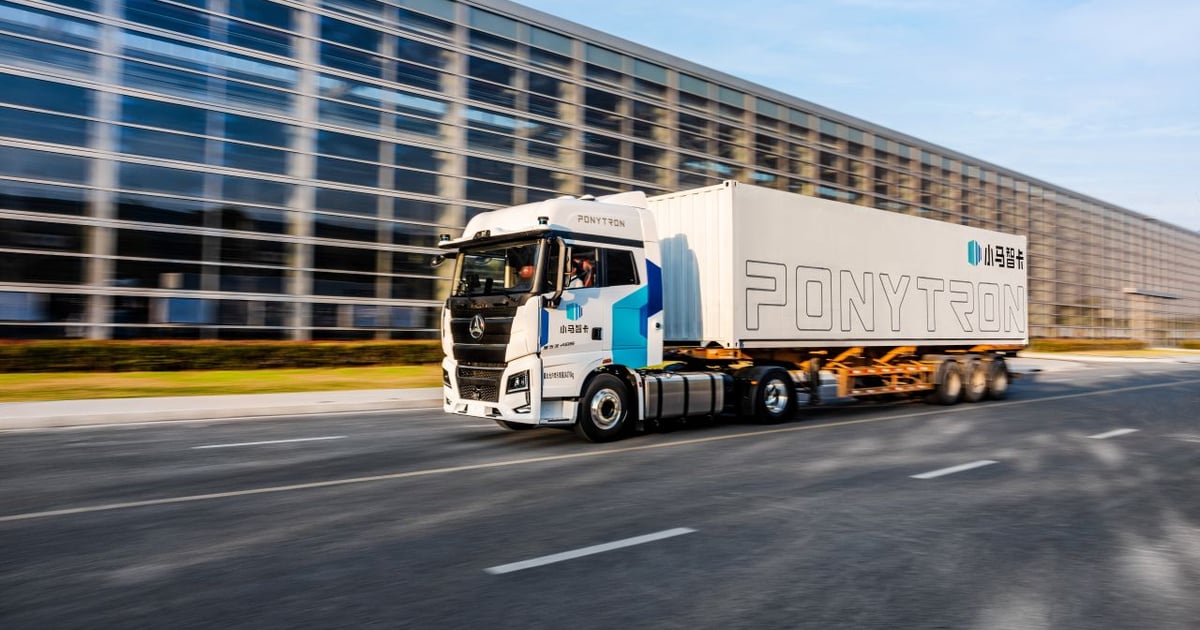
Pony.ai Targets 100,000 Autonomous Trucks on Chinese Roads by 2030
Self-driving technology company Pony.ai has laid out an ambitious roadmap to dramatically scale its autonomous truck fleet in China, with a target of deploying 100,000 light-duty self-driving trucks by 2030. The plan comes as China, which operates one of the world's largest road freight markets by volume, seeks to integrate automation into a logistics sector facing driver shortages and rising labor costs.
The Guangzhou-based firm, which listed on NASDAQ in late 2024 and has spent a decade developing automated driving technology for robotaxis and commercial vehicles, says it can deploy between 500 and 1,000 self-driving heavy-duty trucks across China over the next two to three years. As of November 2025, Pony.ai operated a fleet of approximately 200 trucks.
Heavy-duty robotrucks are intended for long-haul freight operations, including port logistics, highway transport, and specialized bulk transportation in western China. Light-duty autonomous vehicles will primarily serve urban environments, operating routes between retail stores, distribution centers, and cold-chain refrigerated facilities.
Pony.ai achieved early success with its robotaxi service in China before expanding operations into the Middle East and Europe.
Cost reductions unlock scale
Vice president He Xing said the company had deliberately waited for favorable conditions before pursuing large-scale production, noting that hardware costs have fallen substantially — by approximately 70% in the latest generation of heavy-duty trucks.
"We had been waiting for the right moment. Our truck technology had already reached a high level, but the cost of building an L4 Robotruck remained high," He said in a statement. L4, as defined by the Society of Automotive Engineers, denotes fully driverless operation in certain scenarios.
"The reduction in ADK [autonomous driving kit] costs benefited both heavy- and light-duty trucks," He added. "That is why we did not rush into large-scale production earlier."
Shared technology stack
All three of Pony.ai's application areas — robotaxis, light-duty trucks, and heavy-duty trucks — are built on the same underlying technology. Robotaxis and light-duty trucks share approximately 90% of their core tech stack because they operate in similar urban environments. Heavy-duty trucks require more vehicle-specific adaptation but use the same decision-making methodology.
Data from all three applications feeds into a shared development loop. PonyWorld 2.0, the company's proprietary world model, scans collected data to identify areas needing improvement through self-diagnosis and targeted data collection.
Ecosystem requirements
Achieving the dramatic scaling envisioned for light-duty vehicles will require more than advanced autonomous technology and AI models. Pony.ai emphasized the need for "vehicles, freight demand, established operating networks, maintenance capabilities and infrastructure such as logistics hubs and charging facilities."
The company has partnered with Sany Truck on heavy-duty robotrucks and CATL, the world's largest battery manufacturer, on light-duty vehicles. Pony.ai envisions the emergence of an autonomous driving-as-a-service model in which vehicle manufacturers produce trucks, logistics partners own and operate fleets, and Pony.ai supplies its Virtual Driver and technical services.
Global context
While the current rollout is concentrated in China, Pony.ai indicated potential for autonomous trucks in overseas markets. In the United States, Bot Auto completed what it described as the country's first "humanless" commercial freight run earlier in 2026, and other companies are conducting extensive testing, primarily in Texas and southern states. China's government has supported autonomous vehicle development through designated intelligent connected vehicle pilot zones in cities including Beijing, Shanghai, and Guangzhou, providing domestic firms with extensive real-world testing environments.
Source: AI Business

