Polygon Joins Bank of England's Digital Pound Lab as Central Banks Explore Onchain Finance
Key Takeaways
- •Polygon is contributing its blockchain infrastructure, including the Polygon PoS chain and Chain Development Kit, to the Bank of England's Digital Pound Lab initiative.
- •A digital pound would be fundamentally different from cryptocurrencies, as it would be issued and backed directly by the Bank of England with its value linked to the British pound.
- •The Bank of England and HM Treasury published a joint consultation paper in February 2023 that emphasized a digital pound would preserve user privacy by providing the central bank only with aggregate transaction data rather than individual spending records.
- •Central banks across multiple regions are pursuing similar CBDC initiatives, including China's digital yuan pilot ongoing since 2020 and the European Central Bank's preparation phase for a potential digital euro.
- •Polygon's participation in the Digital Pound Lab does not signal an imminent launch, as the Bank of England continues to evaluate the technological, economic, and policy implications before any major decision.
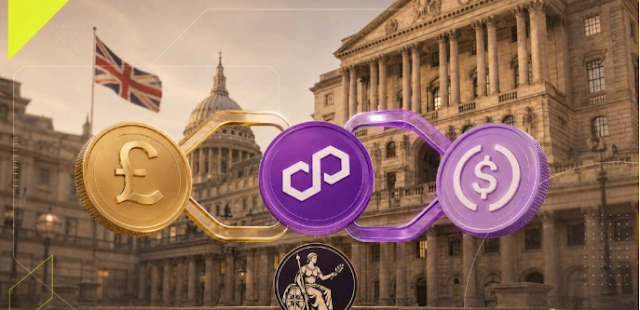
Polygon Joins Bank of England's Digital Pound Lab as Central Banks Explore Onchain Finance
Polygon is joining the Bank of England's Digital Pound Lab, positioning the blockchain network within a major central-bank initiative that is examining how distributed ledger technology could underpin the future of digital money.
The move signals another step in the evolving relationship between traditional financial institutions and blockchain infrastructure. Central banks worldwide are increasingly testing how digital currencies, tokenized assets, and onchain settlement systems might coexist with existing financial networks.
Polygon's participation provides the project with access to technology already deployed across a broad spectrum of blockchain applications, including payments, tokenization, and decentralized finance. The network's infrastructure includes the Polygon PoS chain and the Polygon Chain Development Kit, tools designed to support high-throughput transactions and customizable blockchain environments.
The development was also highlighted in cryptocurrency industry coverage referenced by Cointelegraph, adding to the growing attention surrounding the Bank of England's work on a potential digital pound.
Bank of England Explores the Future of Digital Money
The Bank of England has been studying the potential introduction of a digital pound for several years. A digital pound would constitute a form of central bank money designed for use in everyday payments. Unlike cryptocurrencies such as Bitcoin, it would be issued and backed directly by the central bank.
In February 2023, the Bank of England and HM Treasury published a joint consultation paper outlining the case for a digital pound and inviting public input, signaling that the project had moved beyond preliminary research into active policy development.
The project forms part of a broader global effort by central banks to understand how money could function in an increasingly digital economy. While cash remains an important component of the financial system, consumer payment habits have shifted dramatically. Digital payments have become commonplace, and physical cash usage has declined across many developed economies. That trend has prompted central banks to examine whether a digital version of sovereign money could serve as an additional payment option.
What the Digital Pound Lab Is Designed to Explore
The Digital Pound Lab serves as a testing environment for potential applications of a future digital pound and related technologies. Rather than simply creating another payment system, the initiative enables researchers and industry participants to explore how digital money could interact with programmable financial products.
This is where blockchain technology becomes particularly relevant. Onchain infrastructure can allow transactions and financial assets to be represented digitally and potentially interact through programmable systems, opening new possibilities for payments, settlement, and financial services.
The lab builds on earlier exploratory work. In 2023, the Bank of England and the Bank for International Settlements' Innovation Hub completed Project Rosalind, an experiment that demonstrated how application programming interfaces for a CBDC could enable innovative use cases such as programmable payments and enhanced identity verification.
Polygon's participation arrives at a time when policymakers are looking beyond the basic question of whether central bank digital currencies are technically feasible. The focus is increasingly shifting toward what these systems could actually accomplish.
Why Polygon's Participation Matters
Polygon has developed blockchain infrastructure designed to support scalable transactions and applications. Its technology has been deployed across payments, decentralized applications, and tokenized assets.
By participating in the Bank of England's initiative, Polygon brings experience from the broader blockchain industry into discussions about central-bank digital money. The collaboration also underscores the growing willingness of traditional financial institutions to engage directly with blockchain networks.
For years, blockchain technology and central banking operated largely in separate spheres. That dynamic is changing. Central banks are now examining distributed ledger technology as a potential component of future financial infrastructure.
Central Banks Look Beyond Simple Payments
The potential applications of digital currencies extend well beyond replacing physical cash. One of the most notable areas of interest is programmable money. Programmable financial systems can potentially automate certain transactions based on predefined conditions. For example, a payment could be linked to the delivery of a financial asset, or settlement could occur automatically once specific requirements are met.
This could reduce the number of intermediaries involved in certain transactions and make financial markets faster and more transparent. However, these possibilities remain largely experimental at this stage.
Tokenization Becomes a Major Focus
Tokenization is another area drawing increasing attention from central banks and financial institutions. Tokenization involves representing real-world assets or financial instruments digitally on a blockchain or distributed ledger. Government bonds, corporate securities, funds, and other assets could potentially be represented as digital tokens.
A digital pound could eventually provide a settlement asset for these tokenized markets, creating a connection between central bank money and blockchain-based financial infrastructure. Polygon's involvement is significant in this context because the network has experience supporting tokenized assets and blockchain-based financial applications.
A Digital Pound Would Differ From Cryptocurrency
The development should not be confused with the United Kingdom adopting Bitcoin or any other cryptocurrency. A digital pound would be fundamentally different.
Bitcoin operates through a decentralized network and does not depend on a central bank. A digital pound, by contrast, would represent a direct form of central bank money. Its value would be linked to the British pound rather than determined by the market dynamics that drive cryptocurrencies. The Bank of England would remain responsible for issuing the underlying currency.
That distinction is important, as governments explore blockchain technology without necessarily embracing decentralized cryptocurrencies as national currencies.
Privacy Remains a Key Concern
Any discussion about a digital pound also raises questions about privacy and user control. Digital payments generate transaction data, creating concerns about how information could be accessed, stored, and used.
The Bank of England and the U.K. government have previously emphasized that a digital pound would require strong privacy protections. The 2023 consultation paper explicitly stated that a digital pound would be designed to preserve user privacy, with the central bank seeing only aggregate transaction data rather than individual personal spending records. A central bank digital currency would need to balance technological capabilities with public expectations around privacy and financial freedom. These issues are likely to become increasingly important as central banks move from theoretical research toward real-world testing.
Blockchain Networks Could Benefit From Institutional Adoption
For Polygon and the wider blockchain industry, participation in a central-bank project can confer significant credibility. Blockchain technology has often been associated with cryptocurrencies and speculative trading, but institutional experiments are increasingly demonstrating that distributed ledger technology has applications beyond digital tokens.
Financial institutions are exploring blockchain-based settlement, tokenized securities, and digital payment systems. Central-bank projects could accelerate that trend. If blockchain infrastructure becomes part of future financial systems, networks capable of handling large transaction volumes could become increasingly important.
The Global CBDC Race Continues
The Bank of England is not alone in exploring central bank digital currencies. Central banks across Asia, Europe, the Middle East, and other regions have launched pilot programs or research initiatives. China's digital yuan, the e-CNY, has been in pilot testing across multiple cities since 2020 and has been used in billions of yuan worth of transactions. The European Central Bank is in a preparation phase for a potential digital euro, with a decision on whether to proceed expected in the coming years. The Bahamas launched the Sand Dollar in 2020, becoming one of the first countries to deploy a retail CBDC nationwide.
Technology and policy approaches differ from country to country, but the broader objective is similar: understanding how central bank money can remain relevant in an economy increasingly dominated by digital transactions.
A Potential Bridge Between Traditional Finance and Web3
Polygon's involvement also highlights a broader trend toward convergence between traditional finance and Web3. For years, these sectors developed independently. Traditional finance relied on banks, clearing systems, and centralized databases. Web3 introduced blockchain-based networks designed to allow assets and transactions to operate through decentralized infrastructure.
The growing interest in tokenization is bringing these two worlds closer together, and central bank money could eventually become one of the key components connecting them.
What Comes Next
Polygon's participation in the Digital Pound Lab does not mean that a digital pound is ready for nationwide launch. The Bank of England continues to evaluate the technology, economics, and policy implications of a potential digital pound. Testing and experimentation remain essential before any major decision is made.
The institution will need to determine how such a system could operate safely, efficiently, and at scale. It will also need to consider its impact on commercial banks, payment providers, and consumers.
The Bigger Picture for Blockchain
The significance of Polygon joining the Digital Pound Lab extends beyond a single blockchain project. It reflects a broader shift in how policymakers view blockchain technology. Central banks are no longer examining distributed ledgers solely as a technology associated with cryptocurrencies. They are increasingly considering whether onchain infrastructure could support payments, asset settlement, and financial-market innovation.
That shift could create new opportunities for blockchain companies while also bringing greater regulatory scrutiny. For Polygon, participation in the Bank of England initiative places the network inside an important conversation about the future of money. For central banks, partnerships with blockchain developers provide access to technology and expertise that could help shape future financial infrastructure.
The Digital Pound Lab represents more than an experiment with digital currency. It is part of a much larger effort to understand how money and financial assets could operate in an increasingly onchain economy. As central banks continue exploring these possibilities, Polygon's involvement signals that blockchain infrastructure is becoming an increasingly serious part of that discussion.