Polls Show Most Utahns Opposed Trump’s Cuts to Bears Ears and Grand Staircase-Escalante
Key Takeaways
- •Trump’s orders reduced Bears Ears to about 121,000 acres and Grand Staircase-Escalante to just over 181,500 acres.
- •Utah State University surveys in 2024 and 2025 found 61 percent of Utahns supported preserving Bears Ears as a national monument, while 53 percent opposed reducing it.
- •Colorado College’s Conservation in the West Poll found 91 percent of voters across eight Mountain West states wanted existing national monuments to remain in place.
- •Utah Republican leaders argue the original monument designations exceeded limits under the Antiquities Act because of the size of the protected areas.
- •Trump’s order disbanded the Bears Ears intertribal commission, despite polling showing broad Utah support for tribal involvement in managing ancestral lands.
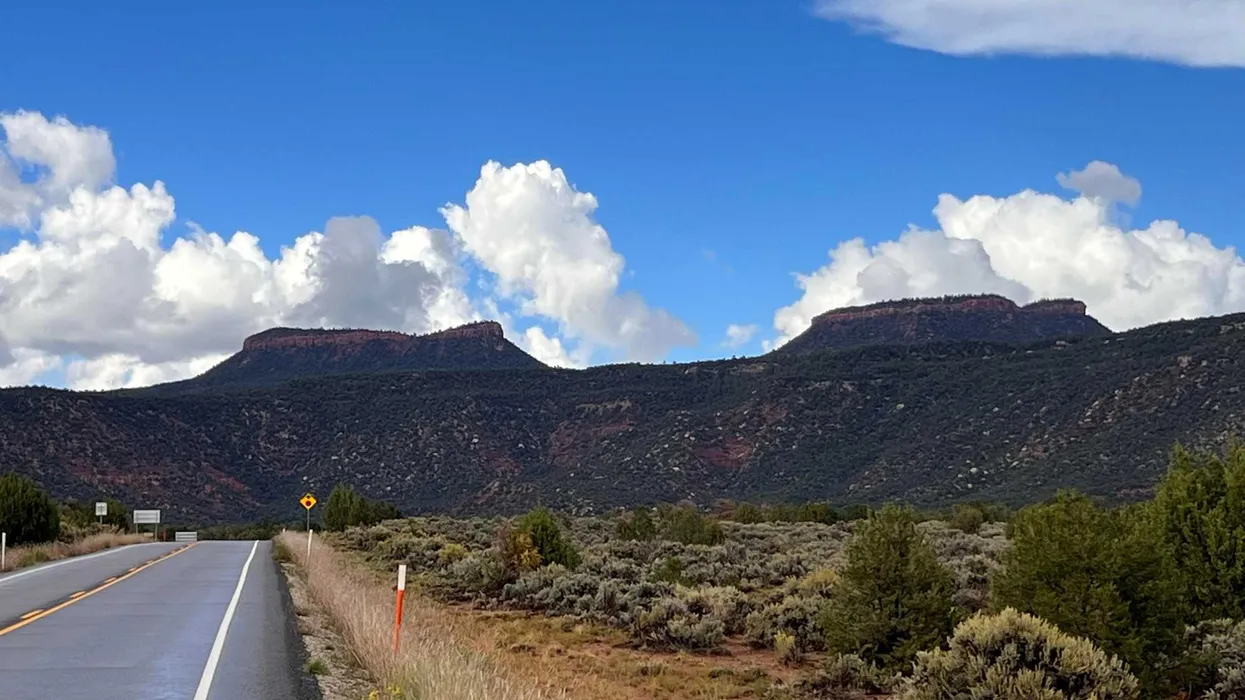
Most Utah residents opposed reducing Bears Ears National Monument before President Donald Trump sharply cut its boundaries last week, according to multiple polls conducted in recent years. The findings run counter to claims from Utah political leaders who said the reductions reflected the wishes of people in the state.
President Donald Trump signed two executive orders reducing Grand Staircase-Escalante and Bears Ears national monuments by roughly 90 percent each. He announced the decision alongside members of Utah’s congressional delegation and Governor Spencer Cox, all Republicans. Trump’s proclamation said the move “will better align the use of these public lands with the public interest,” and cited deposits of critical minerals in the region, including copper, nickel, and uranium.
On Monday, hundreds of people gathered outside the Governor’s Mansion in Salt Lake City to protest the reductions. The demonstration was part of a statewide effort organized by the Southern Utah Wilderness Alliance to pressure lawmakers.
Before Trump’s executive orders, the two monuments covered a combined roughly 3.3 million acres in southern Utah. Both were created by Democratic presidents despite objections from Utah’s elected Republican leaders. The reductions therefore sharpen a long-running dispute over how public lands in southern Utah should be managed, including the balance between conservation, recreation, mineral development, and tribal involvement.
At the Oval Office signing ceremony, Republican Utah Representative Celeste Maloy said those who supported reducing the monuments included “the locals who are worried about losing multiple uses on these federal lands.” She said Trump was “listening to the people of Utah” by cutting the size of both monuments.
“It was very unfair to the people of Utah,” Trump said, “and now fairness has been brought back.”
But several polls taken before the reductions show that majorities of Utahns, as well as residents of other Mountain West states, supported keeping existing national monument protections in place. That makes public opinion a central point of dispute: state leaders framed the cuts as responsive to Utah residents, while the survey data cited by researchers and pollsters points in the opposite direction.
“It is very contradictive of our findings,” said Michaelann Nelson, a professor of environmental rhetoric at the Utah State University campus in Price. “They’re kind of picking and choosing which Utahns they’re paying attention to and listening to.”
In surveys conducted in 2024 and 2025, Utah State University researchers found that 61 percent of Utahns either supported or strongly supported preserving Bears Ears as a national monument, while 19 percent opposed or strongly opposed doing so. The same research found that 53 percent of respondents opposed or strongly opposed reducing Bears Ears, while 26 percent supported the idea. The remaining 21 percent neither supported nor opposed shrinking the monument.
Nearly half of respondents, 46 percent, opposed Utah taking legal action to overturn the Bears Ears National Monument designation. President Barack Obama initially established Bears Ears in 2016 under the Antiquities Act. It originally included 1.35 million acres, but has now been reduced to about 121,000 acres.
Grand Staircase-Escalante was not included in the Utah State University study. President Bill Clinton designated that monument in 1996, and after some congressional adjustments it eventually covered nearly 1.9 million acres. Following Trump’s order last week, the monument now includes just over 181,500 acres.
Nelson, the poll’s lead author, said she focused the surveys on Bears Ears because it was the newer monument and, at the time, a larger target of criticism from Utah politicians. She said she expects Utahns’ views of Grand Staircase-Escalante would be similar.
“In some ways, perhaps [Utahns would be] even more in favor of Grand Staircase,” Nelson said, “just because we’ve existed with it for more than 20 years.”
Jessica Schad, a professor of sociology and director of Utah State’s Community and Natural Resources Institute, oversaw the survey work. She said she does not think Utahns’ views on the monuments have changed significantly in the months since the polling was conducted.
“It seems like this issue has become really politicized,” Schad said, “and our politicians aren’t taking into account what residents are preferring.”
The Utah State poll included 468 respondents in Utah. The university used sociologists based in rural parts of the state so the results would not overrepresent residents of the more urban Wasatch Front, where Salt Lake City is located.
“We use high-quality, really rigorous survey methods,” Schad said.
Other surveys across eight Mountain West states found views similar to those recorded by Utah State University. As of January, 91 percent of voters in those states wanted existing national monuments to remain in place, compared with 88 percent last year and 80 percent in 2017, according to the annual Conservation in the West Poll conducted by Colorado College.
This year’s Conservation in the West Poll included interviews with voters in Arizona, Colorado, Idaho, Montana, Nevada, New Mexico, Utah, and Wyoming. About 24 percent of respondents lived in rural areas or small towns, 24 percent lived in cities, and the rest lived in suburbs. Politically, 36 percent identified as Republicans, including 35 percent who said they supported MAGA; 36 percent identified as independent, and 28 percent as Democrats.
The survey found broad support for existing national monuments across party lines. National monument protections were supported by 87 percent of Republicans, 92 percent of independents, and 96 percent of Democrats. Among MAGA supporters, the share who wanted existing national monument designations to remain in place increased from 81 percent in 2025 to 87 percent this year.
“We’ve asked about this many times over the years,” said Lori Weigel, a principal with New Bridge Strategies, a Republican public opinion research group that helps Colorado College conduct the annual poll. “What we have seen very consistently in the data is that people want additional protections for these public lands.”
The poll also found that voters from both parties wanted to prioritize “conservation, recreation, and renewables over fossil fuel development,” according to a statement released with the results.
A separate December 2024 survey by New Bridge Strategies found that 71 percent of Utah voters supported keeping Bears Ears protected as a national monument, while 74 percent supported the same status for Grand Staircase-Escalante. The survey also found that 75 percent of Utahns supported a president’s authority to create additional national monuments.
Utah politicians, including Cox and Senator Mike Lee, have argued that Democratic presidents exceeded appropriate limits when they designated the two monuments. The 1906 Antiquities Act authorizes presidents to protect places of historic and scientific interest as national monuments, but directs them to preserve “the smallest area compatible with the proper care” of those lands. That statutory language is at the center of the Utah officials’ argument: they are not only objecting to monument status, but to the size of the areas previous presidents chose to protect.
“These multimillion-acre monuments that are bigger than the state of Delaware certainly do not fit that designation,” Cox said at Monday’s event with Trump.
A statement issued by the Utah Senate says the monument designations have increased visitation to the Bears Ears and Escalante areas, placing strain on land management agencies and law enforcement and causing “degradation” at the sites.
When Trump reduced the two monuments during his first term in 2017, records showed mining companies had lobbied administration officials to shrink the boundaries of Bears Ears. Trump’s latest orders cite the need to mine domestic supplies of critical minerals on public lands as part of the justification for reducing both Bears Ears and Grand Staircase-Escalante.
During last week’s signing ceremony, Trump also said the previous monument boundaries restricted access to recreation. “You can’t do anything. You can’t go hunting. You can’t go fishing. You can’t do anything. You can virtually not even walk on it,” he said.
Hunting, fishing, driving off-road vehicles on designated trails, and other forms of recreation are allowed in both Bears Ears and Grand Staircase-Escalante, although such activities are sometimes prohibited at other national monuments.
Bears Ears also had an intertribal commission that federal agencies consulted on management of the monument and protection of its resources. Trump’s order disbanded that body. The change is significant because the polling cited in the article shows support not only for monument protections in general, but also for a continuing tribal role in managing ancestral lands.
Nearly 90 percent of Utahns supported Native American tribes having a strong role in managing ancestral lands, according to the 2024 New Bridge Strategies survey. The same survey found that 81 percent said the incoming Trump administration should keep agreements with tribes in place for managing Bears Ears.
This article originally appeared in Grist at Grist is a nonprofit, independent media organization dedicated to reporting on climate change.

