Support for Political Violence Falls Among Americans, but MAGA Supporters Remain Most Likely to Justify It, Study Finds
Key Takeaways
- •Support for political violence among Americans declined overall heading into the 2026 midterm elections, though changes within individual political groups were mostly small.
- •MAGA Republicans and non-Republican MAGA supporters reported higher justification for political violence than Democrats and non-MAGA Republicans, with 50.5 percent and 52.5 percent respectively considering violence usually or always justified for at least one objective, compared with 35.8 percent of all respondents.
- •Among respondents open to violence, non-Republican MAGA supporters showed greater willingness to target 12 of 14 populations, ranking second to strong Democrats, who were more inclined to justify violence against private armed militias and federal immigration agents.
- •Lead researcher Garen Wintemute emphasized that the vast majority of respondents reject political violence altogether, and willingness to commit it is rare across all groups.
- •The study, released as a preprint on SocArXiv, has not been peer-reviewed, and it builds on the team's 2022 baseline survey data published in PLOS One that found similar partisan patterns.
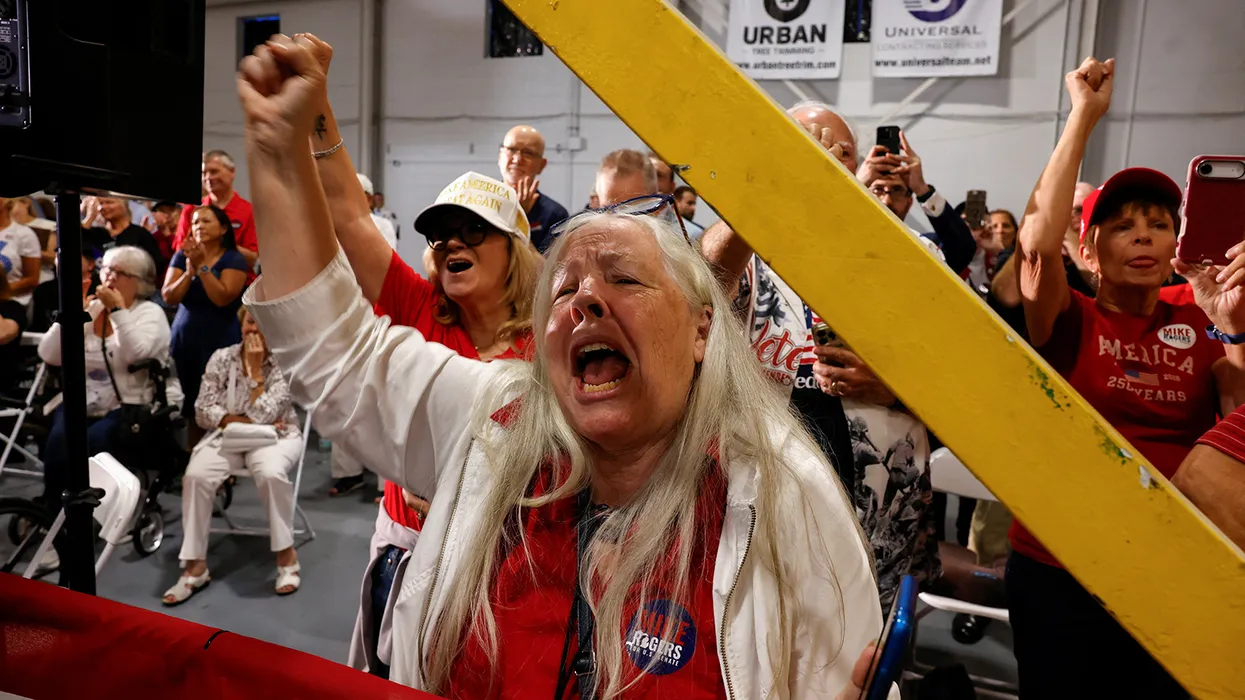
Support for political violence among Americans declined in 2026, according to a recent study, but supporters of the MAGA movement remain the most likely consider it justifiable.
The research, covered by PsyPost, was released as a preprint on SocArXiv and has not yet been peer-reviewed, meaning its conclusions stand as preliminary until that process is complete. Early national surveys indicate that public support for political violence in the United States decreased heading into the 2026 midterm elections, contrary to widespread fears.
According to PsyPost, the findings indicate that while partisan tensions remain high, roughly three-quarters of U.S. adults say political violence is never justified in general, and very few say they would be willing to commit it themselves.
Those figures, however, do not necessarily hold true for the MAGA political enclave, researchers found. When the researchers examined differences among political groups, MAGA Republicans and MAGA supporters who do not identify as Republicans tended to report higher levels of justification for political violence than Democrats and non-MAGA Republicans.
"For instance, 50.5 percent of MAGA Republicans and 52.5 percent of non-Republican MAGA supporters considered violence usually or always justified to advance at least one objective, compared with 35.8 percent overall," PsyPost reported. "… Among respondents who considered violence justified, non-Republican MAGA supporters were more willing than others to commit violence against 12 of 14 target populations."
Those figures ranked second behind strong Democrats, who were slightly more inclined to justify violence against private armed militias and federal immigration agents.
"Declines in support occurred across the political spectrum overall, though changes within individual groups were mostly small," PsyPost reported. "MAGA Republicans moved slightly in the other direction on several items about the potential need for violence and civil war."
"We found, as others have, that support for political violence is generally stronger on the political right than on the political left," said research leader Garen Wintemute, a professor of emergency medicine and director of the Centers for Violence Prevention at the University of California.
The dynamic mirrors the team's earlier findings. In a separate study recently published in PLOS One, the researchers analyzed baseline data collected from the same survey project in 2022 and found that Republicans and conservatives were considerably more likely than Democrats and liberals to view political violence as justified for specific objectives. Because both analyses draw on the same survey project, the 2022 baseline provides a fixed reference point for measuring how attitudes have shifted in the years since.
Most respondents nonetheless reject political violence in general, Wintemute added, noting that the "willingness to commit political violence … is rare across the board."
"The vast majority of respondents in our surveys reject political violence altogether, and most of those who consider it acceptable are not willing to become involved in it themselves," he explained. With the study released as a preprint, its group-level comparisons will now face formal scrutiny through peer review, the standard step before such findings are treated as settled research.

