Political Divides Are Tearing American Families Apart, and Experts Say the Trend Is Accelerating
Key Takeaways
- •A University of California, Irvine survey found that a third of Americans have lost relationships with friends, family, romantic partners, or co-workers over political differences, and researchers believe the trend is accelerating.
- •Among survey respondents who reported fallouts, 40 percent said the estrangement involved a family member.
- •Braver Angels communications director Wilk Wilkinson said toxic polarization is a full-blown crisis and warned against blaming Trump or any single political figure for the broader 'us versus them' tribalism.
- •Organizations including Braver Angels, American Square, and QAnon Casualties run workshops, community events, and online support groups to reduce political hostility and help families affected by conspiracy movements.
- •The i Paper interviewed a paralegal who said she is close to cutting off contact with her MAGA-supporting mother and described coping with the rift as similar to grieving.
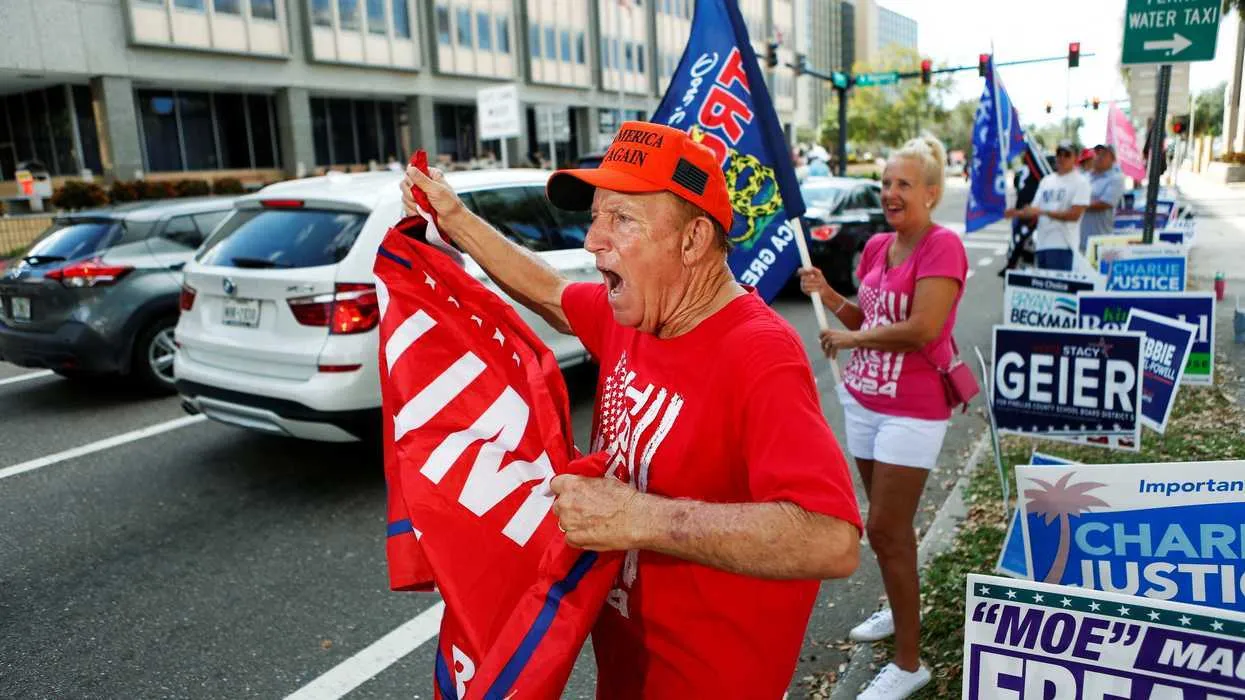
American politics once allowed for fierce disagreement without personal estrangement. In the 1980s, President Ronald Reagan and liberal House Speaker Tip O'Neill (D-Massachusetts) famously fought hard policy battles while maintaining a warm, cordial relationship. On the U.S. Supreme Court, arch-conservative Justice Antonin Scalia and liberal Justice Ruth Bader Ginsburg shared a mutual respect despite deep differences in legal philosophy. In the Donald Trump era, however, political fractures have grown so bitter that families are literally being torn apart — and according to the UK-based i Paper, the trend is only "accelerating."
"In a recent survey," journalist Andrew Buncombe reports in the i Paper, "psychologists at the University of California, Irvine, found a third of Americans had 'lost relationships with friends, family, romantic partners and co-workers over political differences.' Among the respondents, 62 per cent had had fallouts — 40 per cent of them with a family member. The researchers believe the trend is accelerating."
The findings fit into a broader body of research documenting what scholars call "affective polarization" — the tendency to dislike and distrust people from the opposing party rather than merely disagree with their positions. Researchers studying the phenomenon note that identity-driven partisanship can make family gatherings and holiday conversations flashpoints in ways that policy disputes alone historically did not.
Buncombe cites specific examples of families torn apart by political differences, which, the reporter notes, go beyond views on President Trump himself.
One organization working against the effects of extreme partisanship is Braver Angels, a national group founded after the 2016 election that runs cross-partisan workshops, debates, and skills training aimed at reducing political hostility. According to the group's communications director, Wilk Wilkinson, the polarization now gripping the United States is a full-blown crisis.
Wilkinson told the i Paper that while Americans have had intense political disagreements in the past, the "visibility of the toxic division and polarization" is far worse than before.
"The way it's piped into the eyes and ears of everyday Americans on any given day is certainly higher," Wilkinson said. "We have more access to more media outlets and social media feeds and 24-hour news cycles and things like that."
"People who try to pin this on Trump or any other single singular figure within our political apparatus are doing a disservice to the bigger problem," Wilkinson added.
Buncombe reports that Braver Angels advises local communities and schools to "become beacons of civil discourse where students can express their perspectives freely and fully while actively listening to others." Asked whether Trump has made divisions worse, Wilkinson said the president has been a factor but not the only one.
"People who try to pin this on Trump or any other single singular figure within our political apparatus are doing a disservice to the bigger problem," he warned. "And that's the 'us versus them' tribalism and toxic polarization, and the fact we've reached a point where we no longer see political opponents as wrong, we see them as stupid or evil."
Other groups confronting the country's bitter political divisions and their effects on families include the Kansas City-based American Square and QAnon Casualties, the latter an online support community where relatives of people absorbed into conspiracy movements share experiences and coping strategies.
Explaining American Square's approach, spokesperson Ryan Bernsten told the i Paper: "People are going to come and hear something they agree with or something they don't. They might also hear perspectives from someone they've never heard from before, and a subject matter expert who knows more about something than they do."
The human cost of these divisions is illustrated by a paralegal interviewed by the i Paper, who said she is close to cutting off contact with her MAGA-supporting mother because of their political disagreements.
"It's kind of like grief in the sense that there are stages. I'll cycle between radical acceptance to anger to heartbreak. It's also a bit embarrassing … I don't want people to judge me for the heinous stuff my mom and some other family members believe in," she said. "Groups like QAnonCasualties have helped a ton. No one really gets it unless they live it."
