Trump's Xi-Putin Summit Showed His Worldview Is 'Stuck in the 80s,' Pod Save America Hosts Say
Key Takeaways
- •Trump's trilateral summit with Xi Jinping and Vladimir Putin concluded a weeklong Asia trip but generated little substantive outcome beyond criticism and photo opportunities.
- •Pod Save America co-hosts Tommy Vietor and Jon Favreau, both former Obama administration officials, criticized the meeting for elevating Russia to top-three superpower status despite its economy ranking around eighth or ninth globally, comparable in size to Italy's.
- •The hosts argued that India, the world's most populous country under Prime Minister Narendra Modi, would be better suited than Russia to occupy a top-tier position in global diplomacy.
- •Favreau attributed Trump's treatment of Russia as an equal to a worldview unchanged since the 1980s, citing instances where Trump has referred to Russia as the Soviet Union, which dissolved in 1991.
- •Vietor noted that Russia's nuclear stockpile, the largest in the world by warhead count, is a Soviet-era legacy that helps explain its continued superpower treatment.
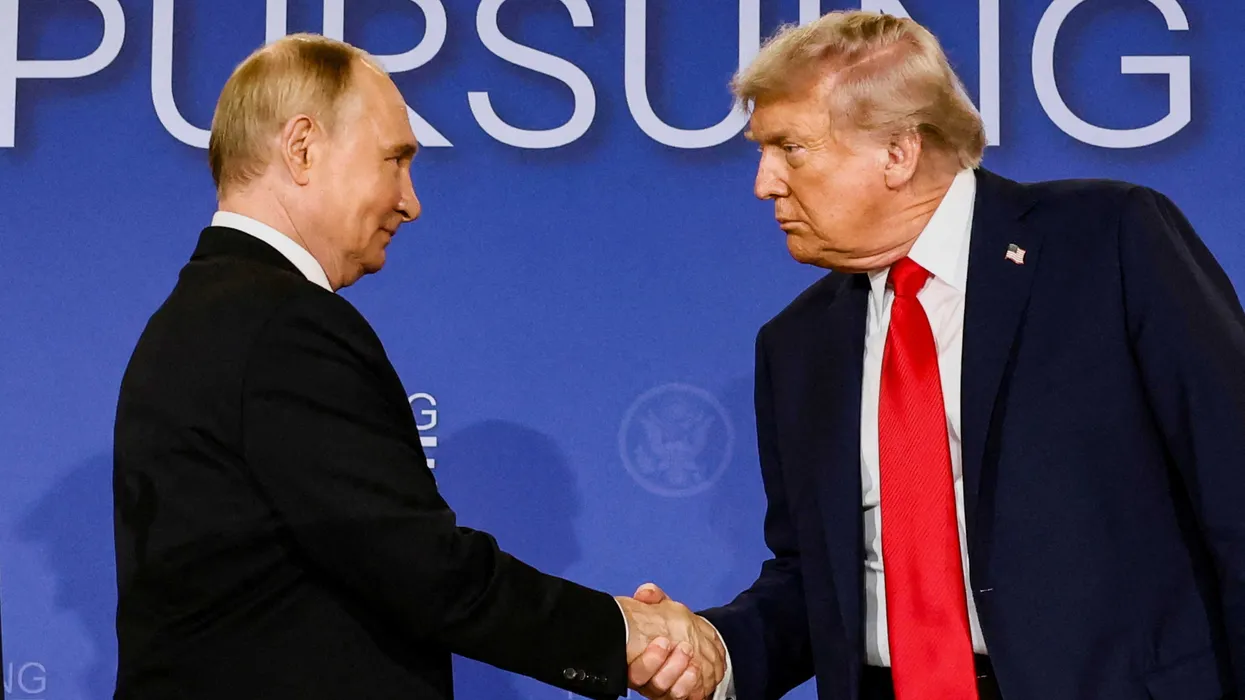
President Donald Trump's recent trilateral meeting with Chinese leader Xi Jinping and Russian President Vladimir Putin has been attacked as an international embarrassment on many fronts — but according to the political insiders at Pod Save America, it also supplied fresh evidence that the president's conception of the world remains "stuck in the 80s."
Trump spent this past week on a major trip across Asia, capped by a heavily hyped meeting with Xi and Putin. The gathering drew widespread criticism for furthering Trump's warm embrace of autocratic dictators at the expense of traditional democratic allies, and it ultimately produced little of consequence beyond photo-ops and negative press.
On their latest podcast episodes, the hosts of Pod Save America — former Obama administration officials — dug into the myriad ways the summit fell short. Co-host Tommy Vietor, a former National Security Council spokesman under Barack Obama, singled out one under-discussed aspect: the way the meeting positioned Russia as a top-three global superpower, despite an economy that lags well behind those of the United States and China.
Vietor and fellow co-host Jon Favreau, Obama's onetime chief speechwriter, suggested that Russia's unearned status made it one of the big winners of the meeting, and argued that a nation such as India — the world's most populous country, led by Prime Minister Narendra Modi — would be far better suited to the spot.
"I mean, like, that's crazy because Putin's a terrible guy, [because of] his human rights record, the fact that he's slaughtering Ukrainians and his own people," Vietor said. "But also, like, Russia is just not a peer of the U.S. They're, like, in terms of GDP, they're like eighth or ninth [in the world]. They're like the size of Italy. It's like, what are they doing there? Why wouldn't it be like Narendra Modi?"
"Now we get the two superpowers, U.S. and China, and now that we're just making them a third, I guess," Favreau responded.
Favreau argued that the explanation for Trump treating Russia as an equal on the world stage lies in an oft-observed criticism: the president's picture of global power appears not to have changed since the 1980s, the last decade in which Russia came anywhere close to the United States.
"And probably in Trump's mind, that's the case because they're still [a] superpower because he's still stuck in the 80s," Favreau said. "He still calls them the Soviet Union sometimes." The Soviet Union dissolved in 1991, leaving Russia as its principal successor state.
"That's exactly what it is," Vietor added, noting that Russia also possesses nuclear weapons to explain the situation. Russia's nuclear stockpile, the largest in the world by warhead count, is a legacy of its Soviet-era inheritance.

