Legal Analyst Warns Jeanine Pirro's Special Grand Jury Could Be Used to Smear Targets
Key Takeaways
- •U.S. Attorney Jeanine Pirro has convened a special grand jury in Washington, D.C., with her top lieutenant Steven Vandervelden assigned to lead the proceedings.
- •Legal analyst Lisa Rubin characterized the decision as unusual and warned it may serve an improper political purpose such as publicly tarnishing an individual's reputation.
- •Federal special grand juries under 18 U.S.C. §§ 3331–3334 are primarily tasked with investigating organized criminal activity and may issue reports only under narrowly defined circumstances involving non-criminal misconduct by public officials.
- •Rubin suggested the special grand jury may be used to allege wrongdoing publicly when there is insufficient evidence to obtain a criminal indictment.
- •Rubin raised concerns about Vandervelden's appointment, noting he lacks prior experience as a federal prosecutor for such a proceeding.
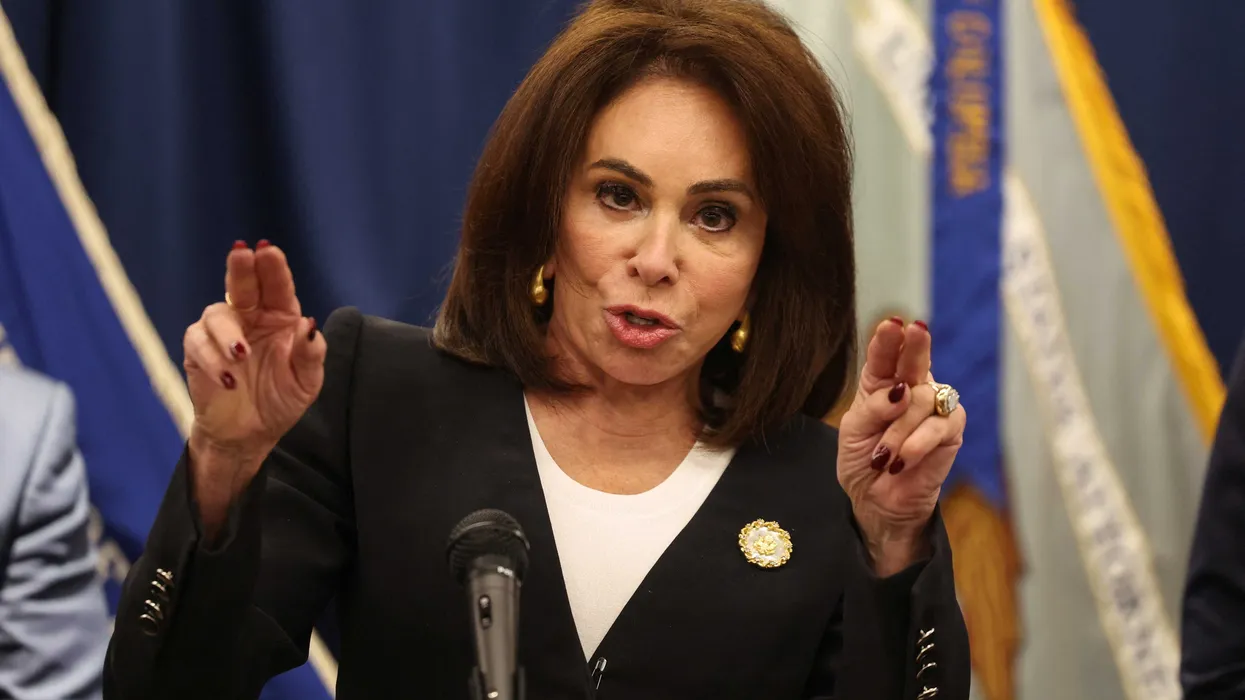
U.S. Attorney Jeanine Pirro's decision to convene a special grand jury in Washington, D.C., represents a "very unusual" move that may signal an improper political purpose, according to legal analyst Lisa Rubin, who appeared on MSNBC's Velshi (also identified as MS NOW) on Wednesday.
Rubin discussed the development following a Washington Post report that Pirro had convened the special grand jury, with her top lieutenant, Steven Vandervelden, tasked with leading the proceedings.
"Why would Jeanine Pirro want a special grand jury?" Rubin asked. "It might be in a circumstance where she can statutorily have that grand jury issue a report that might dirty somebody up."
Rubin's assessment — that Pirro may be seeking to tarnish someone's reputation — hinges on the legal distinction embedded in a single word: special. Under the federal special grand jury statute, 18 U.S.C. §§ 3331–3334, these panels are convened primarily to investigate organized criminal activity within a district and are distinct from ordinary grand juries, which focus on determining whether sufficient evidence exists to indict. A key difference is that a special grand jury has the authority to issue a report, but only under narrowly defined circumstances.
"A special grand jury can issue a report by statute and by federal law, specifically, but it can only submit to the court a report in special circumstances," Rubin explained. "That's with respect to... non-criminal misconduct, malfeasance or misfeasance in office involving organized criminal activity by someone who is currently a public officer or employee."
She added: "Perhaps the reason for impaneling a special grand jury here has something to do with the permitted subject matter of the report."
Host Alicia Menendez suggested that Pirro might be targeting Jerome Powell, the former Federal Reserve chair who continues to serve on the central bank's Board of Governors. Rubin responded that the pool of possible targets was broad, but noted that whoever the subject might be, conventional prosecution appeared unlikely to succeed.
"Thinking about why would you want a special grand jury, it may be because you already understand that you're not going to be able to meet the threshold for indicting someone," Rubin said, "but you want the public to know that that person has done something that we would consider, in a broader sense, wrong."
Rubin condemned such a use of a special grand jury as improper, while acknowledging it would not be surprising given the current posture of the Department of Justice.
"That is not the proper purpose of a special grand jury, but I would also submit to you, based on evidence of how this Department of Justice has behaved," she said. "It's not beyond what they have done in prior situations or how they think necessarily."
Rubin further pointed to Pirro's selection of Vandervelden as an additional indicator of how the grand jury might operate.
"He is not an experienced former federal prosecutor or federal prosecutor at all," she said. "He's not somebody who historically has that DOJ experience you would want in a special grand jury context."
Source: Raw Story | Washington Post | MSNBC segment
