PiPet Reaches 225 Consecutive Days as Community Project Gains Momentum Ahead of Possible Pi DEX Development
Key Takeaways
- •PiPet, an independent community project within the Pi Network ecosystem, has reached a milestone of 225 consecutive check-in days.
- •Pi Network currently operates on an enclosed Mainnet, meaning Pi coins are not yet openly tradable on external cryptocurrency exchanges.
- •Community-driven initiatives like PiPet provide necessary user engagement and utility while the network awaits a transition to an open Mainnet.
- •Community discussions around PiPet include expectations for a potential Pi decentralized exchange (DEX), though this remains speculative and unofficial.
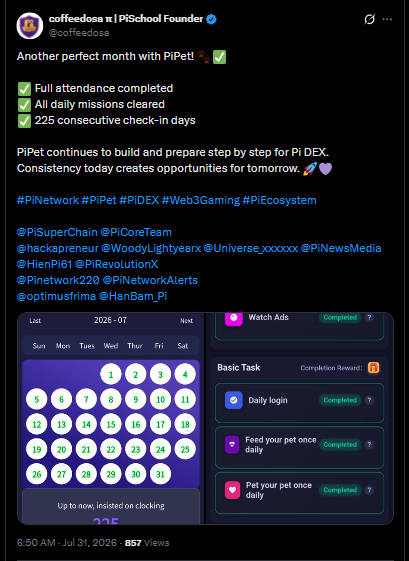
PiPet, a community project within the Pi Network ecosystem, has reached 225 consecutive check-in days after completing a full month of activity with full attendance and daily mission participation.
Pi Network, launched in 2019 by a team of Stanford graduates, allows users to mine Pi coins via a mobile app and has grown a global user base reported in the tens of millions. The network's Mainnet currently operates in an enclosed phase, meaning Pi coins are not yet openly tradable on external exchanges. This restriction makes community-driven utility projects like PiPet particularly relevant, as they give users ways to interact with the ecosystem while awaiting broader network openings.
The milestone has drawn attention as community-driven projects continue to develop alongside the broader Pi Network blockchain roadmap. PiPet's progress does not represent an official Pi Network announcement and does not guarantee future platform developments. Even so, the project illustrates how community initiatives are trying to build engagement and utility around the Pi ecosystem.
According to community discussions, PiPet continues to move forward step by step with expectations tied to future ecosystem opportunities, including potential integration possibilities related to Pi DEX concepts.
PiPet Demonstrates Long-Term Community Commitment
In the fast-moving crypto industry, consistency is often one of the biggest challenges for community projects.
Many blockchain initiatives attract attention quickly but struggle to maintain user participation over time. PiPet's 225 consecutive check-in days point to sustained engagement from its participants.
The completion of daily missions and continued activity suggests a strong commitment from the community members involved in the project.
For Web3 ecosystems, active communities can help create momentum. A blockchain network is shaped not only by technology, but also by users who participate, experiment, and contribute to ecosystem growth.
Why Community Activity Matters in Web3 Development
The growth of a Web3 ecosystem depends on several important elements.
Technology provides the foundation, while community participation helps create real activity around that technology.
Successful blockchain ecosystems often bring together developers, users, applications, and community-driven initiatives.
Projects like PiPet show how communities attempt to create additional engagement opportunities. Although individual community projects may differ in their goals and structure, they can still contribute to overall ecosystem activity by encouraging users to interact with blockchain-related applications.
For Pi Network, maintaining an active user base remains one of the most important parts of long-term ecosystem development. The network's roadmap has emphasized milestones such as KYC verification progress, Node participation, and the eventual transition to an open Mainnet — conditions that would shape how community projects like PiPet could function in a more connected environment.
The Importance of Daily Participation Models
Daily check-in systems and mission-based activities have become common tools in digital communities.
These models encourage users to return regularly and take part in ongoing activities.
From a behavioral perspective, consistent engagement can help strengthen the connection between users and platforms.
In blockchain ecosystems, this type of participation can also help users become more familiar with digital assets, decentralized applications, and Web3 concepts.
PiPet's 225-day achievement shows how consistency can become a valuable part of community building. Rather than focusing only on short-term excitement, long-term participation can create a stronger foundation for future opportunities.
Preparing for Potential Pi DEX Development
One topic associated with PiPet's recent milestone is preparation for Pi DEX-related opportunities.
A decentralized exchange, or DEX, allows users to trade digital assets through blockchain-based systems without relying on traditional centralized intermediaries.
DEX platforms are an important part of many Web3 ecosystems because they provide mechanisms for asset exchange, liquidity, and decentralized financial activity.
However, any future Pi DEX development would depend on official technical decisions, network readiness, and ecosystem conditions.
Community discussions around Pi DEX reflect interest among Pi Network users in seeing broader utility develop around the ecosystem. This interest is heightened by the fact that Pi coins currently lack an open trading venue, making any mechanism for exchange within the ecosystem a significant topic of community attention.
What a DEX Could Mean for a Blockchain Ecosystem
Decentralized exchanges have become important components of the crypto industry.
They allow users to interact directly with blockchain-based markets and can support a range of decentralized applications.
For a blockchain ecosystem, a functioning DEX requires several important elements, including reliable infrastructure, sufficient liquidity, security mechanisms, user adoption, and developer support.
Without these components, a DEX cannot operate effectively. For that reason, ecosystem preparation involves more than simply launching a trading platform. It requires building the necessary technical and community foundation first.
Source: Xpost
Pi Network's Broader Ecosystem Development
Pi Network has continued to attract attention because of its large global community and ongoing blockchain development.
The ecosystem has focused on several areas, including Mainnet progress, Node participation, protocol improvements, and application development.
Community projects add another layer to this growth by creating additional activities for users.
At the same time, the long-term success of any blockchain ecosystem depends on how effectively technology, applications, and user participation work together. A strong community can support development, but practical utility remains one of the most important factors in future adoption.
The Role of Community Projects in Crypto Growth
Many blockchain ecosystems have benefited from community-driven innovation.
Developers and users often create applications, tools, and services that expand the usefulness of a network.
These community contributions can help demonstrate different possibilities within blockchain technology.
PiPet's continued activity is one example of community members trying to contribute to ecosystem engagement.
While such projects should be evaluated independently, they also reflect the creativity and enthusiasm often found in crypto communities.
Why Long-Term Building Matters More Than Short-Term Attention
Crypto markets often move through cycles of excitement and speculation.
New announcements can generate significant attention, but sustainable growth usually depends on continuous development.
Projects that focus on building technology, improving user experience, and creating practical applications often have stronger foundations.
PiPet's 225-day milestone reflects a different approach: gradual progress through consistent activity.
In emerging ecosystems, small steps taken consistently can contribute to larger developments over time.
The Relationship Between Community Growth and Pi Coin Utility
Many Pi Network users are interested in how ecosystem development could affect Pi Coin's future.
However, the value and adoption of any digital asset depend on multiple factors.
Technology, market conditions, regulatory environments, user demand, and practical utility all influence long-term outcomes.
Community applications can potentially contribute to utility by giving users more reasons to interact with the ecosystem.
The growth of applications and services is likely to remain an important factor in how blockchain networks evolve.
Challenges Facing Community-Driven Ecosystems
Although community projects can provide valuable contributions, they also face challenges.
These include maintaining user engagement, ensuring technical reliability, developing sustainable models, and aligning with broader ecosystem standards.
For projects connected to larger blockchain networks, transparency and clear communication are especially important.
Users should continue to distinguish between official blockchain developments and independent community initiatives. That approach helps maintain realistic expectations while still recognizing the contributions of community builders.
Conclusion
PiPet's achievement of 225 consecutive check-in days highlights the importance of consistency and community participation within the Pi Network ecosystem.
With full attendance completed and daily missions consistently achieved, the project demonstrates continued engagement from its participants.
While discussions about future Pi DEX preparation remain part of community expectations rather than confirmed official developments, the milestone reflects growing interest in expanding Pi Network's ecosystem possibilities.
In the evolving world of crypto and Web3, long-term progress often comes from continuous building, active communities, and practical innovation. For Pi Network supporters, projects like PiPet represent one example of how ecosystem participation can continue developing step by step toward future opportunities.

