Pi Wallet Exchange Button Could Be Restricted to KYB-Verified Exchanges, Community Post Suggests
Key Takeaways
- •The exchange-button claim originated from a community post and has not been confirmed by Pi Network as an official feature.
- •Pi Network uses KYB to verify businesses, while KYC applies to individual users.
- •Pi Network’s official KYB directory already includes several exchanges and crypto infrastructure providers, including Kraken, OKX and MEXC.
- •Pi Network has stated that exchanges, onramps, bridges and Web3 wallet providers seeking Mainnet-related access are subject to KYB requirements.
- •Pi Network warns users to rely on its official KYB list and official Pi Wallet address to avoid unauthorized services and scams.
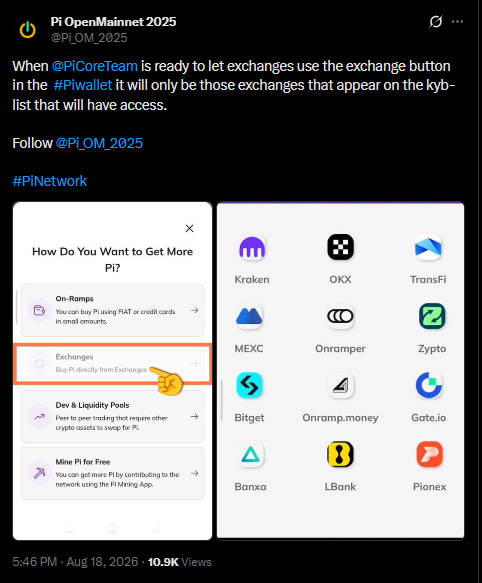
A discussion circulating within the Pi Network community is drawing renewed attention to how cryptocurrency exchanges might eventually interact with the Pi Wallet. Pi Wallet is the project's native wallet application, and the exchange button refers to functionality that, if introduced, would let users interact with external cryptocurrency platforms directly from within the wallet interface. According to a post shared by @Pi_OM_2025 on X, when the Pi Core Team is ready to enable the exchange button inside the Pi Wallet, access could be limited to exchanges that appear on Pi Network's KYB list.
The claim has attracted interest because it points to a potentially significant layer of compliance between Pi Wallet users and cryptocurrency exchanges. The statement from the community account should not be treated as an official announcement of a new Pi Wallet feature. However, the broader concept aligns with Pi Network's existing approach to KYB verification. Pi Network's official website maintains a KYB-verified business list and states that KYB verification is designed to support security, compliance and legitimate participation in the Pi ecosystem. That context makes the debate over a future exchange button particularly relevant for Pi Coin holders watching the evolution of the Pi Network Mainnet.
Pi Wallet Exchange Button Becomes a Major Talking Point
The central claim is straightforward. When the Pi Core Team eventually enables an exchange button within the Pi Wallet, exchanges seeking access through that functionality could potentially be required to appear on Pi Network's KYB list. Such a design would create a more controlled connection between Pi Wallet users and verified cryptocurrency businesses. Rather than allowing any exchange to integrate through a native wallet interface, the system described in the community post would emphasize businesses that have completed Pi Network's Know Your Business verification process.
A native exchange-related function inside Pi Wallet would be significant because it could give users a more direct pathway to interact with external cryptocurrency platforms. However, an important distinction exists between what Pi Network has officially documented and what the community is discussing. Pi Network has confirmed that KYB verification is required for businesses seeking certain forms of participation in the Mainnet ecosystem, and that KYB-verified businesses are listed publicly for users to check. The specific claim that a future Pi Wallet exchange button will be restricted exclusively to exchanges appearing on the KYB list has not been established by the official sources reviewed for this article.
Source: X post
Why Pi Network Uses KYB Verification
KYB stands for Know Your Business. The process is designed to verify businesses rather than individual users. Pi Network distinguishes KYB from KYC: KYC applies to individual Pioneers — the project's term for its users — while KYB applies to businesses seeking participation in relevant parts of the Pi ecosystem.
The purpose is not simply administrative. Pi Network has repeatedly emphasized security, compliance and scam prevention as important considerations for its Mainnet ecosystem. Its official KYB page states that verified businesses and KYC-verified Pioneers can interact within the ecosystem, while KYB requirements are intended to support regulatory compliance and the long-term development of the network.
This framework becomes especially relevant when external businesses such as exchanges, onramps, bridges and Web3 wallet providers interact with Pi. Pi Network's Open Network announcement specifically stated that companies seeking access to the Pi Mainnet, Mainnet Nodes or other Mainnet-related services, as well as providers of critical infrastructure such as onramps, exchanges, bridges and Web3 wallet solutions, are subject to KYB requirements. That existing framework helps explain why the community is paying close attention to the possibility of a KYB-based exchange integration inside Pi Wallet.
Pi Network Already Lists KYB-Verified Exchanges
The discussion is also notable because Pi Network's official KYB directory already includes several recognizable cryptocurrency platforms. The current list published by Pi Network includes Kraken, OKX, Bitget, Gate.io, Pionex, Onramp.money, Onramper, Zypto, LBank, TransFi, MEXC and Banxa.
The presence of exchanges and crypto infrastructure providers on the official KYB list demonstrates that Pi Network's compliance framework is already being used to identify businesses that have completed its verification process. This does not mean every exchange on the list automatically has access to every future Pi Wallet feature. Instead, the list provides a reference point for users seeking to determine whether a business has completed Pi Network's KYB review. That distinction could become especially important if additional wallet-based exchange functionality is introduced.
What a KYB-Only Exchange System Could Mean
If the community's interpretation eventually becomes an official Pi Wallet feature, one potential benefit would be greater transparency for Pi users. A user opening an exchange-related function inside the wallet could potentially interact only with platforms that have already passed the required business verification process. That could reduce the risk of users accidentally interacting with unauthorized services that falsely claim to support Pi.
Pi Network has previously warned users about unauthorized third-party services and emphasized the importance of checking its official KYB list before interacting with businesses claiming to operate within the Pi ecosystem. The issue is particularly relevant in cryptocurrency because fake exchanges, phishing websites and fraudulent services can imitate legitimate platforms. A controlled wallet integration could potentially make it easier for users to distinguish recognized businesses from unauthorized actors. However, security would still depend on users verifying that they are interacting with the legitimate Pi Wallet and legitimate exchange services.
Pi Network Has Emphasized External Connectivity
The potential exchange button also fits into the broader direction established when Pi Network launched its Open Network. Pi Network announced the launch of Open Network in February 2025, describing it as a major milestone that enabled external connectivity between Pi Network and the broader blockchain ecosystem. The network specifically discussed integrations with centralized exchanges and onramps, allowing Pioneers to connect their Pi with external systems. Pi Network also stated that CEX platforms and onramps had integrated with the network after passing KYB verification.
This means the concept of connecting Pi with external crypto platforms through verified businesses is not entirely new. What would be potentially new is the specific mechanism of exposing exchange functionality directly through a Pi Wallet interface. That could make the connection more visible and accessible to everyday Pi Coin users.
What It Could Mean for Pi Coin Adoption
For Pi Coin, the network's native cryptocurrency, easier connections between wallets and verified exchanges could theoretically improve accessibility. A more direct exchange infrastructure could make it simpler for users to move between the Pi ecosystem and external cryptocurrency markets, depending on how such functionality is ultimately designed. It could also create opportunities for greater liquidity and broader participation.
None of these outcomes should be considered guaranteed. The introduction of an exchange button would not automatically increase Pi Coin's price, trading volume or adoption. Market activity depends on many factors, including exchange support, liquidity, regulations, user demand and broader cryptocurrency market conditions. The more immediate significance would be infrastructure. A native exchange pathway could represent another step toward connecting Pi Network's internal ecosystem with external financial and cryptocurrency services.
Security Remains a Central Issue
The potential KYB restriction is especially important from a security perspective. Pi Network has repeatedly warned users about unauthorized services. The network's official safety guidance says users should avoid third-party services claiming to have integrated with Pi if those businesses are not listed on the official KYB page. The network has also warned that interacting with unauthorized businesses could expose users to scams or financial losses.
For Pi Wallet users, this makes the official verification system particularly important. Pi Network's official safety page identifies the legitimate Pi Wallet address as wallet.pinet.com and warns users to avoid entering their wallet passphrase on websites that do not use the official address. Therefore, even if exchange functionality becomes more integrated into the wallet in the future, users will still need to pay attention to security.
What Pi Coin Users Should Watch Next
The biggest question now is whether Pi Network will officially confirm the proposed exchange button and explain how it will work. The community post from @Pi_OM_2025 provides an indication of what some users expect, but it does not establish an official launch date or feature specification. Pi Coin holders should therefore watch Pi Network's official announcements for information about any future wallet upgrades, exchange integrations or changes to KYB requirements.
The official KYB directory should also remain an important reference point for users. If an exchange claims to have a direct relationship with Pi Network, checking whether it appears on the official KYB list can provide an additional layer of verification. This is particularly important because Pi Network itself has warned users about unauthorized exchange activity in the past.
A More Controlled Exchange Ecosystem Could Be Taking Shape
The discussion surrounding a future Pi Wallet exchange button highlights a broader direction for Pi Network: connecting the cryptocurrency ecosystem with external services while maintaining verification and compliance requirements. The community claim shared by @Pi_OM_2025 suggests that only exchanges appearing on the Pi Network KYB list could potentially gain access if and when the exchange button becomes available. While that specific functionality has not been confirmed in the official materials reviewed here, the underlying KYB framework is already established.
Pi Network currently maintains an official list of KYB-verified businesses, including multiple exchanges and crypto infrastructure providers. The network has also explicitly stated that exchanges and other critical infrastructure providers seeking relevant Mainnet participation are subject to KYB requirements. For Pi Coin holders, the potential significance is therefore less about a single button and more about how Pi Network could structure its relationship with external cryptocurrency platforms. If a native exchange feature eventually arrives in Pi Wallet and is limited to verified businesses, it could create a more controlled pathway between Pi users and external exchanges.
For now, the community should wait for official confirmation before treating the proposed exchange button as a confirmed upcoming feature. The KYB system is real, the verified business directory is active, and Pi Network has already established external connectivity with verified businesses. What remains to be confirmed is whether that framework will ultimately determine access to a dedicated exchange function inside the Pi Wallet. That question could become increasingly important as Pi Network continues expanding its Mainnet ecosystem and strengthening its position within the broader Crypto and Web3 landscape.

