Pi Network V25 Mainnet Upgrade Draws Community Focus to Potential V26 Developments
Key Takeaways
- •Pi Network successfully deployed the V25 Protocol on its Mainnet, reinforcing the blockchain's foundational architecture and enhancing the transparency of on-chain data verification.
- •Community discussions have shifted to a potential V26 upgrade, with users anticipating improvements in encryption, smart contract functionality, and Node system performance.
- •Official details regarding V26, including its scope, timing, and technical specifications, have not been confirmed and remain dependent on announcements from the Pi Core Team.
- •The V25 and anticipated V26 upgrades are viewed by the community as progressive steps toward Pi Network's long-term vision of building a more open and advanced blockchain ecosystem.
- •Developer engagement and practical application creation are considered essential factors for sustaining ecosystem growth beyond infrastructure improvements alone.
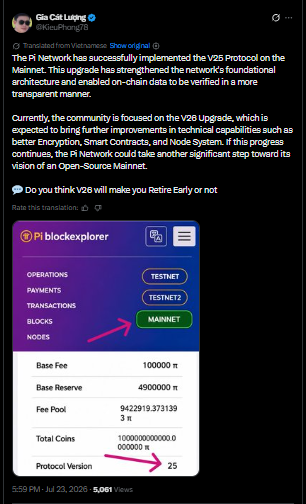
Pi Network is drawing renewed attention from its global community after the successful implementation of the V25 Protocol on Mainnet, a technical milestone in the project’s ongoing blockchain development.
According to a recent discussion shared by Pi Network community member @KieuPhong78, the V25 Protocol upgrade has strengthened the foundation of Pi Network’s architecture and improved the network’s ability to verify on-chain data with greater transparency.
Community discussion has now shifted toward the expected V26 Upgrade, which many users believe could bring further technical improvements. Areas being discussed include stronger encryption systems, smart contract capabilities, and enhancements to Node infrastructure.
Official details on any future upgrades remain dependent on announcements from the Pi Core Team. Because the current V26 discussion is community-led, confirmed scope, timing, and technical specifications would need to come through official communications, release notes, or developer documentation. Even so, the discussion around V26 reflects continued interest in the next stage of Pi Network’s long-term development.
Source: https://x.com/KieuPhong78/status/2080246387640607042
V25 Protocol Upgrade Marks a Technical Milestone
Blockchain networks require ongoing improvements to maintain security, efficiency, and scalability. The successful implementation of Protocol V25 represents an important infrastructure update for Pi Network.
Protocol upgrades are not limited to routine software changes. They often include adjustments to underlying systems that allow blockchain networks to operate more effectively and support a wider range of future use cases.
For Pi Network, strengthening the Mainnet architecture is an important step toward building a more reliable ecosystem capable of supporting future applications and broader participation.
The ability to verify on-chain information transparently is also considered a key element in maintaining trust within decentralized networks. By improving the technical foundation of the Mainnet, the V25 upgrade is viewed by the community as part of Pi Network’s broader infrastructure development process.
Why Blockchain Infrastructure Updates Matter
Many cryptocurrency users focus on visible developments, including applications, token usage, and market activity. However, the long-term functionality of any blockchain ecosystem depends heavily on its technical infrastructure.
A strong blockchain network requires several core elements, including reliable transaction processing, secure data verification, stable network operations, developer-friendly tools, and scalable architecture.
Without these components, even large communities may face difficulty creating sustainable ecosystems. Infrastructure updates help ensure that a blockchain can continue operating securely while preparing for more advanced features.
The V25 upgrade illustrates the importance of improving core technology before expanding into more complex blockchain functions. For networks seeking broader adoption and stronger developer participation, technical reliability remains a central requirement.
Community Attention Shifts Toward V26 Upgrade
After the completion of V25, attention within the Pi Network community has moved toward the potential V26 upgrade. Community discussions have focused on expected improvements in encryption, smart contracts, and Node system performance.
These areas are significant because they represent key components of modern blockchain ecosystems. Encryption improvements can strengthen security and privacy. Smart contract capabilities can give developers tools to create more advanced decentralized applications. Node improvements can support wider network participation and greater reliability.
If these technical developments continue, they could represent another stage in Pi Network’s evolution. However, any specific implementation details remain subject to official confirmation from the Pi Core Team. In practice, protocol-level changes often require coordination across network software, node operators, application interfaces, and developer tools before users can see their full impact.
The Potential Role of Smart Contracts in Pi Network
Smart contracts are among the most important technologies in the blockchain industry. They enable automated agreements and decentralized applications to function without relying on traditional intermediaries.
Many leading blockchain ecosystems use smart contracts as the foundation for decentralized finance, gaming applications, marketplaces, and other Web3 services. These systems allow developers to build applications that interact directly with blockchain infrastructure.
For Pi Network, smart contract capabilities could create new possibilities for developers and ecosystem builders. Developers could potentially build more complex applications that use the network’s infrastructure in direct and programmable ways.
At the same time, implementing smart contracts requires careful development. Security and reliability are essential because vulnerabilities in smart contract systems can affect users, applications, and broader ecosystem confidence. Testing, documentation, and clear developer standards are therefore important parts of any smart contract rollout.
Encryption and Security Improvements
Security remains one of the most important considerations in blockchain development. As networks grow and more users participate, protecting data and maintaining system integrity become increasingly important.
Potential encryption improvements in future upgrades could help strengthen the security framework of the Pi Network ecosystem. Stronger encryption can contribute to safer data handling, improved privacy protections, and greater resilience against technical risks.
Blockchain projects must continue adapting because cybersecurity threats and technological challenges evolve over time. A stronger security foundation can help support confidence among users, developers, and businesses exploring blockchain-based solutions.
For Pi Network, continued attention to security would be consistent with the broader needs of any expanding blockchain ecosystem.
The Importance of Node Systems
Nodes are a critical component of decentralized blockchain networks. They help maintain network operations, verify information, and contribute to overall system reliability.
For Pi Network, the Node ecosystem has been an important part of its infrastructure development. Improving Node capabilities could potentially support greater decentralization and stronger network performance.
A healthy Node system allows a blockchain network to operate more independently while reducing reliance on centralized control. Node improvements may also support better validation, more resilient network operations, and broader participation by community members who contribute infrastructure.
As Pi Network continues developing its Mainnet environment, Node infrastructure remains one of the key technical areas being watched by the community.
Moving Toward an Open-Source Mainnet Vision
One of the major discussions surrounding Pi Network’s future is the possibility of moving closer to an Open-Source Mainnet environment. Open-source development can support greater transparency, collaboration, and innovation.
When developers have access to technical information and tools, they can build new applications, review code, and contribute improvements to an ecosystem. Many successful blockchain projects have benefited from open-source communities because they allow broader participation in development.
For Pi Network, a more open technical environment could encourage additional developer engagement and ecosystem experimentation. However, any transition toward a more open system requires careful preparation to ensure security, stability, and proper functionality.
Open-source development can expand participation, but it must be managed in a way that protects the underlying network and its users.
Developers Remain Central to Ecosystem Growth
A blockchain ecosystem cannot grow through infrastructure alone. Developers play an essential role in turning technical systems into practical applications that users can access and use.
The introduction of stronger technical capabilities could encourage more developers to explore building within the Pi Network ecosystem. Applications created by developers can provide real-world utility and give users more reasons to participate in the network.
From decentralized applications to digital services, developer activity is likely to remain an important factor in determining future ecosystem growth. Technical upgrades may create the foundation, but applications and services are needed to create practical value for users.
For this reason, community discussion around V26 has focused not only on infrastructure, but also on how new technical capabilities could support broader Web3 development.
What V26 Could Mean for the Pi Network Ecosystem
If the expected V26 improvements are implemented successfully, the upgrade could represent another step toward a more advanced blockchain platform. Potential improvements in encryption, smart contracts, and Node systems could strengthen the foundation needed for future Web3 development.
However, technical upgrades alone do not guarantee adoption. Long-term ecosystem growth depends on multiple factors, including user engagement, developer participation, business integration, and practical utility.
A blockchain ecosystem must continue evolving beyond infrastructure to create meaningful experiences for users. While protocol upgrades are important, applications, tools, services, and community participation also help determine whether a network can sustain long-term activity.
For Pi Network, the discussion around V26 reflects both technical expectations and the community’s broader interest in the project’s development path.
Community Expectations Continue to Grow
The Pi Network community has closely followed each major technical milestone. Updates such as V25 and ongoing discussions around V26 have generated significant interest because they offer insight into the network’s development direction.
For many Pioneers, these upgrades are viewed as progress toward the broader vision of creating an accessible digital economy powered by blockchain technology.
At the same time, users should continue relying on official announcements and verified information when evaluating future developments. Community discussions can highlight expectations and areas of interest, but official details about future upgrades depend on communications from the Pi Core Team. Items to watch include any official confirmation of V26 features, node software updates, developer tooling, security guidance, and documentation explaining how new capabilities would be introduced.
Conclusion
The successful implementation of the V25 Protocol on Pi Network Mainnet represents an important step in strengthening the network’s technical foundation. With community attention now focused on the potential V26 Upgrade, discussions are centered on possible improvements in encryption, smart contracts, and Node infrastructure.
If these developments continue successfully, Pi Network could move closer to its long-term vision of a more open and advanced blockchain ecosystem. The project’s future remains dependent on continued development, adoption, and real-world utility.
The movement from V25 toward future upgrades highlights the continuing evolution of Pi Network within the cryptocurrency and Web3 landscape, while underscoring the importance of infrastructure, security, developer participation, and official communication in the network’s next stages.

