Pi Network Trades Near Support After SLICE Testnet Launchpad Distribution
Key Takeaways
- •Pi Launchpad completed SLICE distribution following its second testnet token exercise conducted from June 12 to June 28.
- •Pioneers can now view SLICE allocations, launch and effective prices, liquidity pool access and price tracking inside the Pi Browser Launchpad app.
- •PI traded near $0.083 after a modest gain but remained below major resistance levels and the declining 200-period moving average.
- •Immediate PI support is between $0.080 and $0.082, while nearby resistance is between $0.090 and $0.095.
- •More than 127 million PI are scheduled to unlock in the coming weeks, and about 1.21 billion PI may enter circulation during 2026.
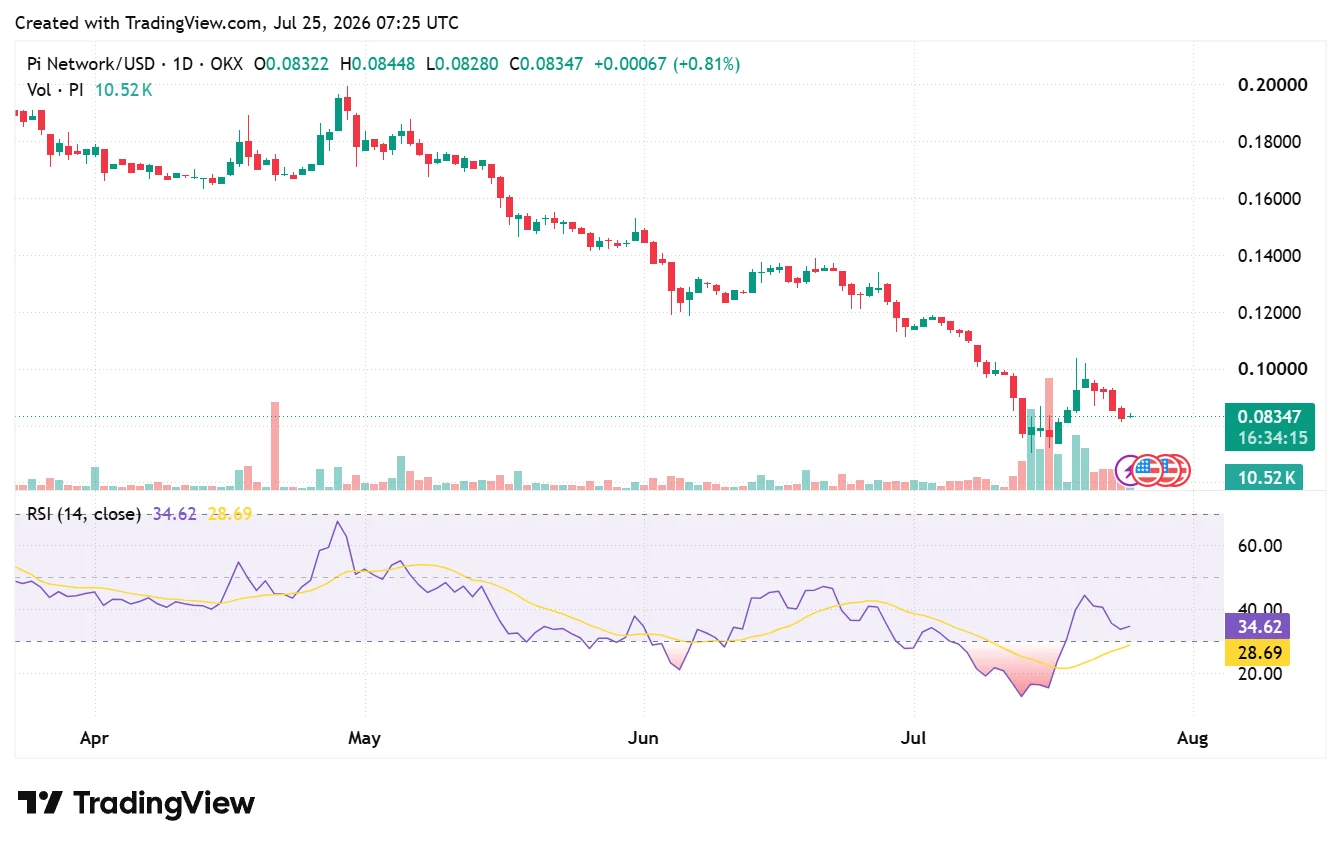
Pi Network’s PI token rose about 1.5% to nearly $0.083 while most major cryptocurrencies traded lower, following the completion of SLICE testnet token distribution through Pi Launchpad. Despite the modest gain, PI remained close to a key support zone after losing the $0.10 level, and its four-hour market structure continued to show bearish characteristics.
The SLICE distribution gives Pioneers access to allocation data, token pricing, liquidity pool features and price tracking. Users can now view allocations, launch prices, effective prices, pool access and a chart comparing SLICE with Test-Pi inside the Launchpad app in Pi Browser. The update extends Pi Launchpad testing after almost 480,000 users joined the first phase on PiDay 2026, adding another simulated environment for users to understand how token launches and liquidity pools may function before any comparable live-market process.
Pi Network Completes SLICE Distribution
Pi Network completed the SLICE distribution after conducting its second testnet token exercise from June 12 through June 28. The project introduced the test after collecting feedback from its first Launchpad trial.
Pi Launchpad has completed the distribution of its second Testnet token, SLICE! Explore the post-launch experience and see how liquidity pools work through the new price tracking feature! The Launchpad app in Pi Browser shows individual allocation details, the launch and… pic.twitter.com/9N0RmQz6UG — Pi Network (@PiCoreTeam) July 24, 2026
The revised Launchpad process focuses on commitment amounts and a fair-access hold. Pi Network also simplified participation steps so users can more easily understand allocation outcomes.
Pioneers can open the Launchpad app in Pi Browser to review individual allocation details. The interface displays launch prices, effective prices, liquidity pool access and SLICE price movements against Test-Pi.
The liquidity pool feature is designed to let users test market activity in a controlled testnet environment. It also demonstrates how token prices can change as users add or remove liquidity from pools. Because SLICE is part of a testnet exercise, the main relevance for PI holders is not direct supply impact, but whether Launchpad testing improves user familiarity with future ecosystem tools.
PI gained modestly after the announcement, but the move did not alter the broader chart setup. The token continued to trade below several resistance areas after falling to a record low near $0.07 earlier in July.
On the four-hour chart, PI has recorded lower highs and lower lows since late April. The token also remains well below the declining 200-period moving average, which is near $0.159.
Immediate support is located between $0.080 and $0.082. Buyers have defended that range several times, making it the key level for the current trading area. A break below the zone could expose the recent $0.070 to $0.073 swing-low range, while additional weakness could bring $0.065 back into focus.
Unlock Schedule Remains a Key Supply Factor
PI faces nearby resistance between $0.090 and $0.095. A stronger supply area sits between $0.100 and $0.105, where previous recovery attempts have stalled.
A move above $0.095 with stronger volume could open a path toward $0.110 and $0.120. However, PI would still need to clear the $0.120 to $0.130 area before the broader structure shows improvement.
The 14-period Relative Strength Index is near 37. That reading indicates weak momentum, though PI has not moved into oversold territory below 30. An RSI recovery above 45 could indicate stronger buying interest, while a move above 50 would provide firmer evidence of a momentum shift.
Supply conditions remain an important factor for the PI market. More than 127 million PI are scheduled to unlock in the coming weeks, according to market data. Around 1.21 billion PI may enter circulation during 2026.
Those releases can add selling pressure if demand does not increase at the same pace. Although the SLICE launch supports ecosystem testing, liquidity education and Launchpad development, it does not directly reduce circulating supply or create guaranteed market demand. For that reason, traders are likely to keep separating product-testing milestones from changes in PI’s available supply and exchange liquidity.
Some users have also reported missing wallet balances and failed transactions to unknown addresses. Pi Network has not provided details on those reported cases in the supplied material.
PI may continue trading between $0.080 and $0.095 while market participants assess demand conditions and token unlock pressure. A confirmed break above or below that range would define the next short-term direction.

