Philippines Ranks 11th Worldwide, First in East and Southeast Asia, in 2026 Happy Planet Index
Key Takeaways
- •The Philippines ranked 11th out of 134 countries in the 2026 Happy Planet Index with a score of 59.3, the best result in East and Southeast Asia.
- •The Happy Planet Index, compiled by the Hot or Cool Institute, measures sustainable well-being by combining life expectancy and self-reported well-being against each nation's ecological footprint.
- •The HPI was first published in 2006 by the UK-based New Economics Foundation, and Costa Rica topped the 2009, 2012, 2016 and 2021 editions.
- •Because the index weighs social outcomes against environmental resource use, wealthy, high-consumption economies do not automatically rank at the top.
- •The HPI belongs to a family of measures, including the UN Human Development Index and the OECD Better Life Index, that gauge national progress beyond GDP.
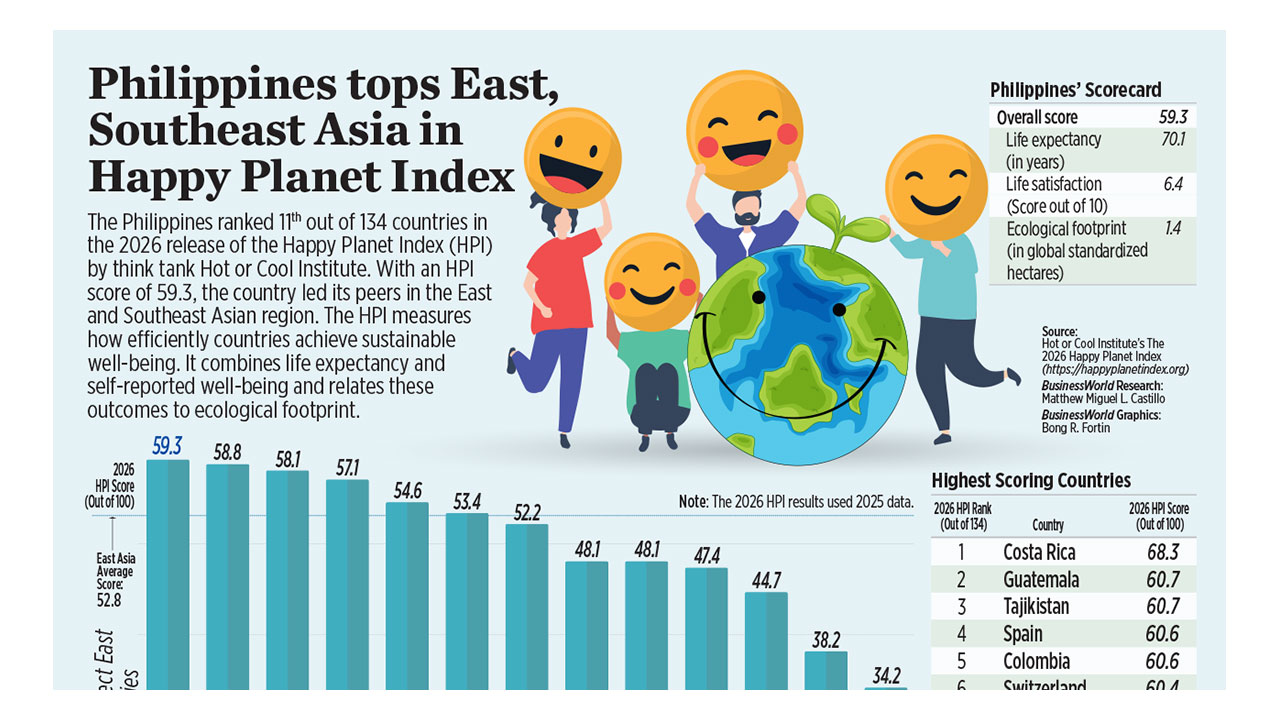
The Philippines placed 11th out of 134 countries in the 2026 release of the Happy Planet Index (HPI), compiled by the think tank Hot or Cool Institute. With an HPI score of 59.3, the country led its peers across the East and Southeast Asian region.
The index measures how efficiently countries achieve sustainable well-being, combining life expectancy and self-reported well-being and relating these outcomes to each nation's ecological footprint.
The HPI was first published in 2006 by the UK-based New Economics Foundation and has appeared in periodic editions since, with Costa Rica topping the 2009, 2012, 2016 and 2021 releases. It belongs to a family of measures, including the United Nations' Human Development Index and the OECD's Better Life Index, that gauge national progress beyond gross domestic product.
Because the HPI weighs social outcomes against environmental resource use, wealthy, high-consumption economies do not automatically rank at the top — a design feature that separates it from output-based league tables and shapes how country comparisons are read. Future editions of the index will track how national scores shift as life expectancy, self-reported well-being and ecological footprints change.
Source: BusinessWorld Online

