Philippines Freezes 25 Crypto Wallets Tied to Flood Scandal Probe
Key Takeaways
- •Twenty-five cryptocurrency wallets linked to an alleged flood corruption scheme have been locked by Philippine officials, preventing all movement of funds while the probe is active.
- •A wallet freeze is distinct from a seizure or forfeiture, as the assets remain the property of the holders and no criminal conviction is implied.
- •The Anti-Money Laundering Council is the Philippine government body responsible for investigating financial crimes and ordering crypto asset freezes.
- •Available reporting has not confirmed the identities of the wallet holders, the nature of the alleged, or the sums involved.
- •Regulators worldwide, guided by FATF standards, are increasingly applying bank-style freeze tools to crypto, with comparable actions seen in the US and across the Asia-Pacific.
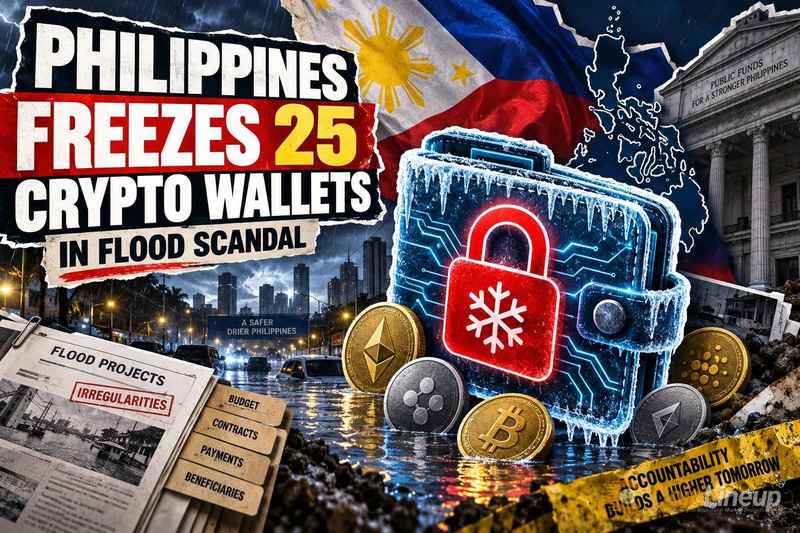
Philippine authorities have reportedly frozen 25 cryptocurrency wallets allegedly linked to a flood scandal, in one of the country's most direct uses of crypto asset controls in a corruption-related investigation. The move restricts the movement of funds held in the affected wallets while investigators examine the alleged connection.
What Authorities Reportedly Did
According to reports, Philippine authorities ordered the freeze of 25 crypto wallets as part of a probe into the flood scandal. Under a freeze, the wallet holders cannot move, withdraw, or transfer any funds sitting at those addresses while the investigation remains active.
A freeze is distinct from a seizure or forfeiture. The assets technically remain the property of the account holders, but they are locked in place — much like a court freezing a bank account during a financial investigation. A freeze order alone implies no criminal conviction.
Regulatory Oversight in the Philippines
The Philippines has been broadening its supervision of digital payment systems and crypto activity, and the action aligns with that wider regulatory posture. Oversight of crypto transactions in the country falls under the Anti-Money Laundering Council (AMLC), the government body responsible for investigating financial crimes and ordering asset freezes.
The Alleged Flood-Scandal Connection
The wallets are described as tied to a flood scandal, though available reporting has not confirmed details of the alleged conduct, the identities of the wallet holders, or the amounts involved. The link between the wallets and the scandal remains an allegation under active investigation.
Crypto wallets are appearing with growing frequency in public-sector misconduct investigations worldwide. Their pseudonymous nature, combined with the permanent record kept on the blockchain, makes them both a convenient vehicle for moving funds and a traceable one for investigators.
Other jurisdictions have taken comparable steps: US authorities froze $344 million in crypto linked to sanctions violations in a separate action. The Financial Action Task Force (FATF), the global standard-setter for anti-money laundering rules, has pressed governments worldwide to apply the same asset-freeze tools to crypto that they already use for traditional bank accounts.
What a Wallet Freeze Means for an Investigation
When authorities freeze a crypto wallet, they typically work through a court or regulatory body to block the associated addresses at the exchange or custodian level, provided the assets sit on a centralized platform. Where funds are self-custodied — meaning the holder controls the private keys directly — enforcement is more complex and may depend on legal orders preventing the holder from transacting.
A freeze preserves the status quo while investigators build their case. Authorities generally need to demonstrate probable cause to a court before pursuing permanent forfeiture. If the investigation fails to produce sufficient evidence, the freeze can be lifted and the assets returned.
For exchange customers, the practical implication is that if an exchange receives a legal freeze order affecting an account, the account holder cannot access those funds until the order is resolved — the same way a bank would respond to a court-ordered account freeze. Australia's recent removal of 45 crypto and remittance registrations offers another example of regulators across the Asia-Pacific tightening their control over digital asset activity.
What to Watch Next
Key developments to monitor include official disclosures from Philippine law enforcement or the courts, any filings that name the wallet holders or specify the assets involved, and whether the freeze is extended, converted into a forfeiture, or eventually lifted.
The Philippine government's ongoing push to tighten oversight of crypto and payment operators suggests enforcement actions tied to financial misconduct are likely to continue. Comparable calls for crypto transfer screening from regulators in Europe indicate this is a global trend rather than an isolated move.
For anyone holding cryptocurrency in the Philippines, the case is a reminder that funds held on regulated exchanges are subject to the same legal processes as traditional bank accounts when authorities have cause to act.
Disclaimer: This article is for informational purposes only and does not constitute financial or investment advice. Cryptocurrency and digital asset markets carry significant risk. Always conduct your own research before making decisions.

