Philippine National Government Debt Reaches P19.66 Trillion at End-September; Debt Service Bill Falls Over 36%
Key Takeaways
- •The Philippine national government's debt service bill declined by more than 36% in September 2026, according to the Bureau of the Treasury.
- •Lower amortization payments during the month were the main driver of the September drop in the debt service bill.
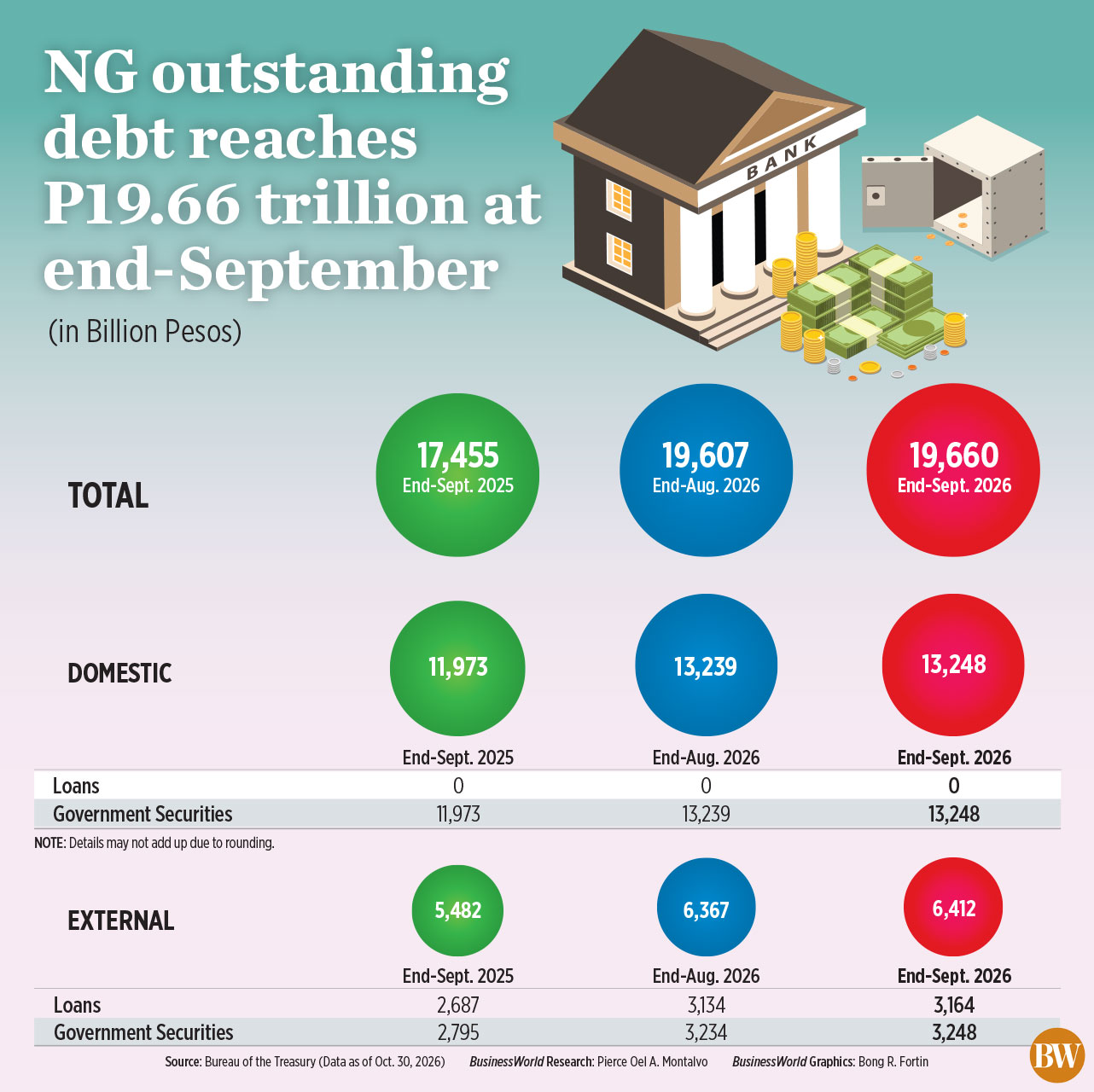
- •The national government's outstanding debt stood at P19.66 trillion at the end of September 2026.
- •Outstanding debt is a cumulative measure of what the government owes domestic and external creditors, while the debt service bill reflects payments within a single period, allowing the two readings to move in different directions.
- •The Bureau of the Treasury, an agency attached to the Department of Finance, manages government financing operations and releases monthly data on borrowing and debt service used to monitor the fiscal position.
The Philippine national government's (NG) debt service bill declined by more than 36% in September 2026, driven by lower amortization payments during the month, according to the Bureau of the Treasury (BTr).
The update on debt service came alongside figures showing the national government's outstanding debt at P19.66 trillion (Philippine pesos) at the end of September, as featured in a BusinessWorld Online infographic published on Nov. 1, 2026. The two readings describe different sides of the government's finances: the outstanding debt is a cumulative measure of what is owed, while the monthly debt service bill covers payments made within a single period, so the two can move in different directions from one month to the next.
The Bureau of the Treasury, an agency attached to the Philippine Department of Finance, manages the government's financing operations, including the issuance of domestic securities and the servicing of public debt. It releases monthly data on national government borrowing and debt service, which are used to track the country's fiscal position. Because these figures form a continuous monthly series, the end-September debt level and the September service bill provide the reference points against which the next monthly release can be measured.
The national government's outstanding debt represents the cumulative amount it owes to domestic and external creditors, while its debt service bill generally comprises interest payments and principal amortization. A reduction in amortization payments lowers the total service bill for a given period, as reflected in the September figures.
BusinessWorld's infographic page is available on its website. Further details on the September debt service decline can be found in the publication's full report.

