National Government Budget Deficit Widens to P106.3 Billion in July
Key Takeaways
- •The National Government budget deficit widened to P106.3 billion in July, more than five times the previous level.
- •State spending increased by nearly 20% in July.
- •The Treasury said higher disbursements for social assistance programs and capital projects drove the spending increase.
- •The July data were reported by BusinessWorld Online using the Bureau of the Treasury’s latest fiscal performance figures.
- •Future BTr reports will track the cumulative year-to-date balance against the full-year fiscal program and borrowing plans.
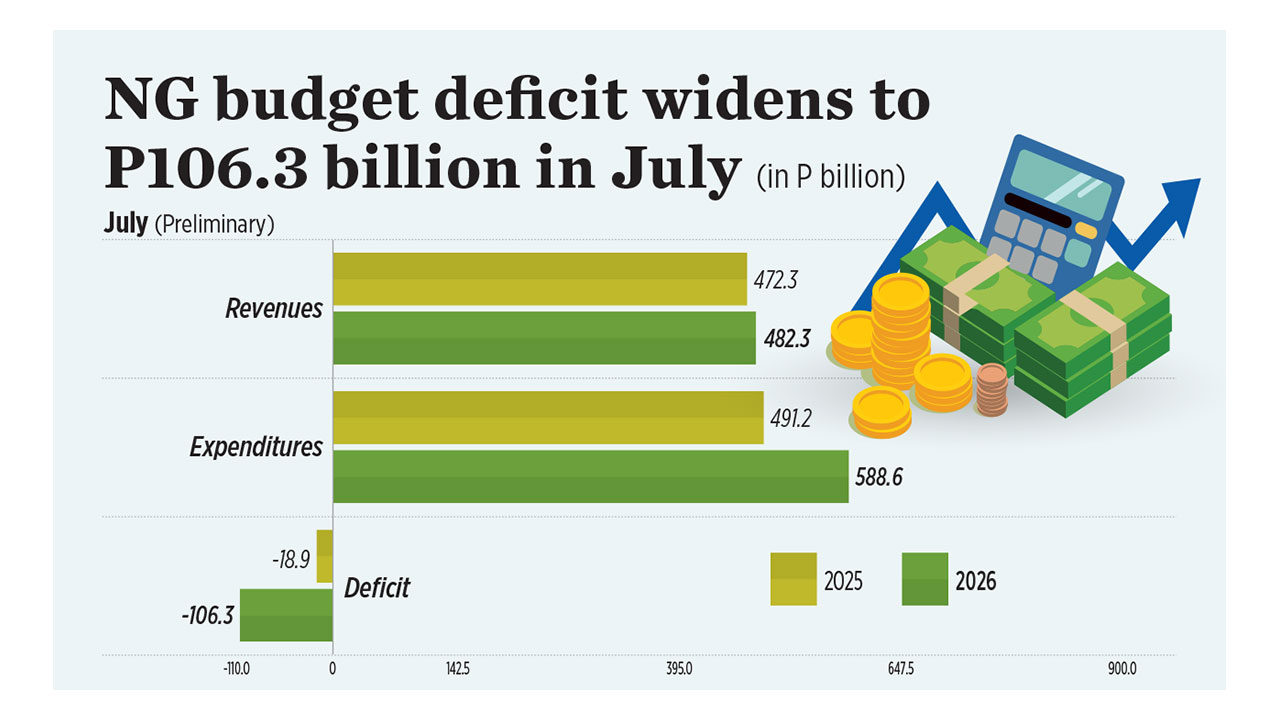
The Philippines' National Government (NG) budget deficit widened more than fivefold to P106.3 billion in July, as state spending jumped nearly 20%, according to the Bureau of the Treasury (BTr).
The Treasury attributed the increase in expenditures mainly to higher disbursements for social assistance programs and capital projects. Amounts are denominated in Philippine pesos.
The figures come from the BTr's regular monthly fiscal performance reporting, which tracks the National Government's revenues, expenditures, and the resulting budget balance. The BTr, a bureau attached to the Department of Finance, is responsible for the government's cash management, debt operations, and fiscal reporting. The country's overall fiscal program, including the full-year deficit ceiling, revenue targets, and spending priorities, is set by the Development Budget Coordination Committee (DBCC), an interagency body whose members include the Department of Budget and Management, the Department of Finance, and the National Economic and Development Authority. Analysts typically assess monthly outturns against that program on a cumulative year-to-date basis, since single-month figures can swing with the timing of disbursements and revenue collections.
A budget deficit arises when government spending exceeds revenues during a given period. The National Government operates on a calendar fiscal year, so July marks the start of the year's second half of budget execution, which is carried out under the General Appropriations Act enacted annually by Congress.
Social assistance and infrastructure outlays are major components of the national budget, and month-to-month swings in disbursements for these items can affect the government's reported fiscal position. When expenditures exceed revenues, the gap is typically financed through borrowing from both domestic and external sources, which the Treasury manages on behalf of the National Government. Domestic borrowing is raised largely through regular auctions of treasury bills and bonds, including retail treasury bonds sold to small investors, while external financing has included global bond issuances and loans from development partners. As a sovereign borrower, the Philippines is rated by the major international credit rating agencies, and fiscal outturns such as the monthly deficit are among the figures tracked in assessments of the government's fiscal position.
The July figures were reported by BusinessWorld Online, citing the latest fiscal performance data from the Bureau of the Treasury. Subsequent monthly BTr reports will show the cumulative year-to-date balance relative to the full-year program, alongside the Treasury's regularly announced borrowing plans for coming quarters.

