Philippine Unemployment Rate Rises to Three-Month High of 4.9% in June
Key Takeaways
- •The Philippine unemployment rate rose to 4.9% in June 2024, reaching its highest level in three months.
- •The increase in unemployment coincided with an expansion in labor force participation, as more Filipinos sought work than the economy could absorb.
- •Elevated joblessness threatens to weaken household consumption, a major component of Philippine GDP and a critical driver of economic growth.
- •The Bangko Sentral ng Pilipinas considers employment trends alongside inflation data when determining the pace and scope of monetary policy adjustments.
- •The unemployment uptick complicates government efforts to sustain economic momentum and maintain the Philippines' standing among Southeast Asia's fastest-growing economies.
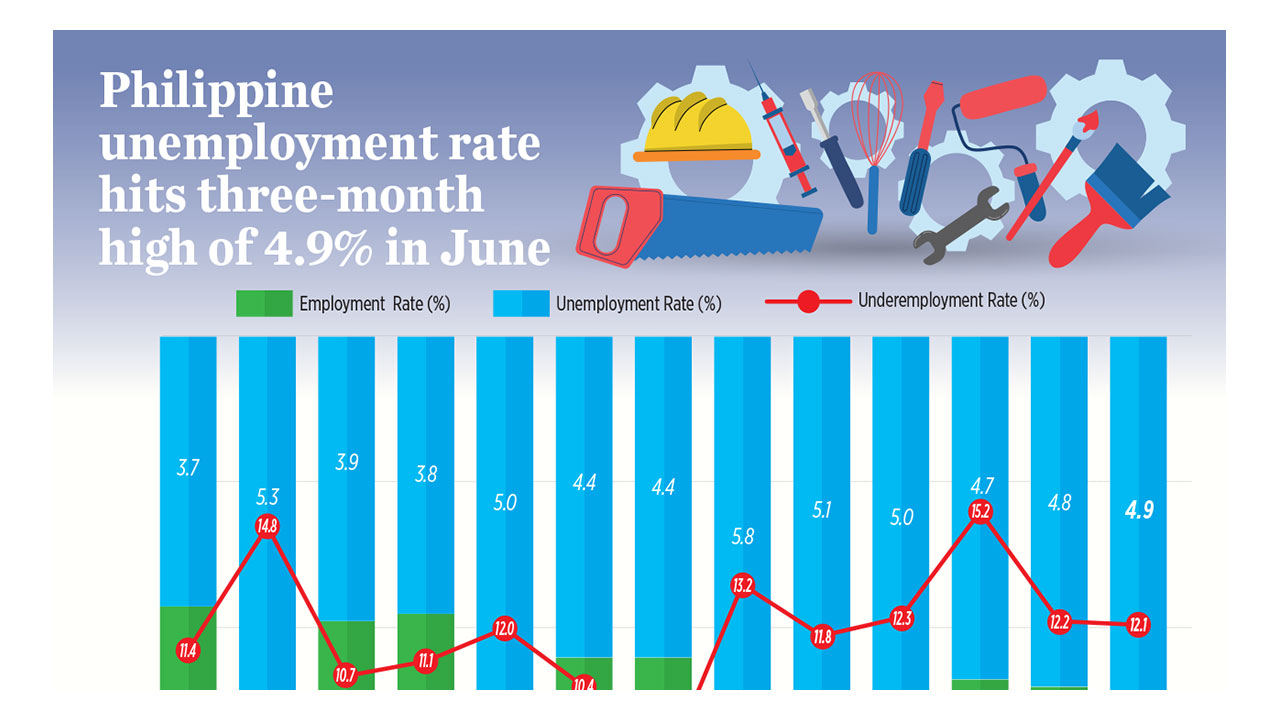
The Philippine unemployment rate climbed to a three-month high of 4.9% in June, pointing to softer labor market conditions that could place downward pressure on household consumption and pose challenges for the government's broader economic growth agenda.
The June figure marks an increase from the levels recorded in the preceding months, according to data reported by BusinessWorld Online. Notably, the rise in the jobless rate coincided with more Filipinos joining the workforce, suggesting that labor force participation expanded even as job creation did not fully absorb the growing pool of workers. A rising unemployment rate driven partly by labor force growth can reflect an economy where more people are actively seeking work, a typically encouraging sign of confidence in job prospects, but one that also underscores the need for sufficient employment opportunities to match that inflow. A elevated jobless rate typically signals reduced income security for households, which in turn may dampen consumer spending—a key driver of the Philippine economy, where household consumption accounts for a substantial share of GDP.
The Philippine Statistics Authority (PSA) regularly publishes labor force data through its monthly Labor Force Survey, which serves as the primary official source for unemployment and employment indicators in the country. Policymakers at agencies such as the Bangko Sentral ng Pilipinas (BSP) and the National Economic and Development Authority (NEDA) monitor these figures closely when formulating monetary and fiscal policy, as labor market outcomes influence decisions on interest rates, inflation targeting, and public spending priorities. The BSP in particular weighs employment trends alongside inflation data, as sustained labor market weakness could affect the pace and scope of future monetary policy adjustments.
The latest uptick in unemployment adds complexity to the government's ongoing efforts to sustain economic momentum, as the Philippines continues to position itself among the fastest-growing economies in Southeast Asia. The full report is available at BusinessWorld Online.
