Philippine National Government Debt Climbs to Record P19.39 Trillion at End-July
Key Takeaways
- •The Philippine National Government's outstanding debt hit a record P19.39 trillion at the end of July.
- •The debt increase was driven by higher domestic and external borrowings plus revaluation of foreign currency-denominated obligations.
- •A weaker peso raises the peso value of foreign-currency debts, increasing reported debt even without new borrowing.
- •The government's Medium-Term Fiscal Framework targets a lower debt-to-GDP ratio and a narrower budget deficit.
- •Growing interest payments compete with social services and infrastructure spending in the annual national budget.
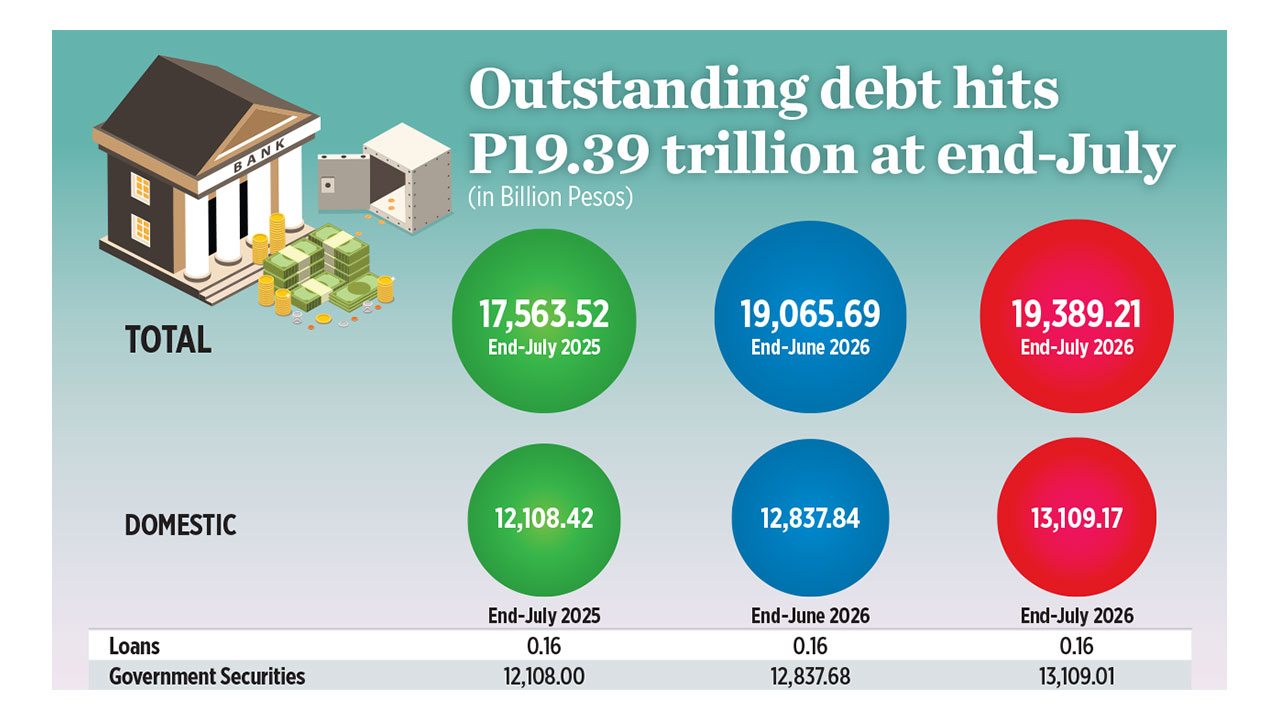
The Philippine National Government's outstanding debt climbed to a fresh high of P19.39 trillion at the end of July, driven by higher domestic and external borrowings as well as the revaluation of foreign currency-denominated obligations, according to the Bureau of the Treasury (BTr).
The figure was disclosed in the BTr's regular monthly report on national government debt. The Bureau of the Treasury, an agency under the Department of Finance, is responsible for managing the Philippine government's cash operations, administering public debt, and publishing periodic data on the country's fiscal position.
The peso-denominated obligations of the government are sensitive to movements in foreign exchange rates. When the local currency weakens against the US dollar, the peso value of debts incurred in foreign currencies rises, contributing to the overall growth in the reported debt stock even without new borrowing.
The rising debt stock matters for the broader fiscal picture because it is closely watched against the government's economic output. Under its Medium-Term Fiscal Framework, the Philippine government has set targets for reducing the debt-to-GDP ratio and narrowing the budget deficit over the coming years, making monthly debt readings one of the indicators tracked by fiscal planners and credit rating agencies alike. Sustained increases in borrowing also translate into larger interest payments, which compete with social services and infrastructure spending in the annual national budget.
Readers tracking this story can watch subsequent BTr monthly debt reports, the government's upcoming budget documents, and future Treasury auction results for indications of how borrowing plans and deficit targets are evolving.
Read the full story here.

