PBOC sets USD/CNY reference rate at 6.7841 vs. 6.7248 estimate; injects 340 billion yuan via 7-day reverse repos
Key Takeaways
- •The PBOC fixed the USD/CNY central parity rate at 6.7841 for August 24, 2026, exceeding the 6.7248 Reuters estimate by 593 pips.
- •A daily fixing set above market expectations is conventionally interpreted by currency traders as official tolerance for a weaker yuan.
- •The onshore yuan is permitted to trade within 2% of the daily reference rate, a band that was widened from 1% in 2014.
- •The PBOC injected 340 billion yuan via seven-day reverse repos while keeping the operation rate unchanged at 1.4%, its primary policy rate.
- •Because seven-day funds mature quickly, the net of new operations against maturing ones determines whether liquidity is actually added or withdrawn.
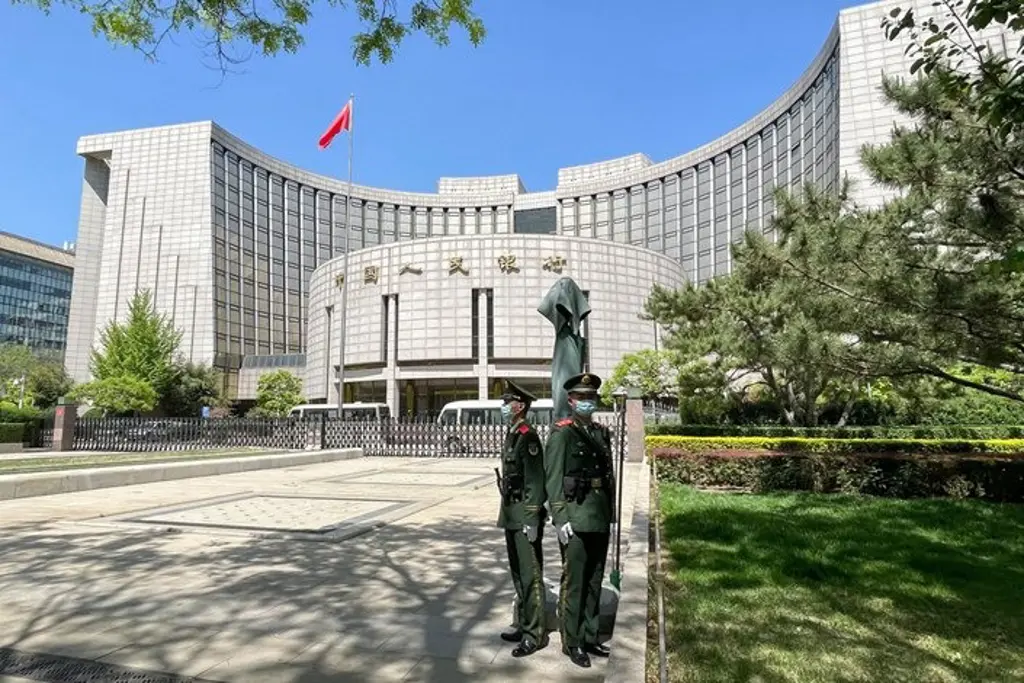
The People's Bank of China (PBOC) set the daily reference rate for the US dollar against the onshore yuan (USD/CNY) at 6.7841 for the trading session on August 24, 2026. The fixing came in above the 6.7248 level indicated by a Reuters estimate ahead of the announcement.
That leaves the midpoint 593 pips, or roughly 0.06 yuan, above the consensus estimate — a wide gap by the standards of daily fixing surprises, which are frequently measured in far smaller increments. Currency traders track the day-to-day deviation from estimates as one of the clearest available signals of official guidance: fixings set above expectations are conventionally read as tolerance for a weaker yuan, while fixings set below expectations are read as an attempt to slow depreciation.
The central bank allows the yuan to fluctuate within a range of plus or minus 2% around the reference rate during the onshore trading session. The daily fixing, formally known as the central parity rate, is published each trading day at 9:15 a.m. Beijing time and serves as the midpoint for the permitted trading band, which was widened from 1% to 2% in 2014. The rate is compiled from quotes submitted by market-making banks, which is why the size and direction of the gap versus estimates is watched daily as a real-time gauge of official steering of the midpoint.
The yuan trades onshore as CNY, while its offshore counterpart trades as CNH; the PBOC's daily reference rate applies to the onshore market, and the spread between the two is widely used by traders as a barometer of relative pressure in the offshore market.
Separately, the PBOC injected 340 billion yuan into the banking system through seven-day reverse repurchase agreements at an unchanged rate of 1.4%. Reverse repos are the central bank's routine open-market operations tool for managing short-term liquidity conditions, and the seven-day reverse repo rate serves as the PBOC's primary policy interest rate. Because seven-day funds mature quickly, the net of fresh operations against maturing ones determines whether liquidity is actually being added or withdrawn; large gross injections often accompany month-end and quarter-end cash demand or heavy rollovers of previous operations, which makes the size of each day's operation and its net position a daily focus for money markets.
The unchanged 1.4% rate leaves the short-term policy setting where it is. Coming sessions will show whether the fixings continue to print above estimates, where onshore spot trades within the 2% band, and whether liquidity operations remain at elevated volumes.
Source: ForexLive

