PBOC Sets USD/CNY Daily Reference Rate at 6.7807, Above Estimate of 6.7167
Key Takeaways
- •The PBOC fixed the USD/CNY daily reference rate at 6.7807, firmer than the analyst estimate of 6.7167.
- •A stronger-than-expected fixing has historically served as a PBOC signal of its stance on currency stability.
- •The onshore yuan may trade within 2% of the daily fixing, while the offshore yuan trades freely and the gap between the two is watched for currency pressure.
- •The central bank conducted zero 7-day reverse repo operations, citing a lack of demand from primary dealers.
- •With 103 billion yuan of 7-day reverse repos maturing, the operations resulted in a net liquidity withdrawal of 103 billion yuan.
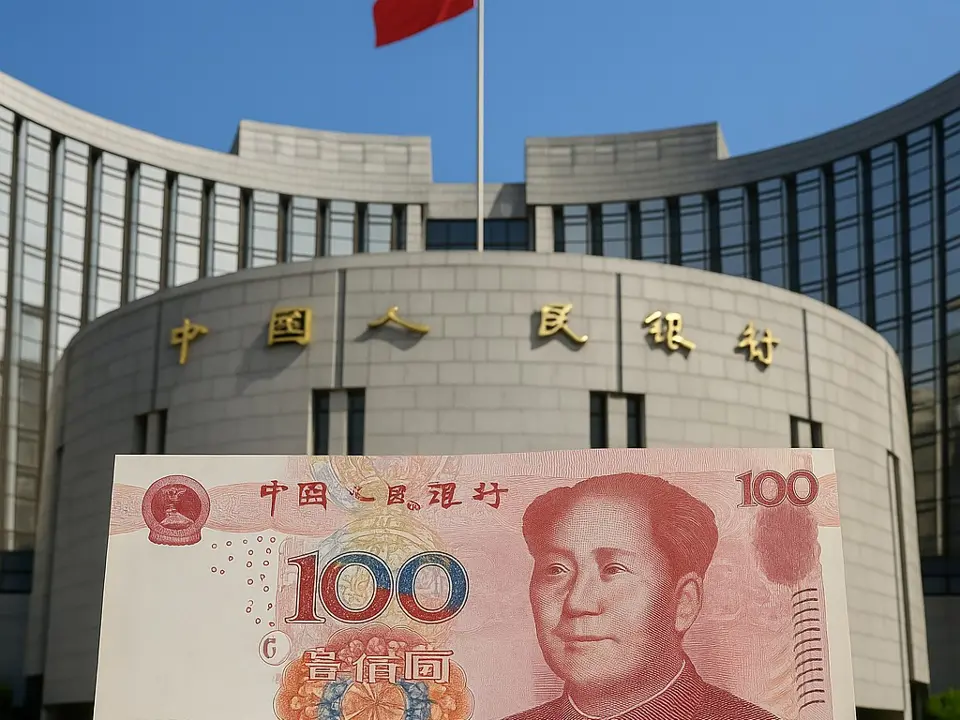
The People's Bank of China (PBOC) set the USD/CNY daily reference rate for today's trading session at 6.7807, firmer than the analyst estimate of 6.7167. Setting the fixing stronger than expected is a tool the PBOC has historically used to signal its stance on currency stability, as the daily rate anchors where the yuan is allowed to trade.
The reference rate, formally known as the central parity rate, serves as the midpoint around which the yuan is permitted to trade. The PBOC allows the currency to fluctuate within a range of plus or minus 2% around this daily fixing on the onshore market (CNY). The offshore yuan (CNH), which trades freely in markets such as Hong Kong, can move independently of this band, and the gap between the onshore and offshore rates is one indicator traders watch for pressure on the currency.
In its open market operations, the central bank conducted zero 7-day reverse repos today, citing a lack of demand from primary dealers. With 103 billion yuan of 7-day reverse repos maturing today, the operation resulted in a net liquidity withdrawal of 103 billion yuan. Reverse repos are the PBOC's routine instrument for managing short-term banking-system cash conditions, and daily operations of this kind are closely tracked as an indicator of the central bank's liquidity stance.
Source: investingLive
